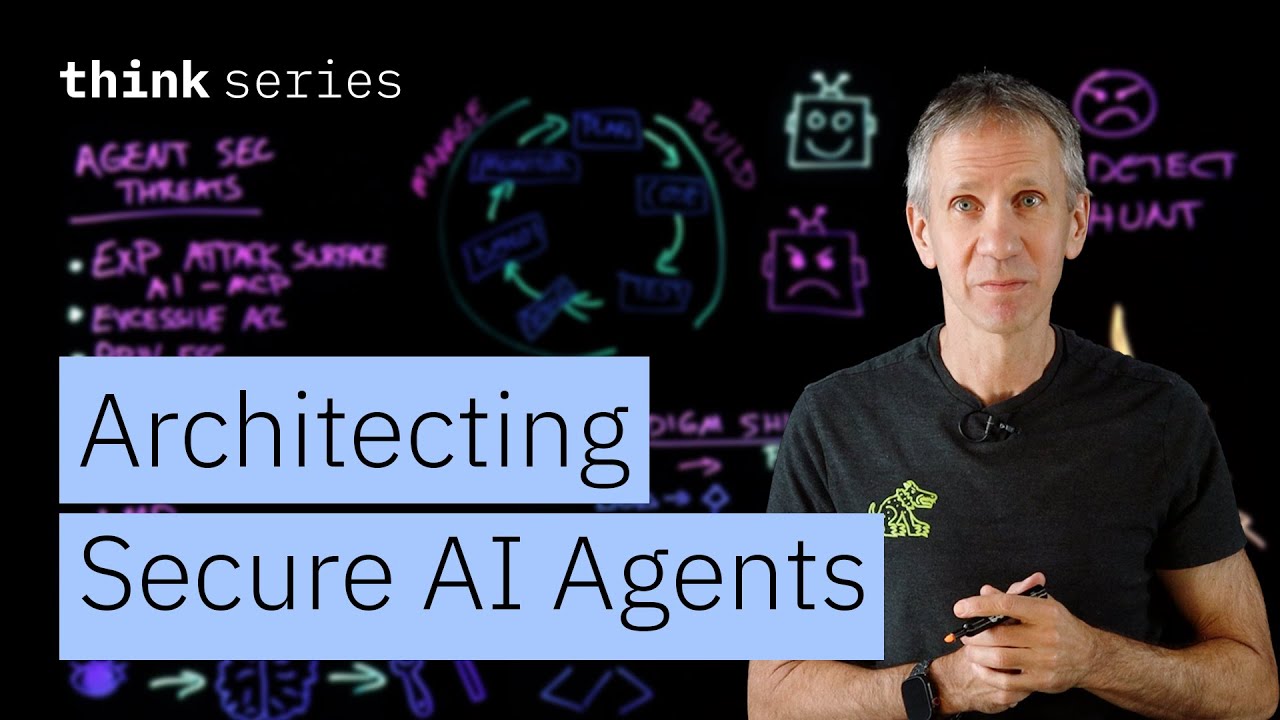
AI agents are increasingly popular due to their ability to autonomously perceive context, reason over goals and constraints, and take actions using various tools and services. This autonomy, while powerful, introduces significant risks that must be managed. Secure AI agents need to operate within explicit boundaries, provide observable traces of their decisions and actions, and be governed and audited to ensure compliance with organizational policies and regulatory requirements. Recent guidance from IBM and Anthropic outlines best practices for architecting secure enterprise AI agents, focusing on addressing the unique risks these systems present.
A key paradigm shift with AI agents is moving from deterministic, code-first systems to probabilistic, evaluation-first systems. Unlike traditional software, agents make dynamic decisions and adapt over time based on interactions and feedback. This requires a structured agent development lifecycle, encompassing planning, coding, testing, debugging, deployment, and continuous monitoring. Integrating security throughout this lifecycle—using a DevSecOps approach—ensures that safety, reliability, and alignment with organizational goals are maintained from the outset.
AI agents expand the attack surface in several ways. They introduce new vulnerabilities not only in the AI components themselves but also in protocols like MCP, which connect agents to external tools and services. Risks include excessive access, privilege escalation, data leakage, prompt injection attacks, and the potential for agents to amplify attacks if compromised. Maintaining compliance and preventing agents from operating outside intended boundaries are ongoing challenges that require robust controls.
To mitigate these risks, several system controls and design principles are essential. Agents should be tightly constrained, permissioned using role-based (or risk-based) access control, and sandboxed to limit potential damage. Security must be built in from the start, not added later. Agents should be interoperable with necessary tools but only within well-defined boundaries, following the principle of least privilege. Continuous observation, governance, and human oversight are critical to ensure agents act within acceptable parameters and align with business objectives.
A comprehensive security framework for AI agents includes identity and access management for both human and nonhuman (agent) identities, unique credentials, just-in-time access, and thorough auditing. Data and model security can be enhanced by routing interactions through AI firewalls or proxies to detect prompt injections and prevent data loss. Real-time monitoring, proactive threat hunting, and ongoing risk assessment are necessary to detect abnormal behaviors, configuration drift, and unauthorized access. By following these best practices, organizations can harness the benefits of AI agents while minimizing security risks and maintaining compliance.