The video introduces the “handoff” skill, which compresses and transfers session context via markdown files to manage long AI coding sessions efficiently by enabling modular, focused workflows across multiple sessions. This approach improves productivity by allowing parallel task handling, maintaining clarity, and avoiding context overload, complementing existing tools like “compact” for better session management.
The video introduces a new skill called “handoff,” developed by the speaker to improve interactions with AI coding agents. The handoff skill compresses the context of a current session into a markdown file, which can then be passed to another session or agent. This approach helps manage the growing context window in long coding sessions, which can become less effective as more tokens accumulate. The speaker explains that while large context windows are available, performance tends to degrade beyond a certain point, making it necessary to efficiently manage and summarize session data.
The speaker contrasts the handoff skill with an existing tool called “compact,” which summarizes conversations within a single session to keep the agent’s responses sharp. Compact works well for long, continuous sessions by condensing previous interactions into summaries that maintain context without overwhelming the agent. However, compact is limited to one session, and the speaker wanted a way to split work across multiple sessions without losing focus or mixing unrelated tasks. This need led to the creation of the handoff skill, which allows for cleanly transferring relevant context to a new session dedicated to a specific task.
The handoff skill is particularly useful during “grilling” sessions, where the agent asks detailed questions to clarify requirements or problems. The speaker demonstrates how handoff can be used to delegate out-of-scope tasks to separate sessions, keeping the original session focused and efficient. For example, when identifying a refactoring opportunity or a complex prototype, the handoff document captures the necessary context and instructions for the new session. This modular approach enables parallel workstreams and better management of complex projects.
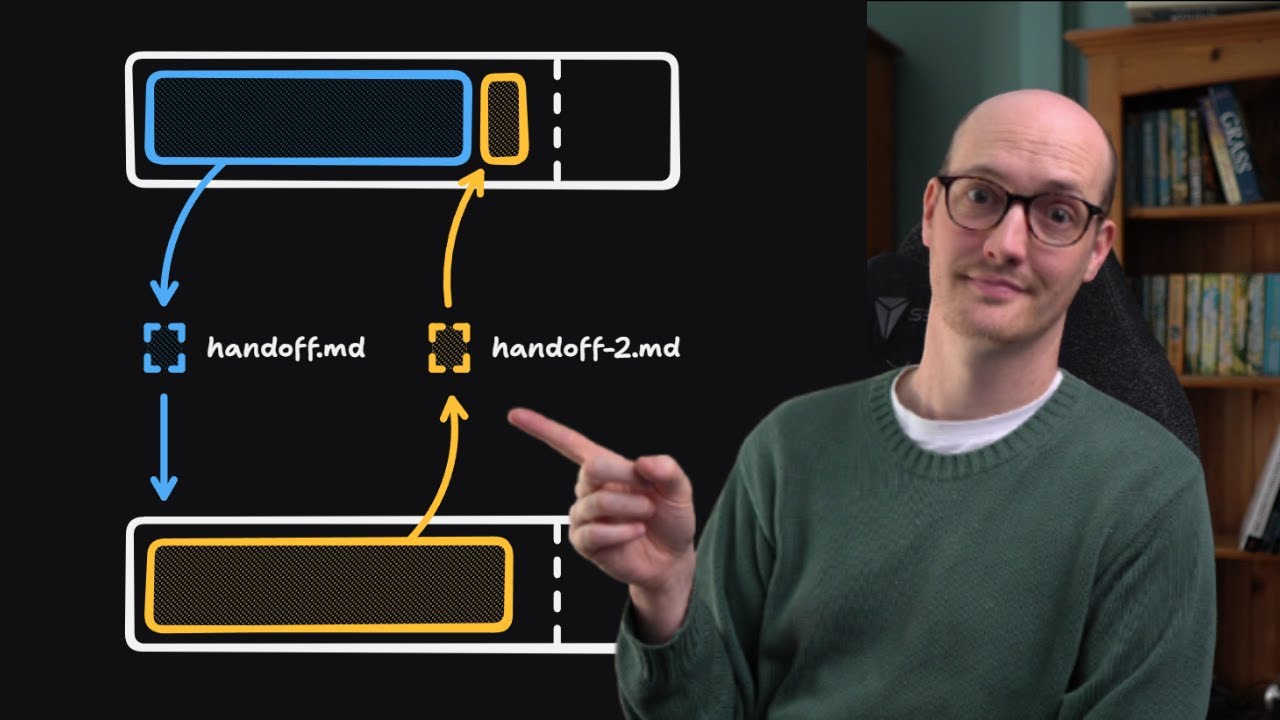
A common pattern described is the back-and-forth handoff between sessions, such as from a planning session to a prototyping session and back again. Each session generates a handoff document summarizing its outcomes, which is then passed back to the parent session. This creates a layered workflow where specialized tasks are handled independently but remain connected through concise documentation. The use of simple markdown files for handoff also allows flexibility in choosing different AI agents or tools for each session, facilitating diverse workflows and reviews.
Finally, the speaker outlines best practices for using the handoff skill, including avoiding duplication of information, redacting sensitive data, and saving handoff files in temporary directories to prevent clutter. The skill also supports specifying the focus of the next session to tailor the handoff document accordingly. Overall, the handoff skill is presented as an essential addition to the speaker’s toolkit, enhancing productivity and session management when working with AI coding agents. The video concludes with an invitation to join the speaker’s AI coding course and a teaser about future content related to coding books.