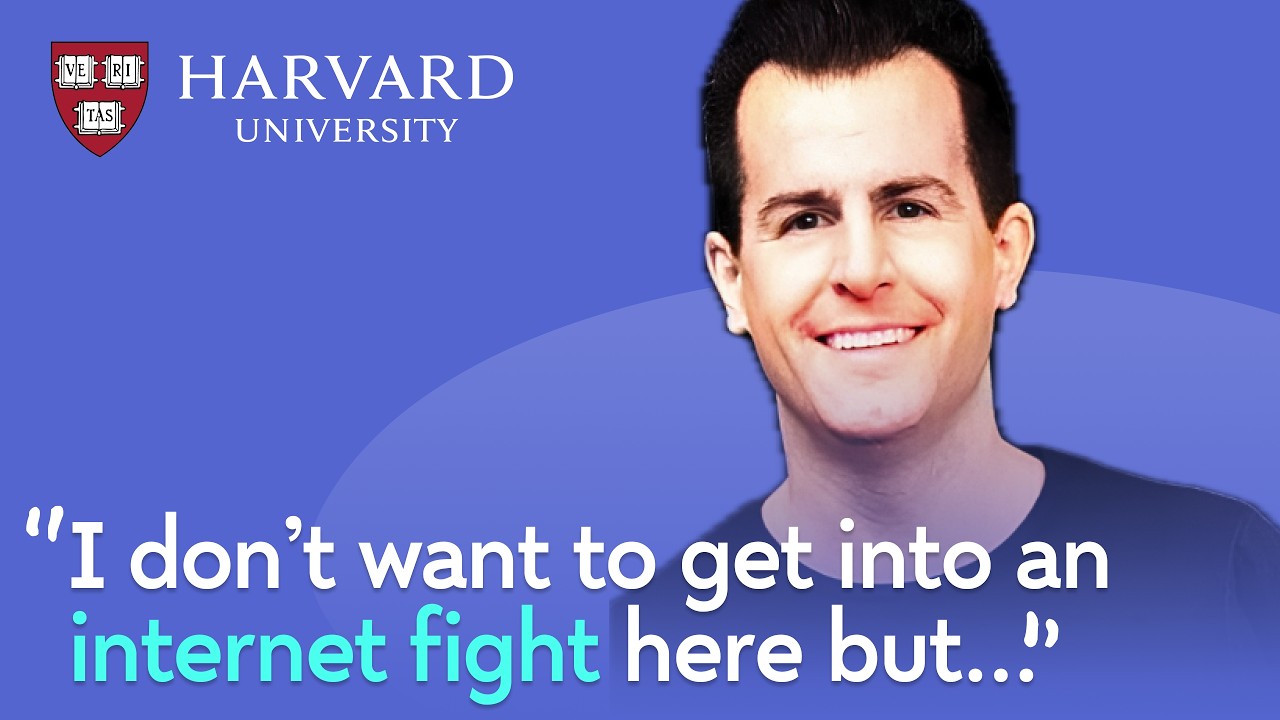
Harvard professor David J. Malan shares his journey from a hesitant student to a passionate educator who transformed CS50 into a globally accessible computer science course emphasizing deep understanding of foundational concepts over surface-level programming. He highlights the importance of engaging, in-depth teaching methods, the challenges and opportunities posed by AI in education, and advocates for greater collaboration among institutions to enhance learning while maintaining academic integrity.
David J. Malan, a Harvard professor renowned for transforming CS50 into a world-class online computer science course, shares insights into his journey from a hesitant student to a passionate educator. Initially drawn to government studies, Malan found his true calling in computer science after taking CS50 as a sophomore. His enthusiasm for the subject was sparked by engaging problem sets that made homework enjoyable, leading him to eventually teach the course and revolutionize its delivery. Malan emphasizes the importance of understanding foundational concepts in computer science, advocating for a deep grasp of how computers work rather than just surface-level programming skills.
Malan discusses the evolution of CS50, highlighting its transition from traditional in-person lectures to a highly accessible online format. Early efforts included distributing course materials via podcasts and adapting to emerging technologies like the iPod and streaming media. Despite the temptation to create bite-sized content for social media, Malan prefers maintaining longer, in-depth lectures that allow students to engage deeply with the material at their own pace. He employs memorable, theatrical moments in lectures—such as physical demonstrations of algorithms—to help students grasp complex concepts and retain knowledge effectively.
Addressing concerns about the relevance of learning low-level programming languages like C, Malan argues that such knowledge is crucial for engineers to understand the underlying mechanics of software and hardware. He distinguishes between merely coding and engineering, emphasizing that foundational skills enable better problem-solving and innovation. Malan also touches on the challenges posed by AI in education, particularly regarding academic honesty. While AI tools can generate code, CS50 has implemented policies and custom tools like a specialized “virtual rubber duck” AI to encourage learning without enabling cheating, maintaining academic integrity in an evolving technological landscape.
Malan reflects on the broader educational landscape, noting inefficiencies in how courses are duplicated across institutions and advocating for greater collaboration and resource sharing among universities. He acknowledges resistance to such consolidation due to institutional pride and concerns about job security but believes that sharing high-quality educational materials can enhance learning opportunities globally. He also comments on the fluctuating interest in computer science, influenced by industry trends and technological advancements like AI, and reassures students that problem-solving skills remain valuable regardless of changes in programming tools or job markets.
Looking ahead, Malan envisions CS50 continuing to evolve with a core focus on problem-solving while expanding into related disciplines such as mathematics and the humanities. He stresses the importance of a growth mindset in learning computer science, encouraging persistence and exploring different teaching styles to overcome challenges. Reflecting on his career, Malan expresses a desire to have explored more diverse experiences earlier on but finds fulfillment in the impact CS50 has had on students worldwide. He remains committed to making education accessible and engaging, blending rigorous content with innovative teaching methods to inspire future generations of learners.