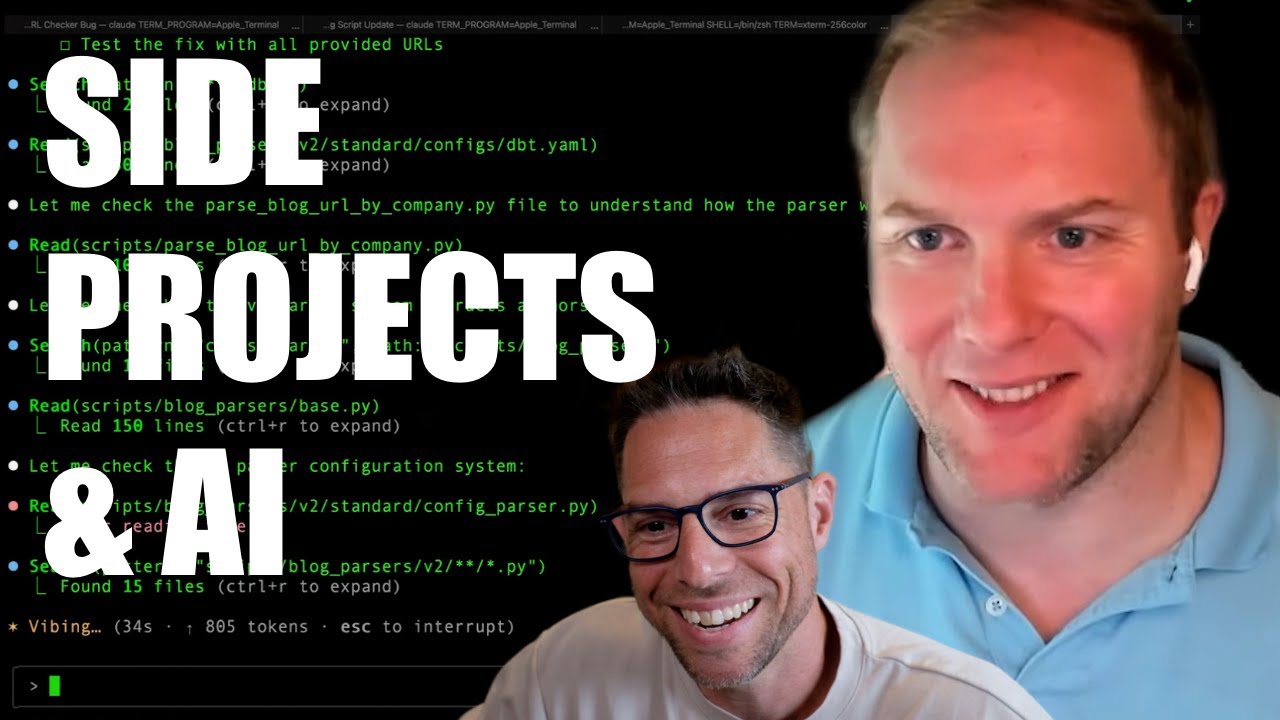
In the conversation, Matt Mai explains how AI coding tools like Claude Code enable developers with limited time to efficiently build and maintain side projects by automating tasks such as writing and updating custom parsers, while emphasizing the importance of manual review and incremental improvements. He also discusses the broader impact of AI on software development, envisioning it as a means to raise abstraction levels, increase productivity, and empower smaller teams to create more complex software without replacing developers.
In this conversation, Greg and Matt Mai discuss how large language model (LLM) coding tools, like Claude Code, have transformed the way developers work, especially those with limited uninterrupted time. Matt explains that these AI tools enable coding in short bursts, making it easier to ship side projects despite busy schedules filled with meetings. He highlights how AI coding tools reduce procrastination and increase ambition by allowing developers to quickly generate and iterate on code, even when only 15 minutes are available. This shift effectively turns a manager’s interrupted schedule into a maker’s focused coding time.
Matt then dives into a practical demonstration of how he uses Claude Code to automate the creation and maintenance of custom parsers for his project Plushcap, which analyzes go-to-market motions for developer-focused companies. He explains the challenges of scraping metadata from hundreds of company blogs, each with unique structures and frequent design changes. By leveraging Claude to write, test, and update these parsers, Matt significantly speeds up the process while maintaining accuracy. He also describes his hybrid workflow where he manually reviews and commits code changes, ensuring quality control before deployment to his Digital Ocean server.
The conversation also touches on Matt’s development environment and workflow, which includes using Tmux and Vim with multiple windows to manage different parts of his codebase simultaneously. He runs several AI agents on different components of Plushcap, emphasizing the importance of incremental improvements rather than large architectural changes suggested by AI. Matt stresses that technical debt can be amplified when AI copies flawed designs, making ongoing maintenance and refactoring critical. He also shares how he uses local LLMs like LLaMA for cost-effective blog summarization, reserving more powerful cloud-based models for complex cases.
Reflecting on his long history as a developer and educator, Matt talks about his Full Stack Python project and how the rise of LLMs has changed the value proposition of traditional content sites. He encourages developers, especially those who have moved into management roles and miss coding, to start small side projects with AI assistance. This approach lowers the barrier to entry for learning new technologies and building projects, making coding more accessible and enjoyable. He advocates for iterative learning through resources like YouTube and emphasizes that the best way to improve is by actively building and experimenting.
Finally, Matt shares his perspective on the broader impact of AI on software development. He believes AI tools will not replace developers but rather raise the level of abstraction, enabling more complex and diverse software to be built with smaller teams. He compares this to past technological shifts that increased productivity and complexity simultaneously. Matt envisions a future where AI empowers developers constrained by time or resources to ship more frequently and build projects that were previously impractical, ultimately expanding opportunities and keeping developers engaged and employed.