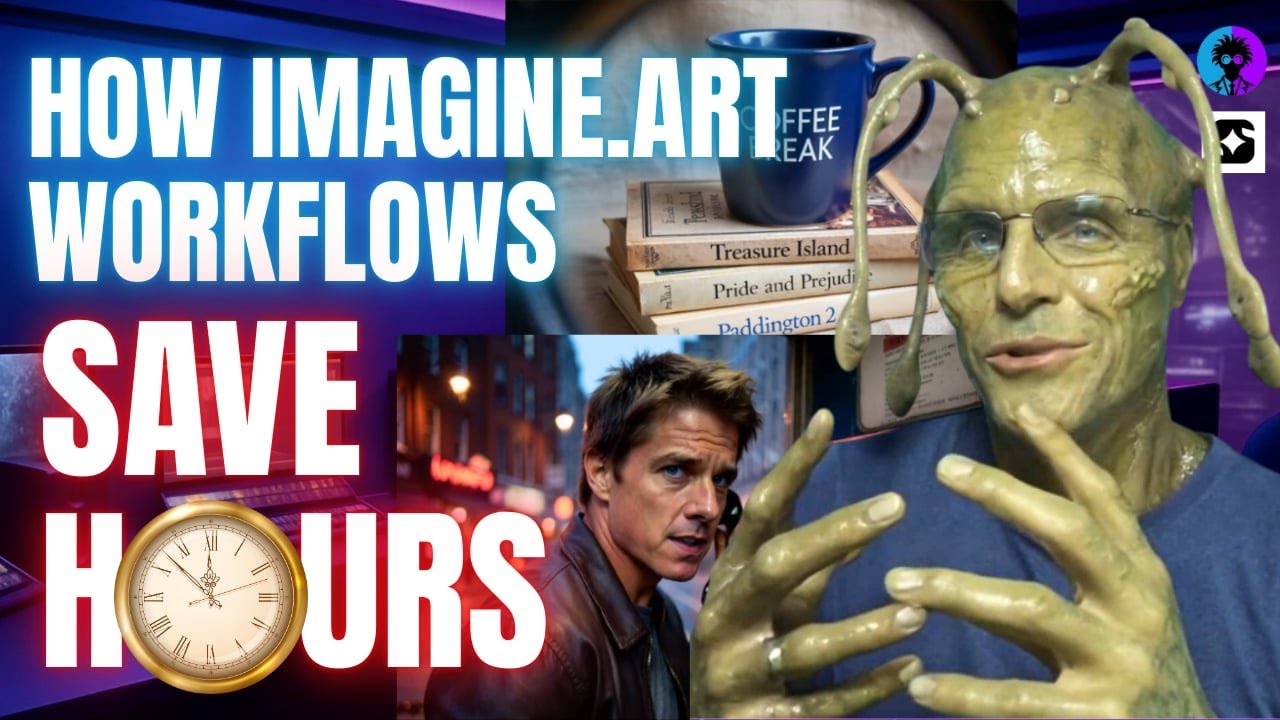
The video discusses the challenges AI professionals face with the increasing complexity of workflows involving multiple image and video models. Imagine Art offers a solution with its integrated workflow system and a highly realistic image model, Imagine Art 1.5, which stands out for its photorealism and attention to detail. The platform supports a variety of models, including NanoBanana, Seed Dreams, and Flux, allowing users to generate images with impressive realism and prompt adherence, making it ideal for creating believable AI-generated content such as influencer images or product ads.
One of the standout features of Imagine Art is its ability to generate highly detailed and accurate images, such as photorealistic ads with clean typography and realistic lighting effects. The model can even correctly spell book titles on a stack of books in an image, demonstrating its precision. Additionally, the platform supports personalized image generation by allowing users to upload reference photos, which can then be animated into videos with sound and camera movements using the video generation tools. This includes advanced features like motion transfer, which applies movements from one video to another character.
Imagine Art’s workflow system is a key highlight, designed to streamline the creative process by integrating multiple tools into a single interface. Users can create workflows using nodes for prompts, images, videos, and uploads, making it easy to run multiple models simultaneously or automate complex tasks. The video demonstrates how workflows can be used to compare different image models with the same prompt or generate multiple video angles from a single image, significantly saving time and increasing productivity for AI professionals.
The platform also excels in automating product photo shoots by analyzing a single product image and generating multiple creative prompts and images automatically. This is achieved through the use of a large language model (LLM) that interprets the image and creates detailed instructions for image generation, effectively acting as a creative director. This automation reduces the need for manual testing and iteration, allowing users to produce professional-quality images quickly and efficiently.
Finally, Imagine Art offers an apps section with various effects for images and videos, such as logo reveals and product transformations, which can add professional polish or creative flair to projects. While some effects may seem playful, many are powerful tools that save time and enhance the quality of output. Overall, Imagine Art is presented as a versatile and productive platform with a strong image model and an intuitive workflow system, making it a valuable resource for AI professionals looking to simplify and enhance their creative processes.