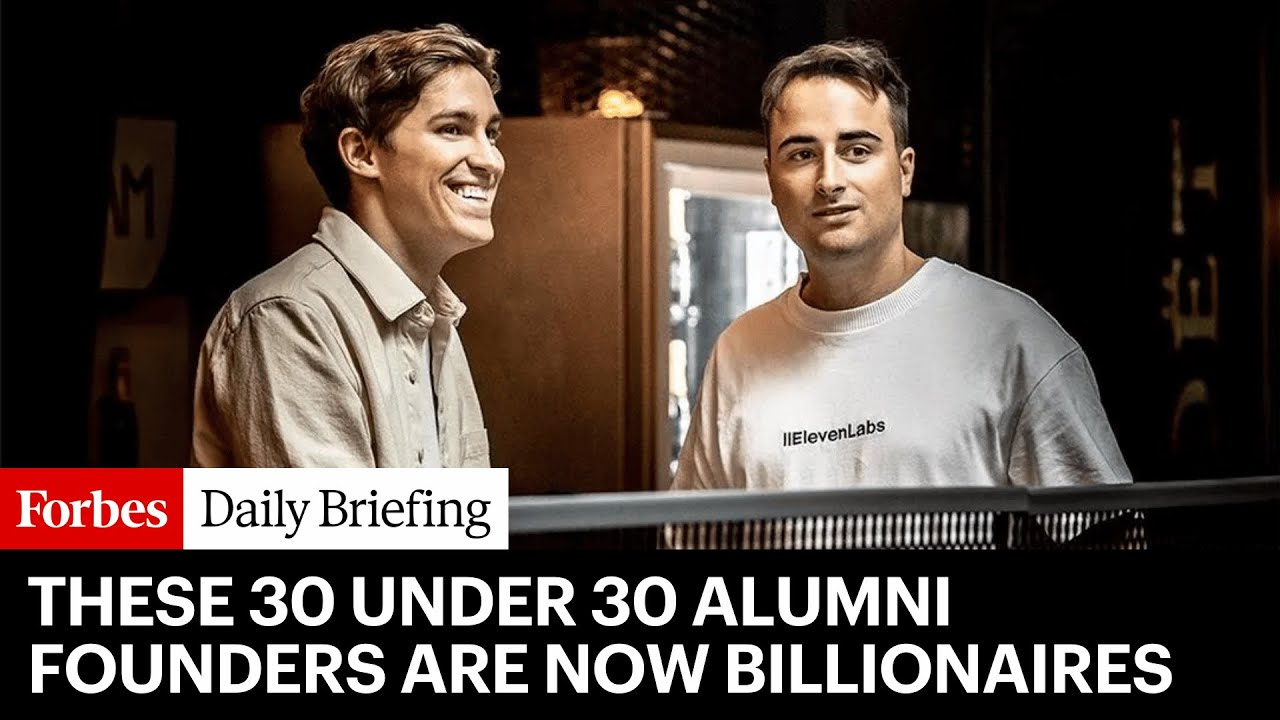
A tiny Polish startup, 11 Labs, has rapidly grown into a multi-billion-dollar company by revolutionizing AI-generated speech. The founders, Mateusz “Mati” Stanowski and Piotr Dąbcowski, started the company after recognizing the poor quality of traditional Polish film dubbing, which relied on a single monotone lector for all dialogue. They initially experimented with AI while working at Palantir and eventually quit their jobs in May 2022 to focus full-time on developing advanced AI text-to-speech technology. Their product quickly surpassed existing solutions like Apple’s Siri and Amazon’s Alexa by producing voices capable of expressing emotions such as happiness, excitement, and laughter.
In January 2023, 11 Labs launched its first AI model, which could read any text aloud in any voice, including personalized voice clones. This innovation sparked immediate demand from various sectors. Authors used the software to create audiobooks instantly, YouTube creators translated videos into multiple languages, and the startup secured partnerships with language learning and meditation apps. Media companies such as HarperCollins and Germany’s Burda also adopted the technology. By May 2023, 11 Labs had raised $19 million in funding, with investors recognizing it as the best model available in the market.
Despite its success, 11 Labs’ technology has also been used for controversial purposes. AI-generated voice clones of public figures like President Trump, actress Emma Watson, and podcaster Joe Rogan went viral, sometimes narrating inappropriate or misleading content. More concerningly, fraudsters exploited the technology to impersonate loved ones and commit sophisticated deepfake scams, resulting in significant financial losses. Nevertheless, venture capital continued to pour into the company, which has now raised over $300 million and reached a valuation of $6.6 billion, making it one of Europe’s most valuable startups.
The company’s revenue, estimated at $193 million over the trailing 12 months, is split roughly evenly between corporate clients and individual creators. Major corporations like Cisco, Twilio, and Swiss recruitment agency Adecco use 11 Labs’ technology for customer service and job interviews, while Epic Games employs it to voice characters in Fortnite, including a Darth Vader chat with permission from James Earl Jones’s estate. Unlike many AI startups, 11 Labs is profitable, with Forbes estimating a net income of $116 million and a 60% profit margin. The founders, both 30 years old, are now billionaires, with valuations exceeding $1 billion each.
11 Labs faces competition from tech giants like Google, Microsoft, Amazon, and OpenAI, who have also developed voice and speech technologies. However, the Warsaw and London-based startup maintains a competitive edge with its extensive library of 10,000 highly realistic voices, including those of celebrities like Michael Caine and Matthew McConaughey. Stanowski claims that 11 Labs is ahead of OpenAI not only in speech generation but also in speech-to-text and music capabilities. With a team of 300 employees as of October 2024, 11 Labs is positioning itself as the leading voice of AI, charging premium prices for its superior technology.