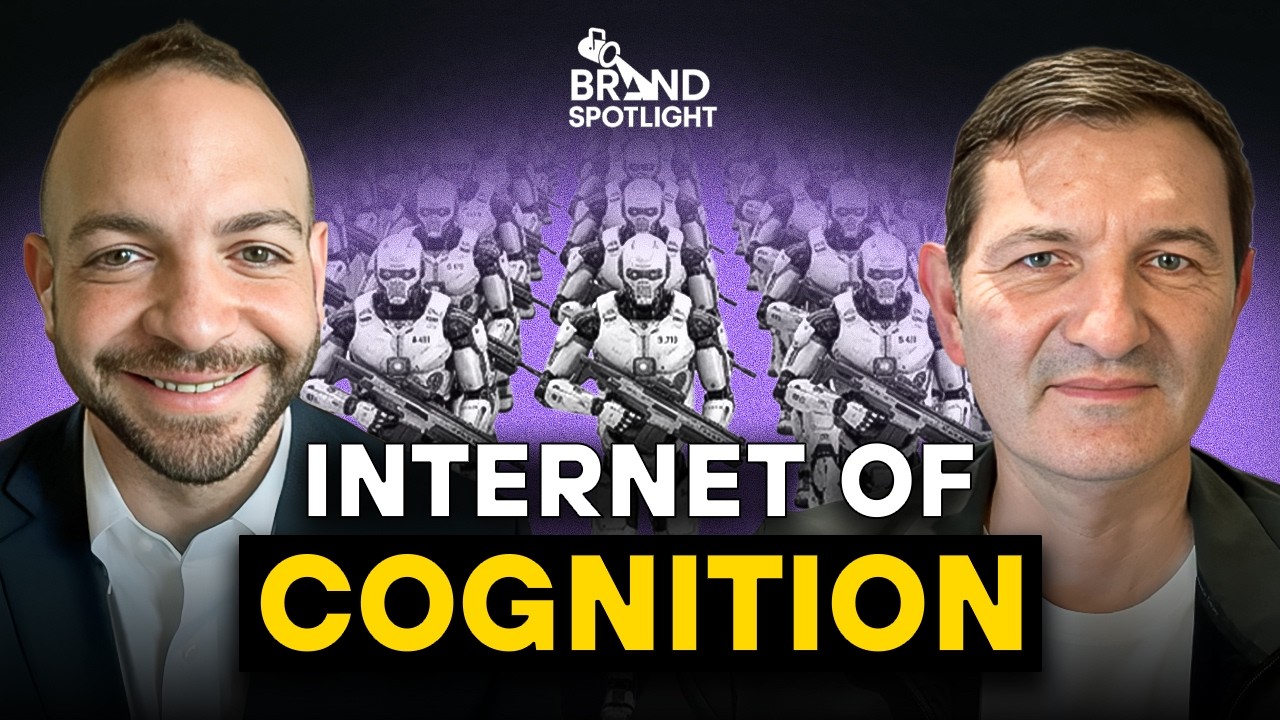
In this insightful conversation with Guillaume de Saint-Marc, Vice President of Engineering at Outshift by Cisco, the discussion centers on the evolution of AI agents from isolated entities to collaborative swarms capable of tackling complex tasks. Guillaume reflects on the viral phenomenon of Maltbook, a social network formed by AI agents, highlighting both its impressive scale and its limitations. While Maltbook demonstrated agents’ ability to connect and interact, it lacked genuine collaboration, shared state management, and governance, essentially performing a “theater of collaboration” rather than meaningful teamwork. This example underscores the need for more advanced frameworks that enable agents to truly think and work together autonomously.
Guillaume explains that Outshift by Cisco has been pioneering the development of what they call the “internet of agents,” an infrastructure designed to support large-scale, distributed multi-agent systems. Recognizing agents as unique entities that blend human-like attributes with computational workloads, they focus on four key functions: connectivity, identity, discovery, and observability. To facilitate this, they have open-sourced a project named “Agency” (spelled A-G-N-T-C-Y), which has garnered support from major industry players like Google, Oracle, and Red Hat. However, Guillaume notes that while connecting agents and following predefined workflows is achievable, the real challenge lies in enabling self-forming, self-evolving agent swarms that can dynamically collaborate on novel and complex missions.
The conversation delves into the concept of self-forming agent swarms, where agents autonomously discover, select, and coordinate with one another based on the skills required for a given task. Guillaume highlights the importance of a directory feature within Agency that allows agents to find and recruit others in real time, facilitating flexible and adaptive collaboration beyond rigid workflows. He also discusses the critical need for control mechanisms to prevent runaway AI behavior, emphasizing the application of networking principles such as segmentation and encryption to regulate agent communication. Additional safeguards include cryptographically signed agent identities and semantic verification processes (referred to as TAC or attribute-based access control) that ensure agents only perform actions consistent with their assigned tasks.
Guillaume provides a concrete example of how agent swarms could revolutionize enterprise IT operations by collaboratively resolving severe outages. In such scenarios, diverse specialized agents—ranging from site reliability engineers to security and observability agents—work together to diagnose and remediate issues rapidly, potentially reducing resolution times from days to minutes. He underscores that these agents will be heterogeneous, developed by different vendors and operating on various platforms, necessitating interoperability and sophisticated coordination. Moreover, he touches on the economic and technical importance of deploying lightweight specialized language models for routine verification tasks to manage computational costs effectively.
Finally, Guillaume articulates the strategic rationale behind open-sourcing much of their work on multi-agent systems. He stresses that the complexity and scale of building an interoperable “internet of cognition” require ecosystem-wide collaboration rather than isolated efforts by individual companies. By fostering an open and extensible foundation, Cisco aims to accelerate innovation velocity and maximize value for the broader community. Interested developers and organizations are encouraged to engage with the project through the Outshift by Cisco website, where they can access code, white papers, demos, and participate in open working groups. Guillaume concludes with an invitation to join this collaborative journey toward realizing the next leap in AI capabilities through agent swarms.