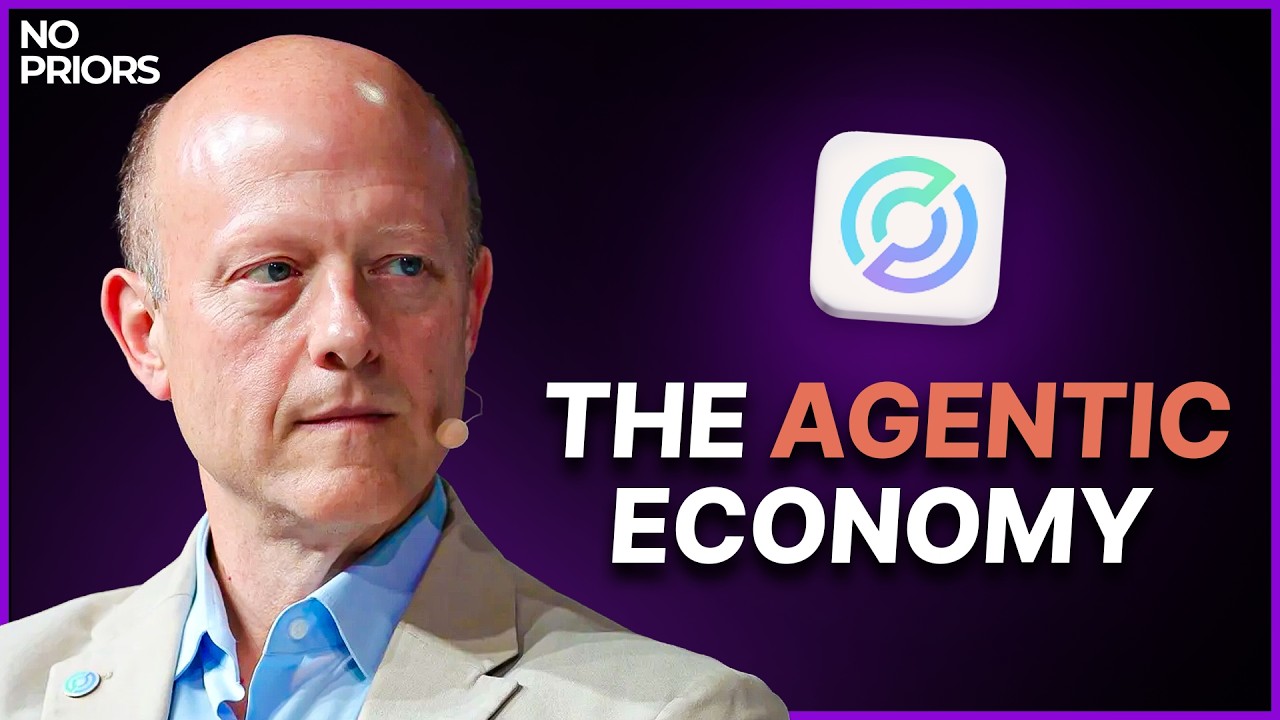
In this insightful conversation, Jeremy Allaire, co-founder and CEO of Circle, discusses the evolution and future of the financial system through the lens of cryptocurrency, AI, and blockchain technology. Circle was founded with the vision of creating a protocol for digital dollars on the internet, enabling instant, frictionless, and programmable money. Allaire emphasizes the importance of stablecoins, particularly dollar-backed ones like USDC, which are fully backed by short-term U.S. government treasuries and cash equivalents, ensuring safety and liquidity. These stablecoins serve as a foundational layer for a new financial infrastructure that is accessible 24/7, cost-effective, and globally interoperable, supporting a wide range of transactions from micro-payments in digital games to large-scale capital market activities.
Allaire elaborates on the concept of programmable money and blockchain as operating systems that enable tamper-resistant, auditable, and verifiable smart contracts. This infrastructure is crucial for the emerging agentic economy, where AI agents will autonomously conduct economic activities, collaborate, and transact with each other in real time. He highlights the need for a new financial infrastructure that can handle billions or trillions of transactions at micro scales, something traditional systems cannot support efficiently. Circle’s ARC blockchain is introduced as an economic operating system designed to meet these demands, featuring a known validator set composed of major financial institutions to ensure reliability, compliance, and deterministic settlement finality.
The discussion also touches on the broader crypto ecosystem, including advancements in scaling solutions like zero-knowledge rollups and privacy-preserving technologies, which are essential for enabling large-scale, secure, and private financial transactions on-chain. Allaire draws parallels to the early days of the internet, suggesting that blockchain technology is now reaching a “broadband moment” where it can fulfill its potential as a foundational infrastructure for the real economy. He also notes the growing trend of tokenizing real-world assets such as stocks and treasury bills, which is gaining regulatory clarity and market adoption, enabling fractional ownership and broader access to financial markets globally.
Looking ahead, Allaire envisions a future where AI and blockchain converge to create new social, political, and economic organizational structures. He foresees the emergence of on-chain corporate forms that blend human and agentic actors, necessitating new governance models and a renegotiated social contract. While acknowledging the unpredictability of technological diffusion, he is optimistic about the potential for significant economic growth driven by AI, possibly resulting in double-digit GDP growth in the 2030s. However, he cautions that this growth must be managed to ensure it benefits society broadly rather than concentrating capital at the expense of human well-being.
Overall, the conversation presents a compelling vision of how AI agents, stablecoins, and blockchain-based economic operating systems like ARC will transform the financial system. By providing a secure, programmable, and globally accessible infrastructure, these technologies promise to enable a more efficient, transparent, and inclusive economy. Allaire’s insights underscore the importance of regulatory clarity, institutional involvement, and technological innovation in realizing this future, highlighting the profound shifts underway at the intersection of finance, technology, and AI.