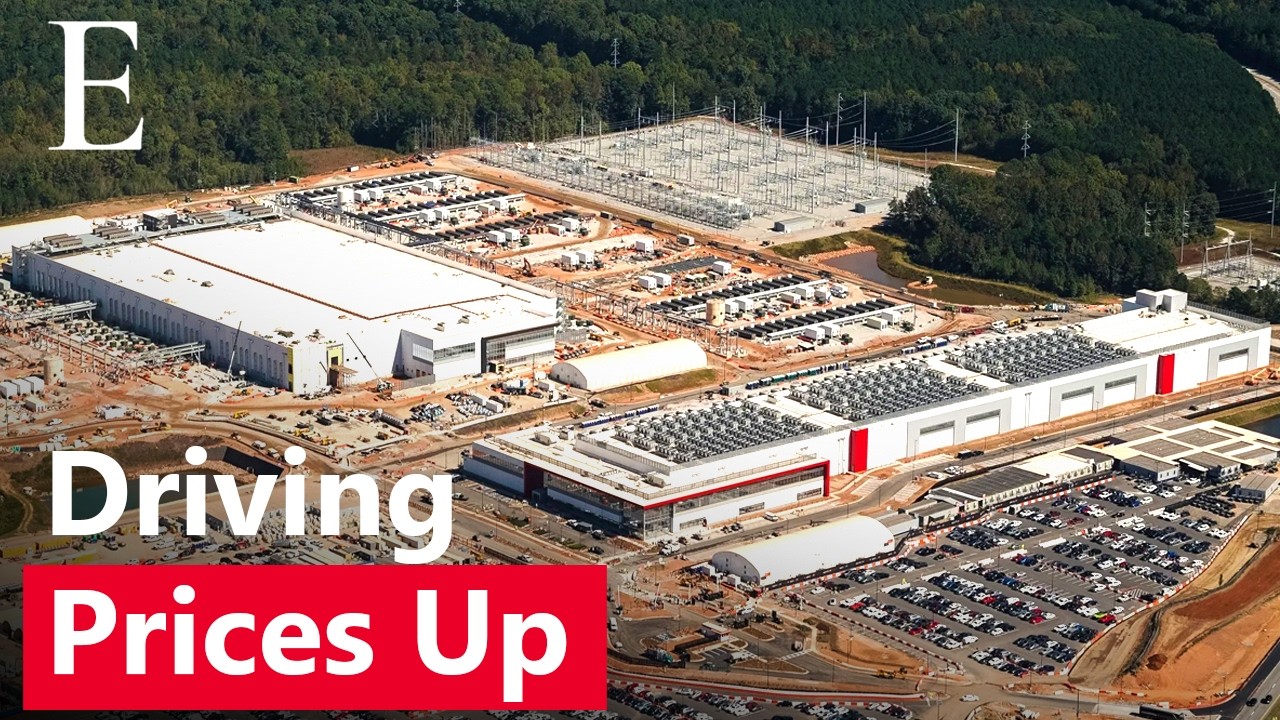
The rapid expansion of AI data centers is significantly driving up the cost of living, as evidenced by rising prices across a wide range of electronic devices and essential utilities. For example, the price of a MacBook Pro increased by $400 within a year, and similar price hikes have been seen in smartphones, refrigerators, cars, and gaming consoles. This surge in costs is largely attributed to the massive construction and operation of AI data centers, which consume enormous amounts of electricity and water, leading to higher utility bills for consumers nationwide.
Data centers require vast amounts of energy, with a single facility consuming as much power as 80,000 homes. This increased demand has contributed to a 10.2% rise in electricity costs across the U.S. between 2025 and 2026, with some areas near data centers experiencing price hikes of up to 267% over five years. Water bills have also increased by an average of 5.1%, further straining household budgets. The Federal Reserve has taken notice of these inflationary pressures, raising interest rates for the first time in three years to address the risks posed by AI-driven demand.
Beyond energy consumption, AI data centers are intensifying shortages in critical electronic components, particularly RAM memory chips. The demand for high-performance memory like HBM, used extensively in data centers, has led manufacturers to prioritize its production over other types such as NAND and DRAM. This shift has created a supply shortage, causing memory prices to quadruple in a short period. Consequently, major electronics companies like Apple, Amazon, and Xbox have raised prices on their products, passing increased costs onto consumers.
The inflationary impact of AI data centers extends beyond technology, affecting various sectors including agriculture, housing, pharmaceuticals, and transportation. Higher interest rates, implemented to curb inflation, increase borrowing costs for small businesses and farmers, potentially slowing economic growth and job creation. This widespread effect on multiple industries contributes to rising prices for food, housing, medications, and other essentials, making everyday life more expensive for Americans.
In summary, while AI promised efficiency and innovation, the infrastructure supporting it—particularly data centers—is driving up costs across the economy. The combination of soaring utility bills, component shortages, and increased borrowing costs is fueling inflation and raising the overall cost of living. As these trends continue, Americans may begin to question whether the benefits of the AI revolution justify the financial burdens it imposes on households and businesses alike.