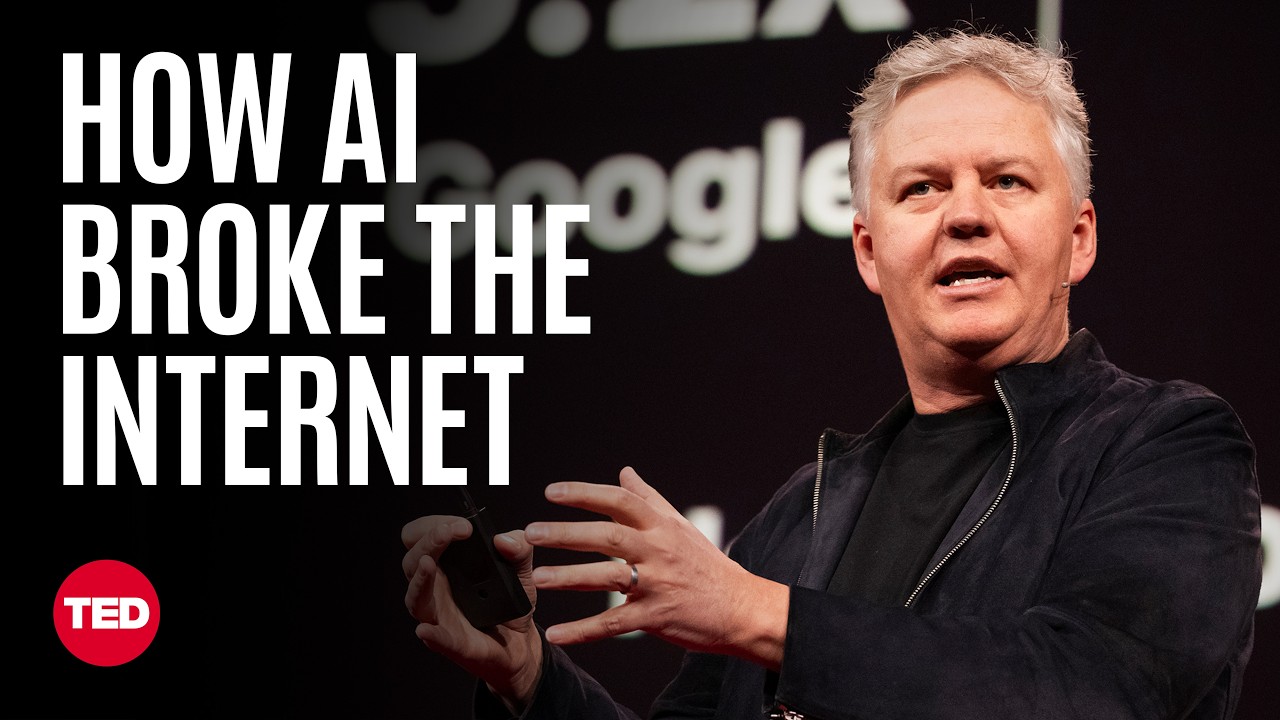
Matthew Prince begins by highlighting the internet’s miraculous growth over the past 30 years, driven by a consistent business model centered on generating traffic to content, which is then monetized through ads or subscriptions. He explains that Google has been the superhero of this era, creating both the search engine and the monetization system that allowed content creators to earn revenue. However, he warns that this model is now being disrupted by AI, which represents a new platform shift changing how people consume information.
Prince contrasts the traditional search engine model, where users follow links to publishers’ sites, with today’s AI-powered “answer engines” that provide direct answers without driving traffic to original content. This shift has made it significantly harder for publishers to attract visitors—5.2 times harder with Google’s newer systems, and exponentially more difficult with AI platforms like OpenAI and Anthropic. As a result, media outlets are experiencing drastic declines in traffic, threatening the financial viability of journalism and the broader media ecosystem.
Despite these challenges, Prince is optimistic about the future. He envisions a new business model where AI companies reward creators who fill gaps in human knowledge—what he metaphorically calls “filling the holes in the Swiss cheese” of collective understanding. He contrasts this with the current media trend of producing sensational, low-quality content designed to generate clicks. Instead, he advocates for valuing original, meaningful contributions that advance knowledge and enrich society.
Prince shares two anecdotes to illustrate how technology can expand opportunities for creators. First, he recounts how the music industry adapted to digital disruption by creating new revenue models like Spotify, which now pays artists billions annually. He highlights a songwriter who earns millions by creating music for unique, previously unmet listener requests. Second, he describes his own experience reviving a local newspaper, which has increased voter turnout and is poised to earn more from licensing content to AI companies than from traditional advertising, demonstrating the value of unique local content.
Finally, Prince addresses the challenges posed by dominant players like Google, which he accuses of unfairly leveraging their vast content access and resisting paying creators. He calls for a new approach where AI companies pay for content access, likening this to the transformative “iTunes moment” for the internet. He expresses hope that this shift will lead to a better, more sustainable internet business model that rewards original content creation and knowledge advancement, culminating in his vision of awarding a “Big Cheese” prize to those who contribute most to expanding human knowledge.