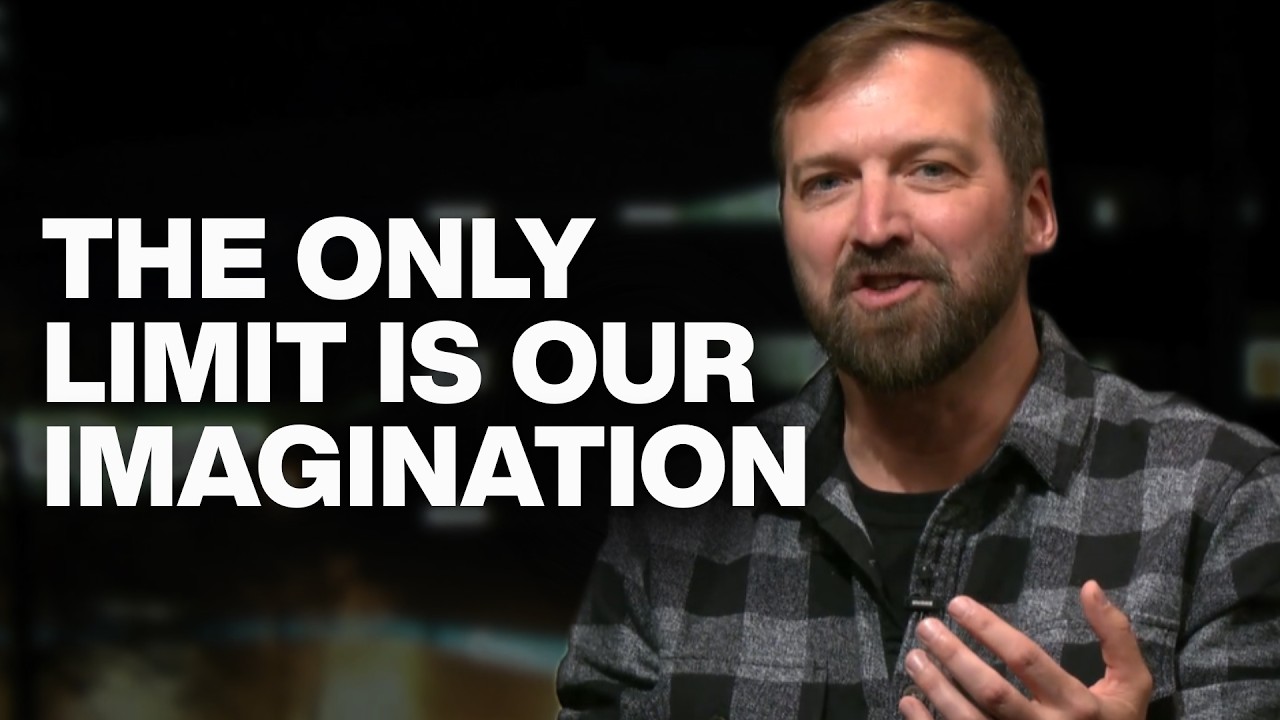
Roger Melko discusses how AI is revolutionizing physics by enhancing data processing, quantum computing control, and creative problem-solving, with institutions like the Perimeter Institute leading advancements through initiatives like the Quantum Intelligence Lab. He emphasizes the synergistic future of AI and quantum computing, acknowledging challenges in AI interpretability while highlighting its transformative potential for accelerating scientific discovery.
In the video, Roger Melko discusses the pervasive impact of artificial intelligence (AI) on physics research today. He highlights how AI is integrated into various aspects of physics, from processing large datasets to simulating quantum matter and serving as a chatbot for physicists to brainstorm ideas. Melko notes that the Perimeter Institute has been an early adopter and leader in AI research, fostering a vibrant community focused on machine learning and deep learning models for nearly a decade.
Melko elaborates on the symbiotic relationship between AI and quantum computing. He explains that AI is essential for controlling the complex operations of quantum computers, which manipulate individual atoms as qubits. Conversely, quantum computers generate vast amounts of data at high speeds, necessitating AI tools to process and analyze this information efficiently. He envisions a future where AI systems and quantum computers are co-designed in an iterative cycle to enhance each other’s capabilities.
The discussion also touches on the nature of large language models (LLMs) like ChatGPT, which operate through next-token prediction to generate probabilistic outputs. Melko explains how physicists can adapt their problems, such as quantum computer outputs, into sequences that LLMs can process. While acknowledging the probabilistic and sometimes opaque nature of AI reasoning, he emphasizes the potential for AI to exhibit creativity and reasoning, as evidenced by advances in AI-generated art and poetry.
Melko addresses the challenge of interpretability in AI, noting that while AI can produce correct answers, the underlying reasoning process is often difficult for humans to understand. He suggests that this lack of transparency should not be feared, as there may be phenomena in the universe beyond human intuition. The Perimeter Institute provides a unique environment for researchers to explore these deep questions, including the fundamental principles behind AI’s scaling laws and capabilities.
Finally, Melko highlights the Perimeter Institute Quantum Intelligence Lab (PIQL), a collaborative network established in 2018 that bridges AI and quantum computing research. PIQL has engaged hundreds of researchers and fosters connections with industry and entrepreneurship. He mentions Open Quantum Design, a startup co-founded by Melko, which aims to open-source the entire quantum computing stack—from hardware design to data pipelines—to facilitate transparent AI training on quantum data. Melko concludes by affirming that AI is already transforming physics research and anticipates even greater acceleration in scientific progress due to AI in the future.