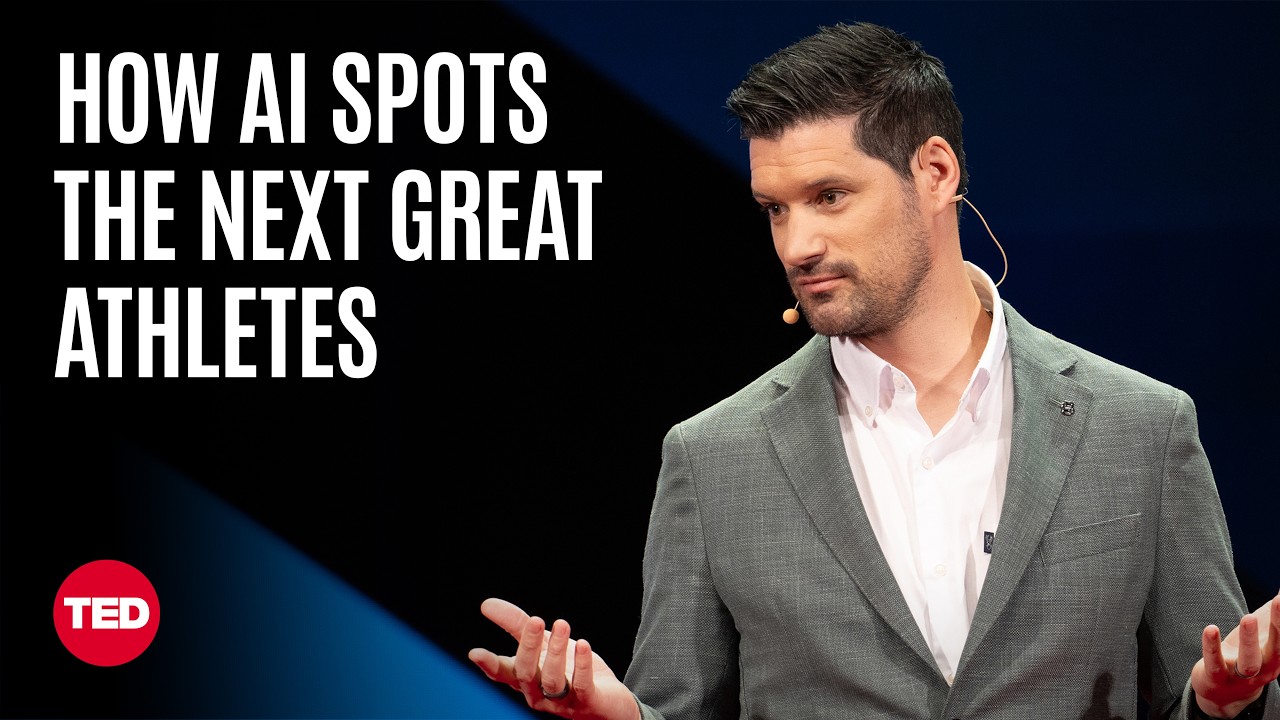
In the TED talk, Richard Felton-Thomas explores the challenge of discovering athletic talent worldwide, emphasizing that exceptional athletes are not limited to a few well-known countries. He highlights that talent exists everywhere, but the key issue is visibility and opportunity. Traditional scouting methods are limited by geography, cost, and the number of scouts, who can only observe a small fraction of the millions of young athletes globally. Many young athletes now share their highlights on social media, but human scouts cannot keep up with the volume or diversity of talent.
To address this, Felton-Thomas and his team developed AiScout, an AI-driven platform that uses computer vision and deep learning to analyze athletic performance through smartphone videos. Kids can download the app, perform standardized exercises, and upload videos for analysis. The AI evaluates key body movements, speed, coordination, and other metrics, converting 2D video into 3D data to provide detailed insights. This data-driven approach helps overcome the biases and limitations of traditional scouting by offering objective, comparable, and reliable performance metrics tailored to the needs of different sports teams and scouts.
The development of AiScout involved close collaboration with professional football clubs like Chelsea and Burnley in the English Premier League. These clubs helped define the specific metrics and exercises relevant to football scouting. The team discovered that experienced scouts often rely on intuition, which can be difficult to quantify. By translating scouts’ expertise into algorithms, AiScout can process thousands of videos and establish benchmarks based on age and gender, ensuring fair comparisons among athletes. A notable success story involved a previously overlooked 17-year-old player living near Chelsea’s training ground, who was discovered through the app and went on to sign with professional clubs.
AiScout’s impact extends beyond elite football academies to remote and underserved regions. Partnering with the Reliance Foundation in India, the platform has enabled tens of thousands of children to be assessed fairly and efficiently, helping identify talented athletes who might otherwise remain invisible. The app also supports other sports and has been used in Senegal for the Youth Olympic Games, where it helped identify athletes for multiple disciplines. By providing accessible, data-driven talent identification, AiScout democratizes the scouting process and increases opportunities for young athletes worldwide.
Looking ahead, AiScout is expanding globally, supporting multiple languages and cloud platforms to adapt to different regions. In the United States, Major League Soccer has integrated the app into its MLS NEXT program, with tens of thousands of young players using it regularly to track their development. The technology’s potential extends beyond sports into healthcare and rehabilitation, as fundamental movement patterns are relevant across many activities. Ultimately, Felton-Thomas envisions a future where talent is universally visible and opportunities are equitable, powered by AI and smartphone technology.