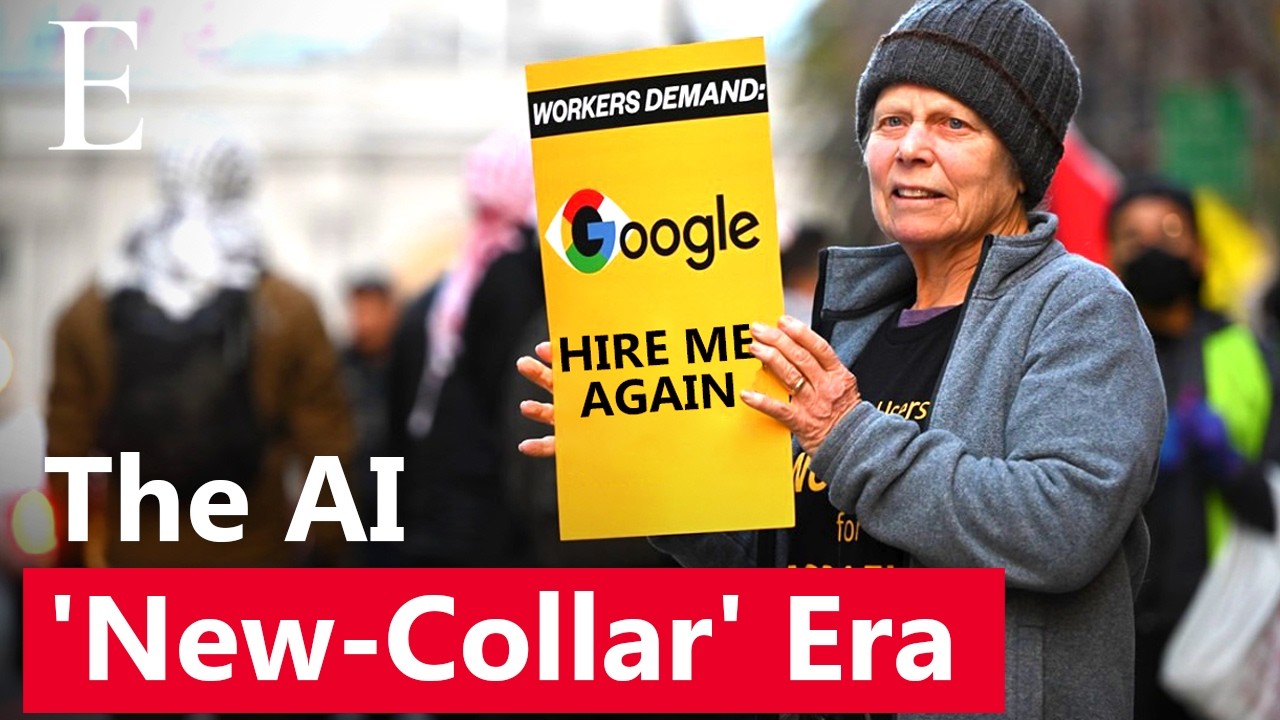
Artificial intelligence is rapidly transforming the job market, with demand for AI skills in the United States growing by 70% annually. This shift is not just about automating existing tasks but also about creating entirely new professions that didn’t exist a few years ago. Companies are increasingly prioritizing candidates with AI knowledge, sometimes even preferring less experienced workers who understand AI over more experienced ones who do not. As a result, the labor market is being reconfigured rather than contracted, with a new category of “AI workers” emerging—individuals who blend technical, digital, and human skills.
The traditional divide between white-collar and blue-collar jobs is giving way to what’s being called the “new-collar” era. Hybrid roles that combine AI expertise with practical skills are on the rise, and nearly 12% of job postings in the U.S. now require some level of AI knowledge. AI is also enabling entrepreneurs to start businesses more easily and at lower costs, thanks to generative tools that automate processes and reduce expenses by up to 72% compared to a decade ago. This has led to a surge in young founders and a growing interest in technical trades among Generation Z, who value the stability and control these roles offer.
The integration of AI is expected to change more than 40% of current job skills by 2030, making continuous education and reskilling essential. Governments and companies are responding by investing heavily in digital training programs, with major tech firms partnering to deliver millions of courses. However, this transition also risks widening the gap between those with access to technological training and those without, making labor mobility and technical certifications crucial for integrating displaced workers into the new economy.
AI is not just increasing efficiency by automating repetitive tasks; it is also amplifying human capabilities. Productivity in AI-exposed industries has risen significantly, with studies showing that less experienced workers can boost their productivity by up to 21% when using AI tools. Rather than causing mass unemployment, AI is leading to a reconfiguration of work, where social skills, creativity, and ethical judgment become more valuable. The most successful workers will be those who can interpret AI-generated results, contextualize data, and make strategic decisions in collaboration with intelligent systems.
Ultimately, the future of work will depend on the ability to adapt and continuously learn as AI becomes more integrated into every sector. While over a million AI-related jobs have been created in the past two years, the key challenge will be ensuring that opportunities are accessible to all, preventing increased inequality. The new-collar era is defined by the convergence of digital and manual skills, with humans and AI working together to drive productivity, innovation, and economic growth.