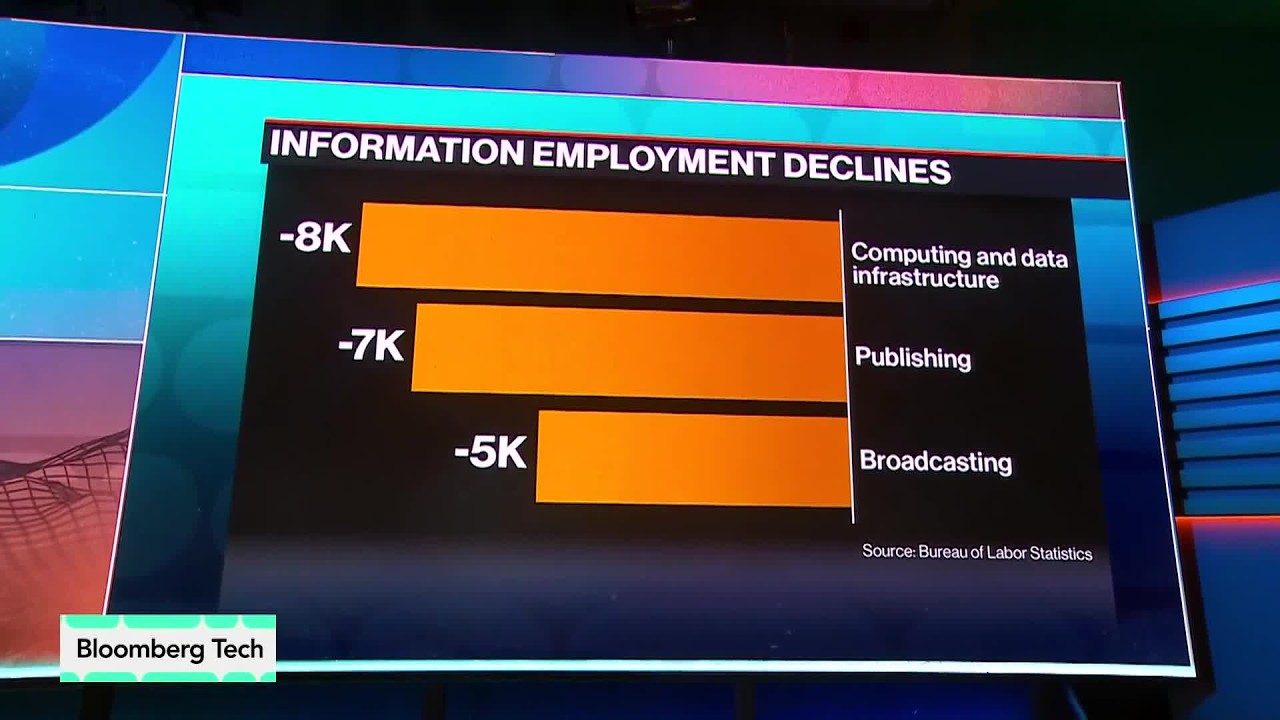
The discussion centers on the impact of AI on the tech labor market, particularly focusing on early indicators from the tech sector, which is often an early adopter of new technologies. Recent data shows a decline in information employment by 22,000 jobs in August, especially in areas like computing infrastructure and data processing. This decline is seen as a significant signal of how AI is beginning to affect the broader labor market, with these sectors experiencing some of the swiftest and largest impacts.
There is concern about the long-term unemployed, who now make up about 27% of the unemployed population. Companies are cautious in hiring due to macroeconomic challenges such as inflation, interest rates, supply chain disruptions, and rising costs. Additionally, firms are leveraging AI tools to enhance the efficiency of their existing workforce, which reduces the need for new hires. This cautious approach, combined with evolving skill requirements driven by AI, raises worries that the entry-level job market—the first rung on the job ladder—is eroding, particularly for new workers in industries with rapid AI adoption.
The conversation highlights the challenges faced by recent college graduates, especially those seeking entry-level roles like junior software engineers. A study focusing on this group found a 15% relative decline in junior software developer job postings compared to senior roles, coinciding with the public release of ChatGPT. Employers are raising the bar by demanding more years of experience and higher-level skills such as problem-solving, communication, attention to detail, and judgment, making it harder for new graduates to qualify for these positions.
The hiring process itself is also evolving due to AI. Employers are inundated with resumes that may be AI-generated or heavily AI-assisted, making it difficult to screen candidates effectively. As a result, companies are increasingly relying on traditional, human-centric hiring methods like referrals and networking. They are seeking candidates who demonstrate not only technical skills but also the judgment to use AI ethically and effectively in their roles, emphasizing the importance of human discernment in the age of AI.
Overall, the discussion underscores a significant shift in the tech job market driven by AI adoption. Entry-level opportunities are shrinking, skill requirements are rising, and hiring practices are adapting to new challenges posed by AI-generated applications. This evolving landscape presents challenges for new entrants to the workforce, highlighting the need for adaptability, advanced skills, and ethical judgment in navigating the future of work in tech.
Useful Links