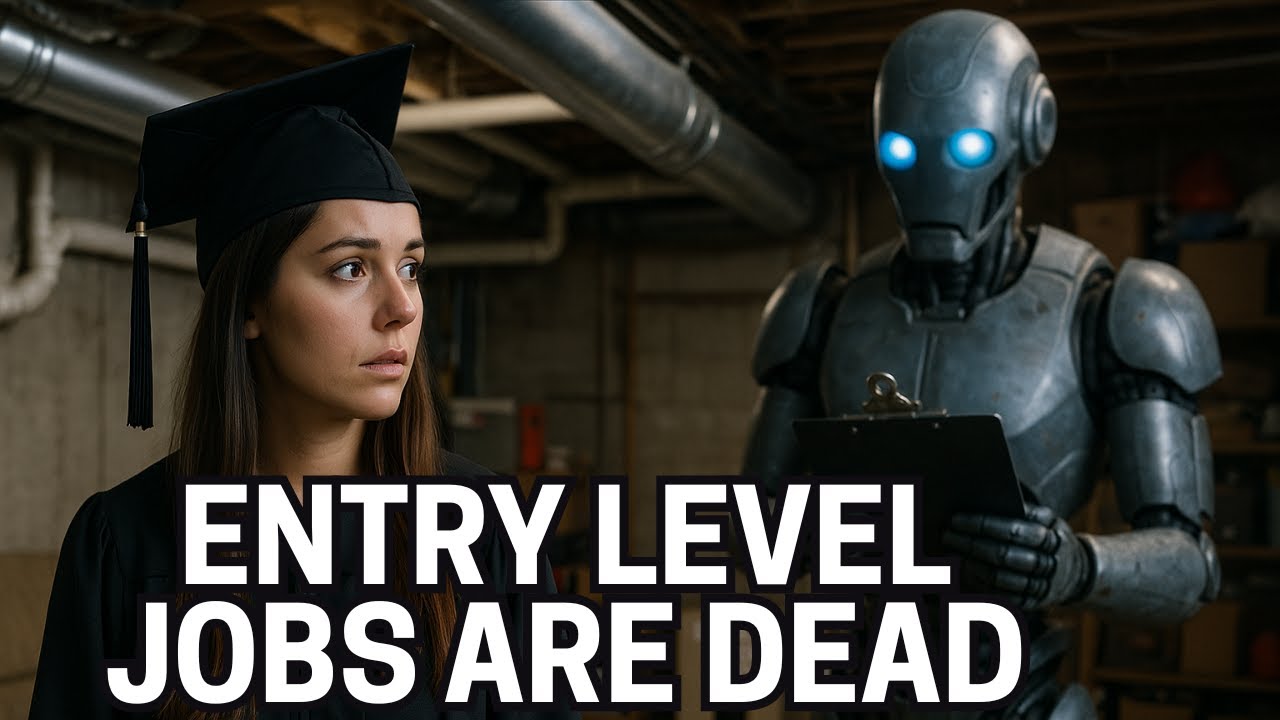
The video discusses the significant impact of AI on the Gen Z workforce, particularly focusing on how AI is transforming entry-level jobs and internships. AI automation is reducing the number of available entry-level roles, especially in fields where tasks are repetitive and programmable, such as call centers, office support, basic creative work, and paralegal research. While these jobs are not disappearing entirely, they are becoming fewer and more competitive, forcing Gen Z to adapt to a changing job market. The speaker emphasizes the importance of understanding which skills are AI-resistant, such as emotional intelligence, complex critical thinking, interpersonal collaboration, and ethical judgment, as these will be more valuable in the future.
The conversation highlights the dual nature of AI’s impact on the job market, referencing data from the World Economic Forum that predicts a net gain of 78 million jobs globally by 2030 despite 92 million jobs being replaced by AI. This shift will cause a major reshuffling of job types, with growth expected in sectors like clean energy, cybersecurity, engineering, and strategic creative design. The speaker advises students and job seekers to research market trends and align their skills with industries that are likely to grow, rather than relying solely on passion or outdated career advice. The importance of strategic career planning and personal branding is stressed to help individuals stand out in a competitive environment.
The video also addresses concerns about the preparedness and work ethic of Gen Z employees, noting that while some employers perceive them as entitled or unprepared, this is partly due to broader societal factors like the cost of living crisis and delayed adultification. The speaker, a university marketing lecturer, shares insights on how educational institutions are adapting to AI, including the ethical use of AI tools like ChatGPT in coursework. They emphasize the need for assessments that measure true understanding rather than just the ability to generate AI-assisted content, ensuring students develop critical thinking and application skills.
Further, the discussion touches on the challenges faced by recent graduates, especially in oversaturated fields like tech, where the number of graduates far exceeds available jobs. The speaker advises job seekers to focus on quality over quantity in applications, tailoring their resumes and marketing themselves effectively to meet employer needs. They recommend viewing the job search as a marketing and sales process, where personal branding, networking, and strategic communication are key to success. This approach helps candidates differentiate themselves in a crowded market increasingly influenced by AI-driven productivity tools.
In closing, the speaker encourages proactive career management regardless of one’s beliefs about AI’s future impact. They stress the importance of continuous learning, market research, and skill development to remain competitive. The video ends with a call to action for Gen Z and all job seekers to start planning and preparing now, using resources like Brand U to build strong personal brands and navigate the evolving workforce landscape. The overall message is one of adaptation, strategic thinking, and embracing AI ethically to secure fulfilling and sustainable careers.