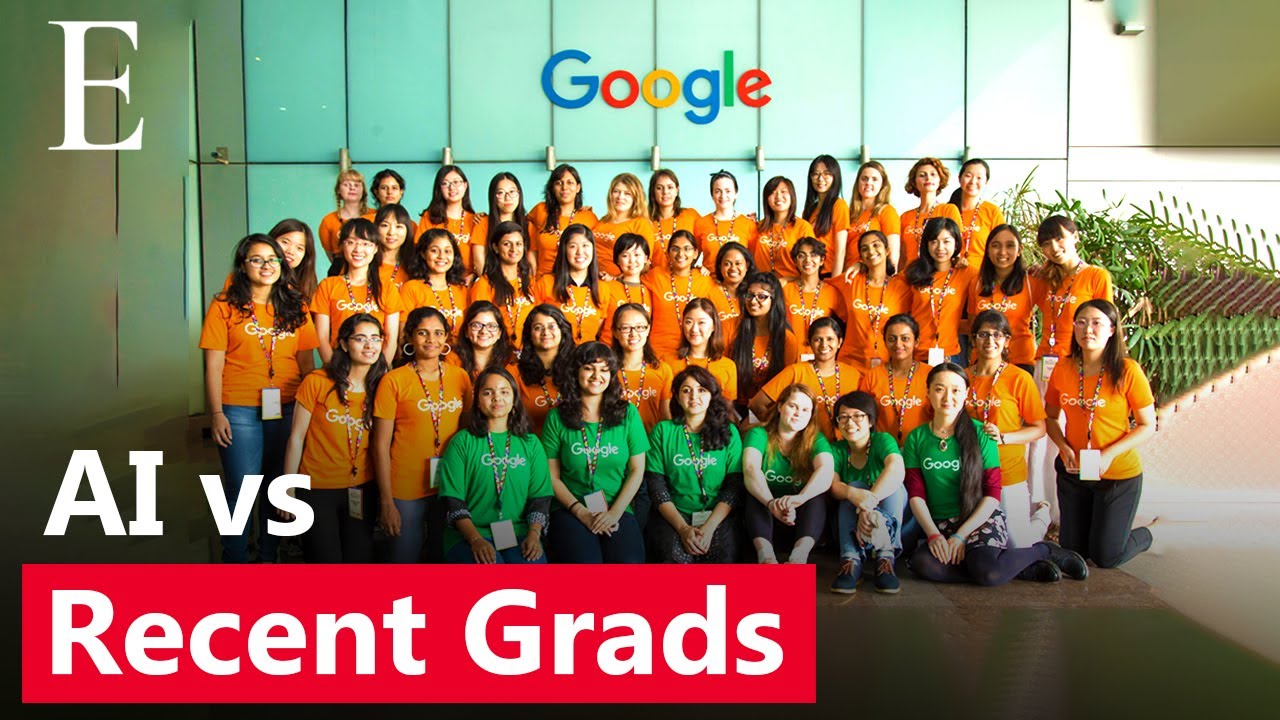
The college class of 2025 is facing one of the toughest job markets in recent years, with unemployment among recent graduates reaching 5.8%, significantly higher than the national average. This challenging landscape is driven not only by broader macroeconomic issues such as political uncertainty and inflation but also by the rapid rise of artificial intelligence (AI). AI is transforming industries across the board, particularly impacting entry-level jobs that have traditionally served as the first step on the career ladder for new graduates.
AI technologies are increasingly automating tasks that were once assigned to junior employees, reducing the demand for entry-level positions. In law firms, AI systems can analyze contracts and identify risks much faster than junior lawyers, while in the tech sector, AI-powered code generation tools allow smaller teams to accomplish what previously required multiple junior programmers. Customer service roles are also being affected, with AI chatbots handling routine queries, leading to fewer openings for inexperienced workers. This automation is reshaping the job market, making it harder for new graduates to find their footing.
The erosion of entry-level jobs has significant long-term consequences. According to research from MIT, graduates who fail to secure a formal job within a year of finishing college can lose up to 20% of their lifetime earnings. The lack of early work experience, mentorship, and skill development opportunities hampers career growth and economic mobility. Moreover, young workers who do not enter their field promptly are more likely to become underemployed, often taking jobs unrelated to their degrees just to make ends meet.
In response to these challenges, some organizations are adapting by assigning new graduates more complex and strategic responsibilities, leveraging AI to handle routine tasks. For example, firms like KPMG and McFarland Law Firm are providing opportunities for young professionals to engage in higher-level work earlier in their careers. Employers increasingly value familiarity with AI tools, with 82% considering it a key hiring factor in 2024. This shift signals a move away from traditional linear career paths toward more dynamic and adaptable professional trajectories.
Overall, the labor market for the class of 2025 is undergoing a profound transformation driven by AI and economic pressures. Entry-level jobs, once a reliable gateway to career advancement, are diminishing, forcing new graduates to navigate a more complex and competitive environment. Success in this evolving landscape will require adaptability, continuous learning, and proficiency with AI technologies, as the nature of work and required skills continue to change rapidly.