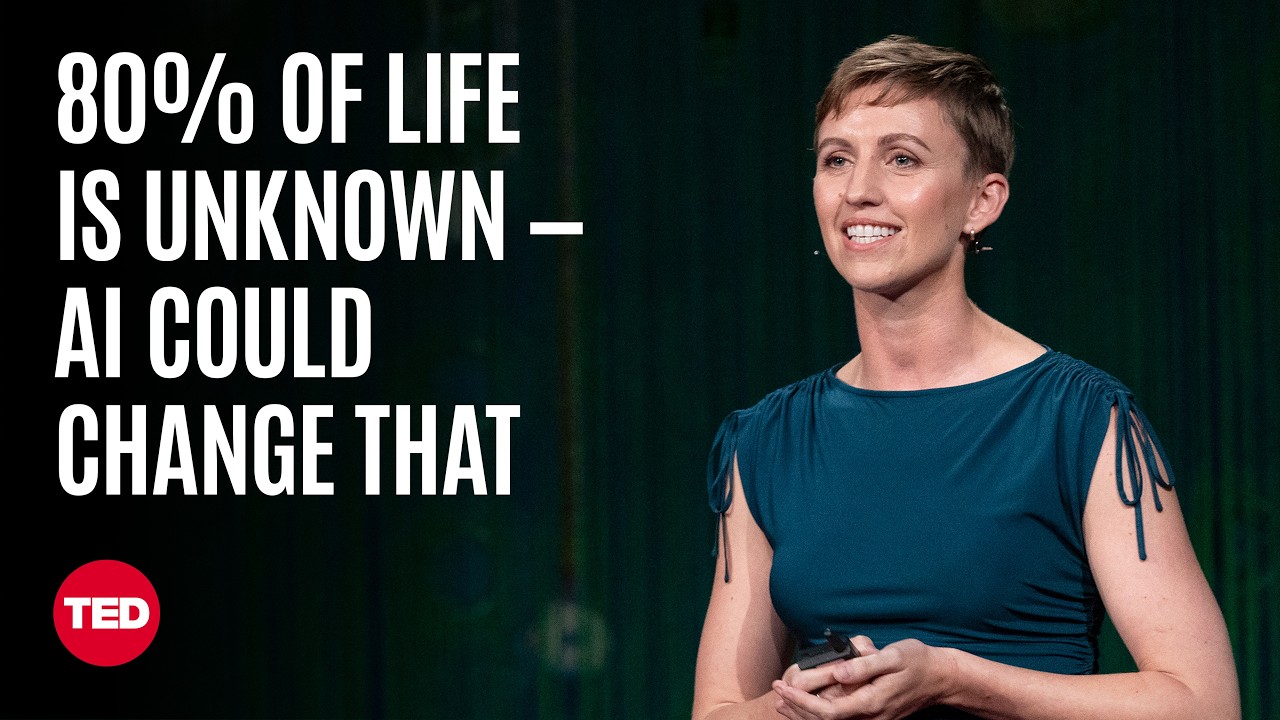
Sara Beery, an AI researcher and ecologist at MIT, opens her talk by highlighting the urgent need to protect ecosystems under threat, comparing our limited understanding of nature to a doctor trying to treat a patient while only seeing a fifth of their body. She explains that while scientists estimate there are about 10 million species on Earth, only two million have been observed, leaving 80 percent of biodiversity unknown. This lack of knowledge makes it difficult to understand how species interact, what puts them at risk, and how to effectively protect them, especially as extinction rates are now 100 to 1,000 times higher than historical averages.
Beery emphasizes that traditional data collection methods are too slow to keep up with the current biodiversity crisis. However, she points out that we already possess vast ecological databases, such as iNaturalist, which contains 300 million images uploaded by volunteers. Each image is labeled with species information, but the true wealth of knowledge—such as individual animal identification, social interactions, and environmental context—remains hidden within the images’ pixels. Similar untapped data exists in other platforms, including bioacoustic recordings and camera-trap images.
The challenge, Beery explains, is efficiently accessing and analyzing this enormous volume of data. Manually reviewing every image would take decades, but AI can help process and extract valuable information quickly. Traditionally, training AI models for ecological research requires collecting hundreds or thousands of labeled examples for each new question, which is still too slow and labor-intensive. Beery’s team at MIT has developed a system called Inquire, which allows scientists to search massive databases using natural language queries without needing to train new models or write code.
Inquire works by matching scientific questions—broken down into search terms—to relevant images in seconds, enabling interactive and efficient exploration of data. This approach has already allowed researchers to answer complex ecological questions, such as analyzing bird diets across seasons, in a fraction of the time previously required. The system’s flexibility means it can be adapted to various types of ecological data, including audio, video, satellite imagery, and GPS tracking, opening up new possibilities for discovering hidden patterns and connections in nature.
Beery concludes by stressing that while AI alone cannot solve the biodiversity crisis, it can maximize the value of existing data and help identify knowledge gaps for future research. She calls on everyone to contribute by collecting and sharing observations through platforms like iNaturalist, emphasizing that every photo, sound, and observation is a vital piece of the puzzle. With the combined efforts of citizen scientists and advanced AI tools, she envisions a future where we can build a complete picture of life on Earth and take more effective action to conserve it.