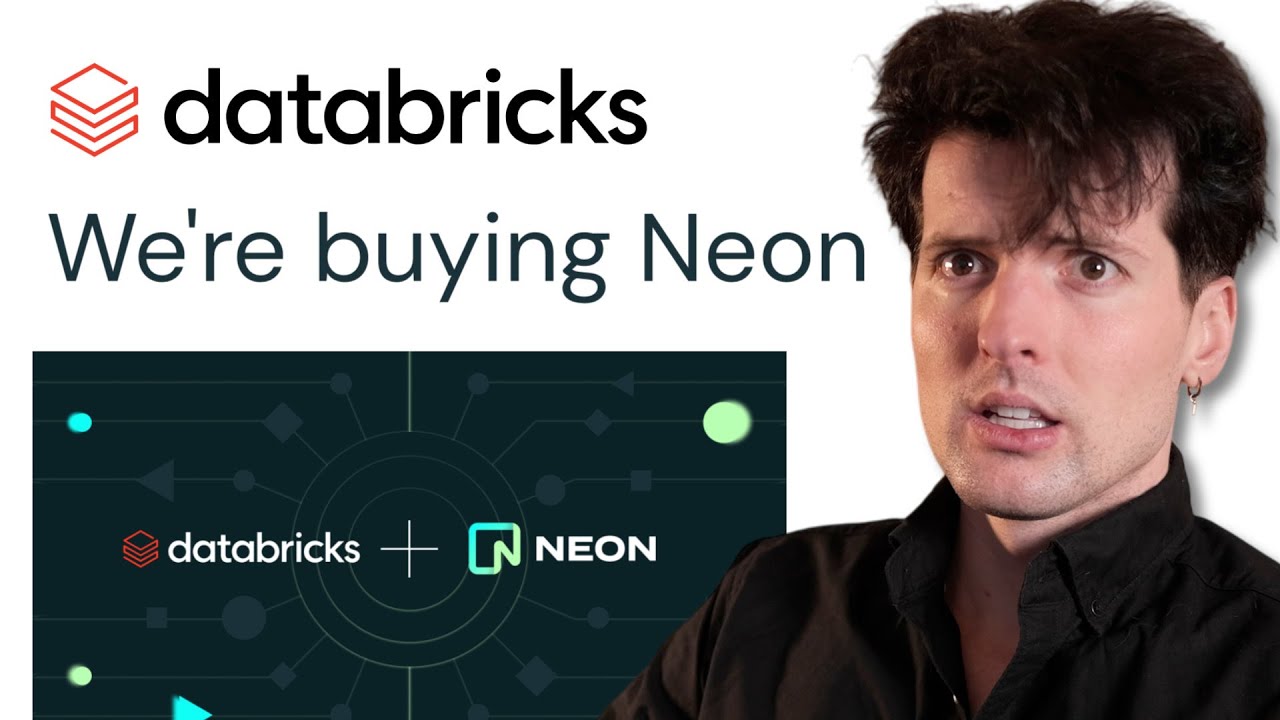
The video discusses the recent consolidation and decline of independent database startups, highlighting how the surge of new database companies over the past decade is now slowing down or ending. Companies like Planet Scale, Terso, Neon, and Convex once offered innovative solutions that challenged traditional databases, but recent developments such as Planet Scale removing its free tier, Fauna shutting down, and Neon being acquired by Data Bricks indicate a shift. The speaker emphasizes that the landscape is changing, and the era of numerous small, innovative database startups may be coming to an end, partly due to the challenges of profitability and the evolving needs of developers and enterprises.
Neon, a notable player in serverless PostgreSQL, aimed to improve upon traditional Postgres by rewriting it in Rust, focusing on features like fast scaling, branching, and preview environments that cater to modern development workflows. Neon targeted small to medium-sized companies and individual developers, offering affordable, easy-to-use databases that integrated well with modern workflows. Despite its innovative approach, Neon faced significant challenges, including high operational costs, overhiring, and difficulty in scaling profitably. Its rapid growth and large employee base contrasted sharply with its limited revenue, raising questions about its long-term sustainability.
The speaker explains that Neon’s financial situation was unsustainable, with massive costs due to overhiring and a business model that relied heavily on a free tier and AI-driven growth. Neon had raised over $129 million but struggled to generate enough revenue, especially as many users created databases for free or small projects that didn’t pay. The company’s costs were soaring, and its valuation appeared inflated relative to its revenue, making further fundraising difficult. Ultimately, Neon’s financial pressures and inability to scale profitably led to its acquisition by Data Bricks, a move that provides Neon with stability while allowing Data Bricks to tap into the growing market of small, AI-driven development teams.
The acquisition of Neon by Data Bricks is portrayed as a strategic move for both companies. Data Bricks, traditionally focused on enterprise analytics, is seeking to enter the smaller, AI-focused developer space, which Neon was well-positioned to serve. Neon’s architecture and features, such as fast spin-up times and branching, align with the needs of AI agents and small teams experimenting with new ideas. For Neon, the acquisition offers a lifeline to avoid collapse, while Data Bricks gains a foothold in the emerging market of small-scale, AI-driven database usage, which is becoming increasingly valuable as big companies adopt more decentralized and rapid development practices.
In conclusion, the video suggests that the recent trends point to a shrinking of the independent database startup scene, with many companies either shutting down or being acquired. The rise of AI and modern development workflows has made certain features like rapid provisioning and branching more critical, favoring platforms that can deliver these capabilities efficiently. The industry appears to be consolidating around a few large players, and the innovative era of diverse database startups may be over, replaced by a focus on profitability and integration into larger enterprise ecosystems. The speaker invites viewers to reflect on whether this signals a fundamental industry shift or if new opportunities might still emerge.