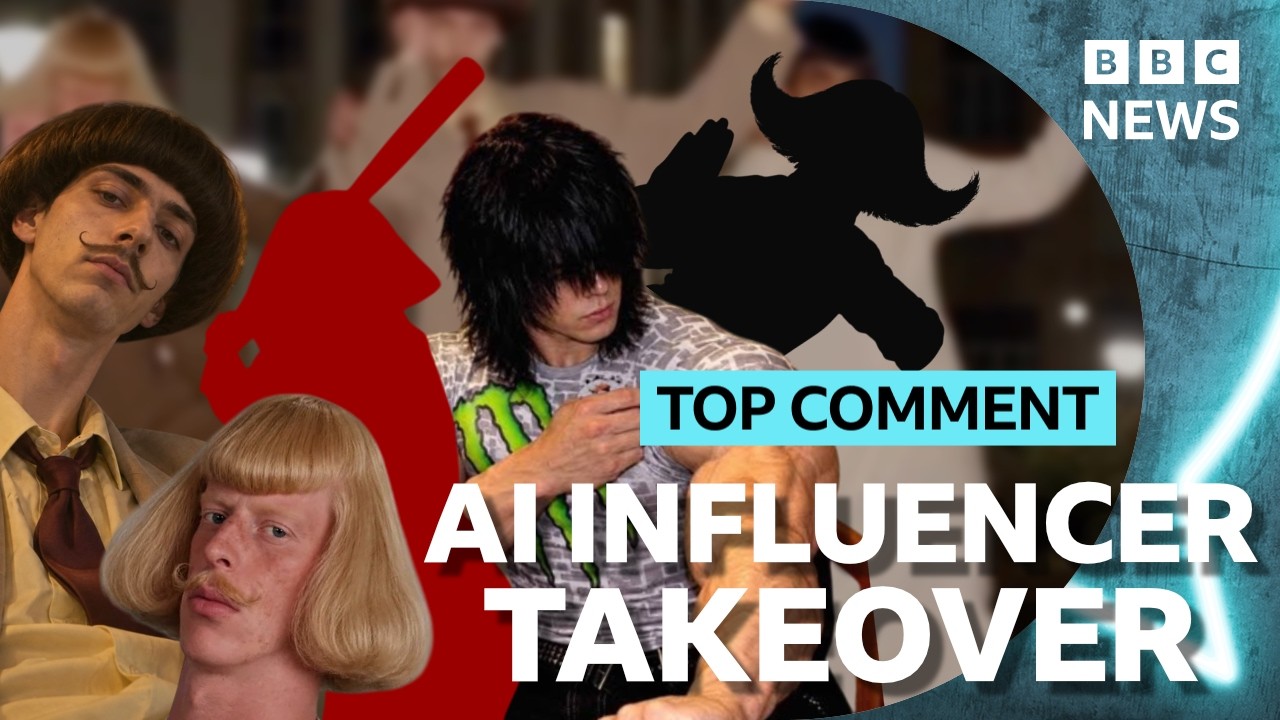
The video discusses the rise of AI-generated influencers on social media platforms like Instagram and TikTok, highlighting how these AI personas are increasingly “reskinning” real human videos. This process involves advanced motion tracking technology that overlays AI-generated faces and bodies onto existing human-created content, making it appear as though the AI influencer was originally in the video. One notable example is Jean Phil, an AI character with a distinctive triangular blonde haircut and suit, who has amassed millions of views. This trend has led to a proliferation of bizarre and often absurd AI influencer characters, which are rapidly gaining popularity and overshadowing the original human creators.
These AI influencers are not just digital novelties; they have become entities in their own right, with multiple versions and copies appearing across social media. Unlike earlier AI influencers who were often idealized and glamorous, these new AI characters are intentionally strange and eye-catching to capture attention in an increasingly saturated digital environment. The technology behind this, such as the Higsfield Genjutsu platform, has made it easier for anyone to create and distribute AI influencers, often repurposing human content without permission or credit. This has led to concerns about the devaluation of human creativity and the difficulty creators face in protecting their intellectual property.
The video also explores the economic motivations behind AI influencers, noting that many are linked to cryptocurrency schemes or platforms like AI-only fans, where AI personas are used to drive traffic and generate revenue. The creation and promotion of meme coins associated with AI influencers exemplify how these digital characters can be monetized. This commercialization raises ethical questions about authenticity and exploitation, as well as the broader impact on social media ecosystems where human creators struggle to compete with mass-produced AI content.
A significant issue raised is the challenge of accountability and copyright enforcement. Since AI influencers are not real people, they cannot be held responsible for content theft or misrepresentation. Social media platforms currently struggle to regulate this content effectively, often deprioritizing AI-generated posts that do not clearly label themselves as such. Meanwhile, individual creators have limited legal recourse against AI-generated reskins of their work, unlike large corporations that can pursue lawsuits over intellectual property violations. This imbalance threatens to marginalize human creators and reshape the nature of online content.
Finally, the video reflects on the cultural and emotional implications of AI-generated content. While AI can mimic human creativity, it lacks genuine experience, desire, and emotional motivation, which are central to authentic art and storytelling. As AI influencers become more prevalent, there may be a growing premium placed on genuine human authenticity in digital media. The evolving landscape suggests a future where distinguishing between real and AI-generated content becomes increasingly difficult, challenging our perceptions of creativity, originality, and trust in online spaces.
Useful Links