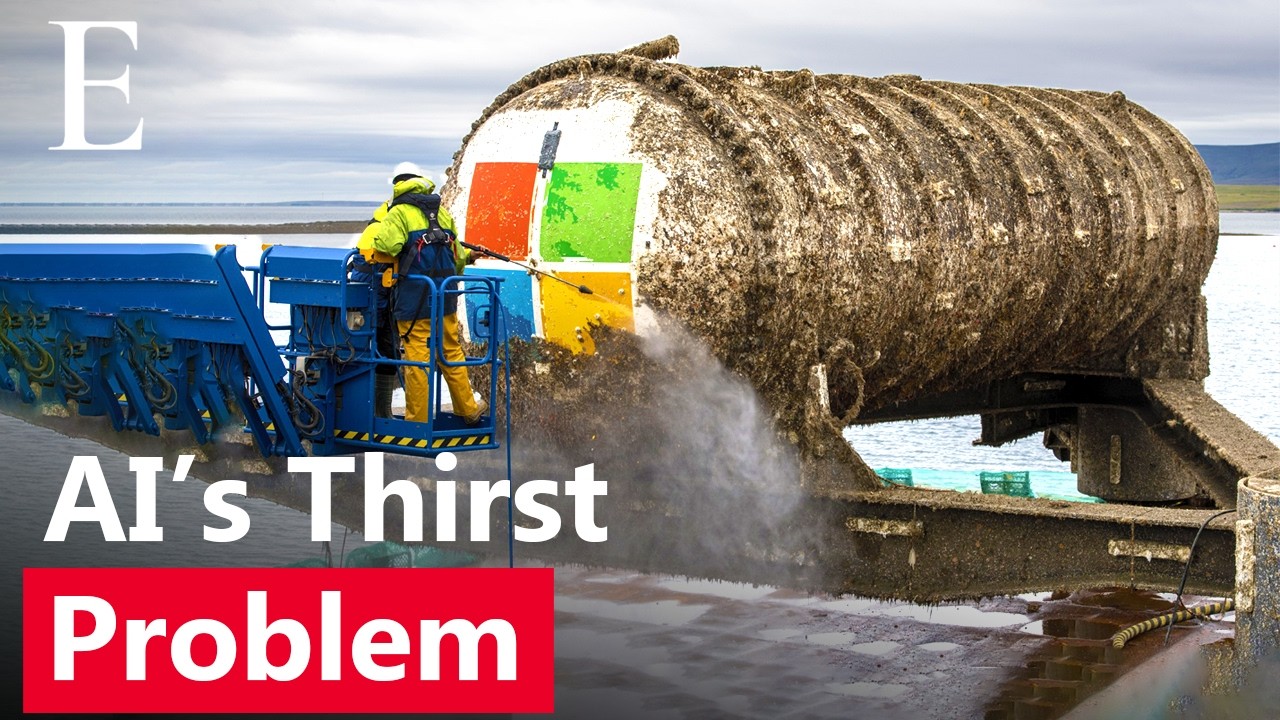
The video explores the significant and often overlooked water consumption associated with artificial intelligence (AI) and the data centers that power it. Data centers, which are essential for running AI models, require vast amounts of electricity and water to keep their servers cool. A single data center can use up to 4 million gallons of clean water per day, and each AI query indirectly consumes water through the cooling process. As AI usage grows, billions of queries daily translate into substantial water use, with much of it lost to evaporation and not returned to local water systems.
The increasing demand for AI is driving a surge in both electricity and water consumption. Data centers currently account for about 4% of US electricity demand, a figure expected to triple in the next three years. As AI models become more complex and energy-dense, traditional air cooling is being replaced by liquid cooling systems that require even more clean, potable water. This water must meet high purity standards to prevent corrosion and bacterial growth, further straining local water supplies, especially in regions already facing scarcity.
Beyond direct water use in data centers, the video highlights the indirect water footprint from electricity generation. Many power plants, especially those using coal, gas, or nuclear energy, consume large amounts of water to produce and cool steam for electricity. As AI data centers demand more power, the water required for electricity generation also rises, compounding the overall impact. Additionally, the manufacturing of semiconductors—the chips that enable AI—relies heavily on ultra-pure water, with some facilities using over 10 million liters per day for cleaning and processing silicon wafers.
This extensive water use has sparked social tensions, particularly in water-stressed regions where data centers compete with agriculture and domestic needs. In some cases, such as during the construction of Amazon data centers, groundwater extraction has affected local drinking water supplies, leading to protests and debates about the sustainability of allocating so much water to digital infrastructure. The video notes that some tech companies are responding by pledging water neutrality, investing in restoration projects, and adopting more efficient cooling technologies, but these efforts currently cover only a small portion of global operations.
Ultimately, the video argues that the relationship between AI and water is structural, not incidental. As the digital sector’s share of global electricity and water consumption grows, the sustainability of AI will depend on how these resources are managed. With over 2 billion people already facing water scarcity, the expansion of AI infrastructure raises urgent questions about balancing technological progress with environmental and social responsibility. The video concludes by emphasizing the need for innovation in both AI efficiency and water management to ensure a sustainable future.