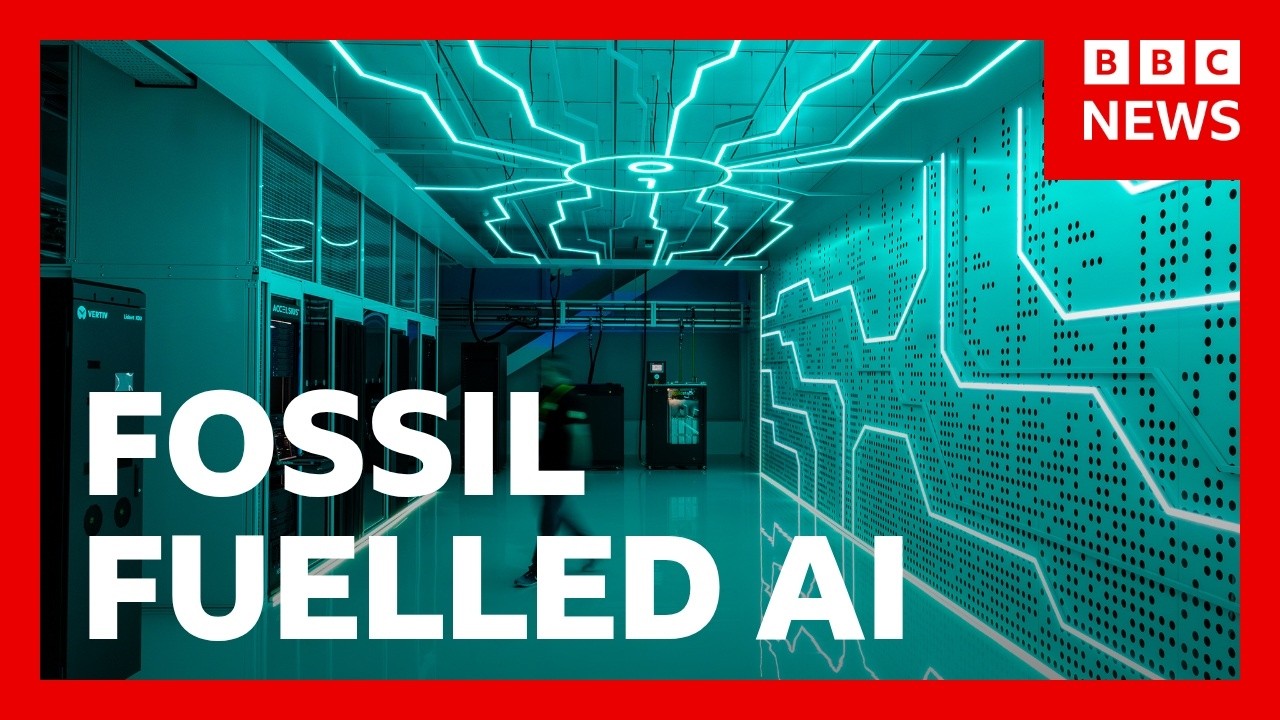
The BBC investigation reveals the conflict between the UK’s goal to become an AI leader and its 2050 net zero emissions target, focusing on the environmental impact of expanding energy- and water-intensive data centers needed for AI development. While these centers promise economic growth and technological advances, their high energy demands risk increased carbon emissions and water scarcity, challenging the government’s climate commitments amid calls for stricter regulations and a shift to renewable energy.
The BBC investigation explores the tension between the UK’s ambition to become an AI superpower and its legally binding 2050 net zero greenhouse gas emissions target. Central to this issue are data centers—large warehouses filled with servers that process vast amounts of online activity. The government plans to expand these facilities significantly to support AI development, which promises economic growth and technological advancements such as improved healthcare and job transformation. However, these new hyperscale data centers require enormous amounts of energy and water, raising environmental concerns.
Data centers generate substantial heat and thus need extensive cooling systems, often relying on large volumes of water. This demand exacerbates existing water scarcity issues in parts of the UK, where water shortages have already delayed housing developments. Campaigners worry that the increased water consumption by data centers, especially in drought-prone areas, could strain local resources further. While companies like Microsoft have pledged to use rainwater harvesting and limit water use during cooler temperatures, the overall impact on water supplies remains a significant concern.
Energy consumption is an even more pressing challenge. The UK’s electricity grid is already struggling to meet current demand, with peak usage around 45 gigawatts (GW). Yet, data center developers are seeking connections totaling 72 GW, far exceeding the grid’s capacity. This mismatch means some data centers face waiting times of up to ten years for grid access. To avoid delays, several proposed data centers plan to use on-site gas-fired power generation, which would increase carbon emissions substantially—potentially surpassing the annual emissions of major UK cities combined.
This reliance on natural gas conflicts directly with the UK’s net zero goals, creating a difficult balancing act for the government. While environmental campaigners call for a moratorium on new data centers until renewable energy solutions are fully implemented, the government emphasizes the economic benefits of AI development. The recent British data center covenant aims to address these issues by requiring developers to commit to local communities, minimize water use, and allow temporary on-site power generation while awaiting grid connections. However, this approach has drawn criticism for potentially undermining climate commitments.
Despite these challenges, there is some optimism as parts of the industry are already moving toward renewable energy, with some existing data centers powered almost entirely by renewables. Certain new sites are strategically located near wind farms to harness clean energy. Nonetheless, the debate over the environmental impact of AI data centers is ongoing, reflecting the broader struggle to balance technological progress, economic growth, and climate responsibility in the UK. The investigation highlights that this issue will remain a significant topic in the coming months as AI infrastructure expands.
Useful Links