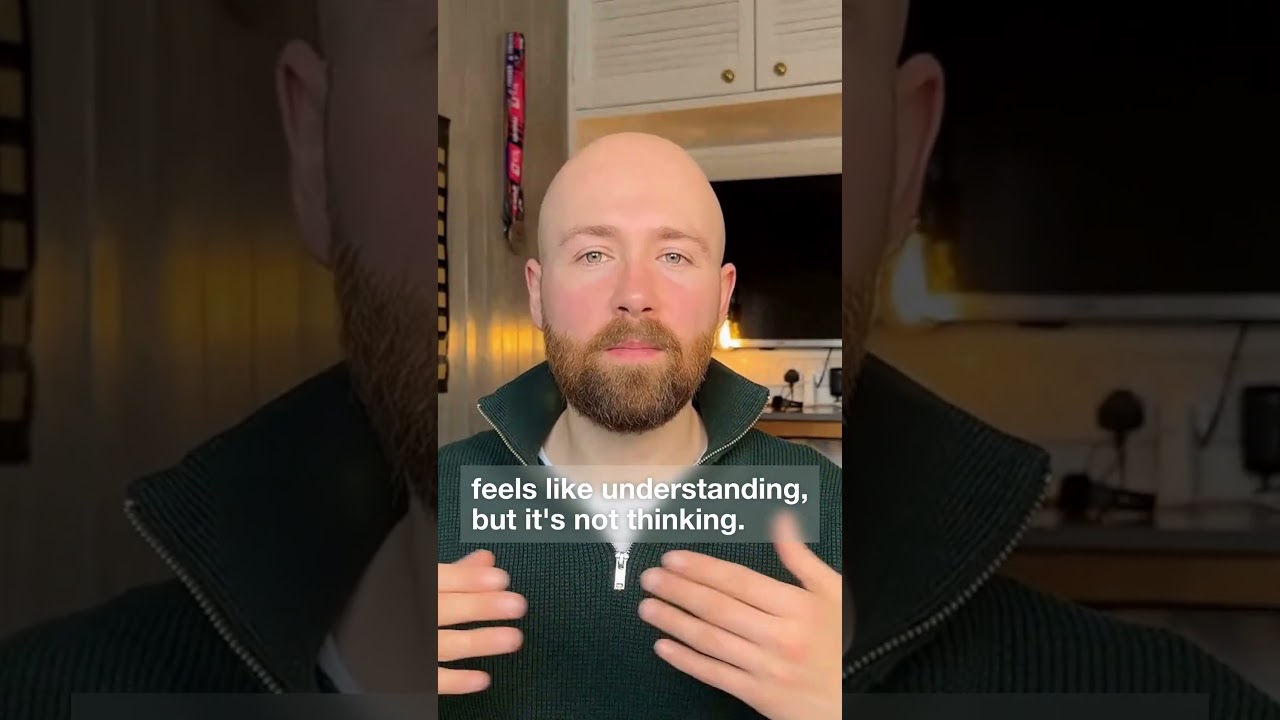
The video explains that AI language models like ChatGPT do not truly understand language but instead predict the next word in a sequence based on learned patterns from vast text data. While they can generate coherent and contextually relevant responses, their outputs are the result of statistical guessing rather than conscious thought or genuine comprehension.
The video discusses the fundamental nature of how artificial intelligence (AI), particularly language models like ChatGPT, processes and generates language. It emphasizes that AI does not truly understand language in the same way humans do. Instead, it operates by predicting the next word in a sequence based on patterns it has learned from vast amounts of text data.
When a user inputs a prompt, the AI analyzes the words and identifies statistical relationships between them. It draws from billions of examples to make educated guesses about what words or phrases are likely to follow. This process occurs one token at a time, highlighting the AI’s reliance on pattern recognition rather than comprehension or intention.
The video illustrates the AI’s ability to mimic various styles of writing, such as that of Shakespeare, or to explain complex topics like coding. This capability stems from the AI’s extensive training on diverse text sources, allowing it to remix information in real time. However, this does not equate to genuine understanding; the AI is simply leveraging its training to produce coherent and contextually relevant responses.
One of the key points made is that while the AI’s outputs can often seem intelligent or insightful, they are fundamentally the result of statistical guessing rather than conscious thought. The AI lacks awareness and does not possess the cognitive abilities that characterize human understanding.
In conclusion, the video reminds viewers that while AI can generate impressive answers, it is important to recognize its limitations. It is not “smart” in the human sense; rather, it is an advanced tool that excels at predicting language patterns based on its training. Understanding this distinction can help users better appreciate the capabilities and boundaries of AI language models.