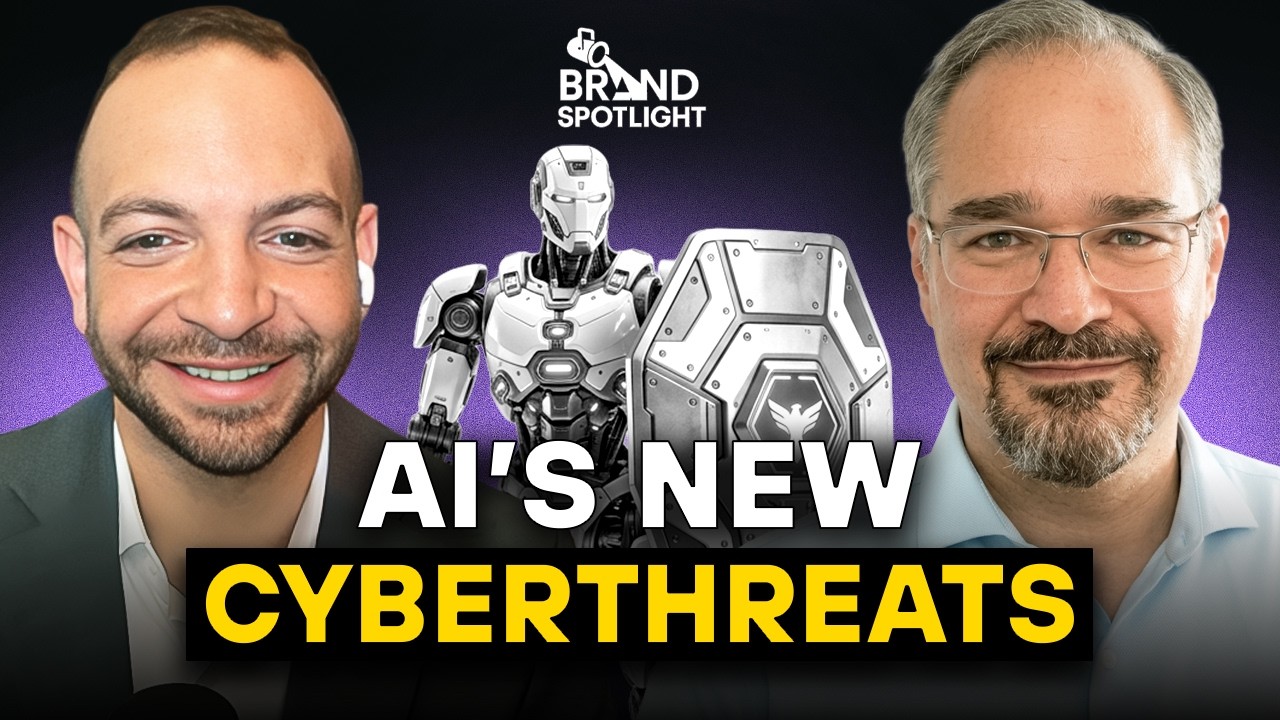
The video features a conversation with Snehal Antani, CEO and co-founder of Horizon 3, discussing the impact of the latest AI models like Anthropics Fable and OpenAI’s GPT 5.6 on cybersecurity. While there is significant hype and fear around these models enabling unprecedented cyberattacks, Antani clarifies that attackers did not need these advanced models to hack systems before, and these AI models often struggle in real-world, actively defended network environments. He highlights that many of the alarming claims are more marketing-driven than reflective of actual capabilities, emphasizing skepticism within the cybersecurity community.
A key insight from recent research shared by Antani is the effectiveness of deception techniques in cybersecurity defense. Decoys or “honey tokens”—fake credentials or data files placed strategically within networks—are highly successful in trapping AI-driven attackers. Surprisingly, these AI models often recognize these traps but still interact with them at a very high rate, triggering alerts for defenders. This fundamental flaw in AI attackers provides a powerful defensive tool, suggesting that traditional cybersecurity tactics like deception, micro-segmentation, and zero-trust architectures remain crucial in mitigating AI-driven threats.
Antani also discusses the evolving threat landscape where AI accelerates attackers’ capabilities, particularly in reverse engineering software patches to discover vulnerabilities faster than defenders can patch them. This speed advantage creates a critical window of exploitation, underscoring the importance of rapid patching, virtual patching, and robust containment strategies. However, he tempers fears of AI-driven cyber doomsday scenarios, explaining that while AI enhances attackers’ efficiency, it does not yet enable fully autonomous, unstoppable cyberattacks in complex, dynamic environments.
The conversation further explores the risks introduced by AI-generated code and AI agents, which can increase attack surfaces due to poor coding practices and excessive permissions. Antani likens AI agents to insider threats—entities with broad access that can be manipulated or corrupted through prompt injection attacks. He highlights prompt injection as both a significant risk and a potential defensive opportunity, where defenders can use crafted inputs to mislead or expose malicious AI agents. The integrity and security of AI models themselves, especially those from different geopolitical sources, remain an area of concern due to potential hidden triggers or corrupted training data.
Finally, Antani reflects on the current state of cybersecurity as a human versus human battle augmented by AI tools, with full AI versus AI conflict still emerging. Horizon 3’s approach involves building proprietary AI hacker models trained on extensive real-world data, enabling them to simulate advanced attacks and improve defenses. Their technology can compromise top-tier organizations rapidly, demonstrating both the power and limitations of AI in cyber offense and defense. Antani expresses cautious optimism that mastering fundamental cybersecurity practices—detection, containment, eradication, and training—can effectively counter AI-driven threats, paving the way for AI-assisted defense where humans remain essential.