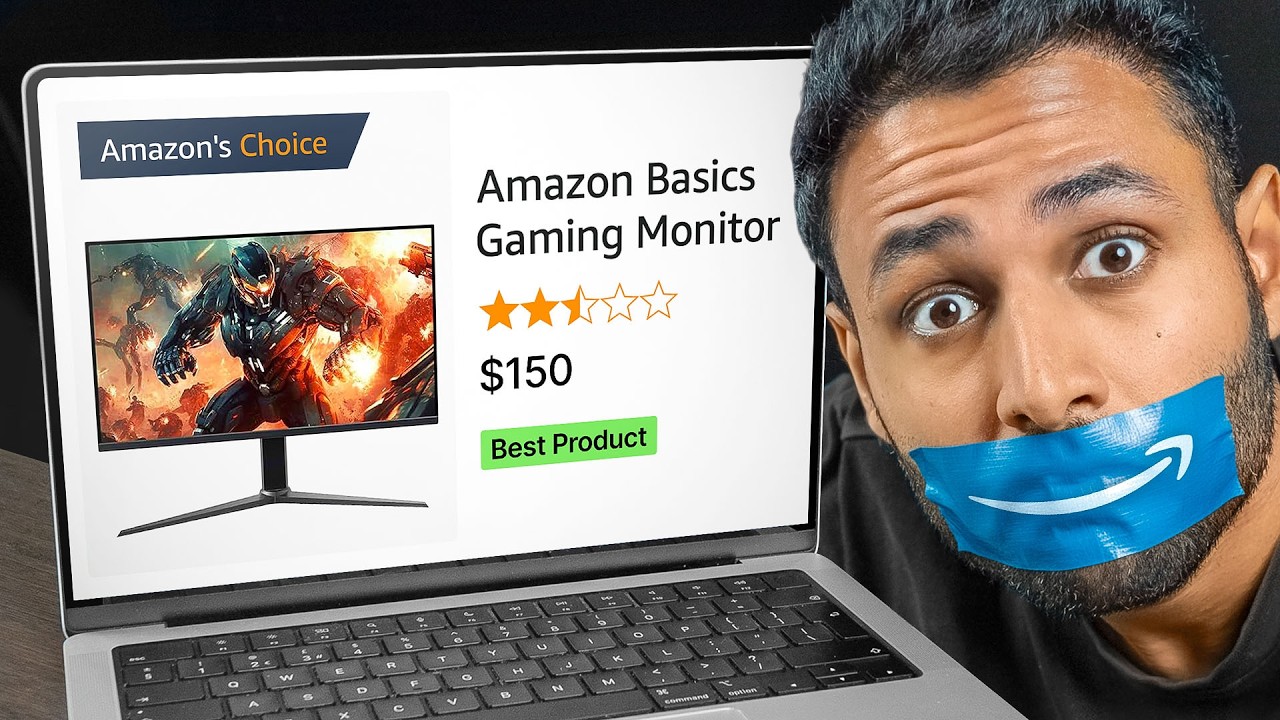
The video explores how Amazon leverages its own private label brands, like Amazon Basics, to dominate product search results on its platform, often placing its products above better-reviewed and sometimes cheaper alternatives from third-party sellers. For example, when searching for desktop microphones or gaming monitors, Amazon’s own products appear first, despite competitors offering superior features, more reviews, and lower prices. The creator tested these products firsthand and found Amazon’s versions to be decent but rarely the best value or quality option available.
Amazon’s strategy is deeply data-driven. The company uses its vast trove of sales and customer data to identify trending product categories with low brand loyalty and quickly launches its own versions. This practice has been controversial, with accusations that Amazon copies successful products from other brands, sometimes even mimicking names and designs, as seen in the case of Peak Design’s sling bag. Amazon then uses its control over the platform’s search algorithm to ensure its products are prominently featured, often ahead of better or cheaper alternatives from other brands.
The video highlights how Amazon’s dual role as both marketplace operator and competitor creates an uneven playing field. Third-party sellers face fees averaging around 15% per sale and must invest heavily in sponsored ads to gain visibility. Amazon, on the other hand, does not pay these fees on its own products and can afford to price aggressively or even sell at minimal profit. This dynamic pressures sellers to either accept low margins or spend more on advertising, both of which ultimately benefit Amazon financially.
Amazon’s private label products are not necessarily poor quality, but they are typically basic, low-cost commodities designed to capture market share rather than maximize profit. The real financial gain for Amazon comes from driving more traffic to its platform, increasing Prime subscriptions, and encouraging customers to engage with its broader ecosystem of services like Prime Video, Music, and Fresh grocery delivery. By controlling product placement and leveraging its marketplace fees and advertising revenue, Amazon effectively monetizes both sides of the transaction.
In conclusion, Amazon’s approach to its private label brands is a sophisticated strategy that uses data insights, platform control, and pricing power to dominate product categories and squeeze third-party sellers. While consumers benefit from reliable logistics and decent products, they often miss out on better deals unless they look beyond the top search results. The video encourages shoppers to be aware of this dynamic and to explore further down the listings to find potentially superior or more cost-effective options.