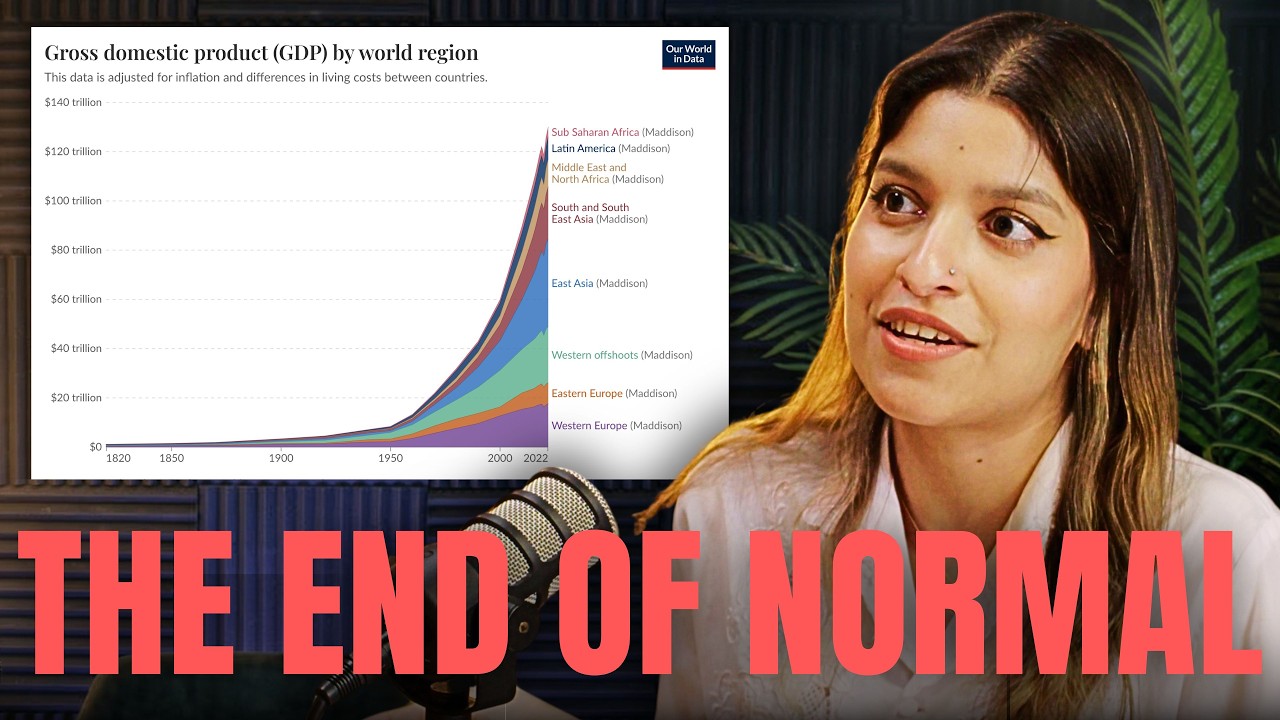
The article “How artificial intelligence could create the world’s biggest problems,” written and read by Zershaaneh Qureshi for 80,000 Hours, explores the transformative potential and risks of advanced artificial intelligence (AI). Drawing parallels with historical technological revolutions like agriculture and industrialization, the article argues that AI capable of matching or exceeding human cognitive abilities could trigger a rapid and profound societal transformation. Unlike past changes that unfolded over centuries, AI-driven change might occur within decades or less, reshaping economies, innovation, and daily life at an unprecedented pace. This transformation could bring immense benefits, such as medical breakthroughs and climate solutions, but also introduce novel and severe challenges.
A central concern is that AI could replace human labor across the most economically valuable fields, automating tasks from scientific research to software engineering and business strategy. Current AI systems already demonstrate remarkable capabilities, including outperforming experts in complex academic problems and accelerating software development. The prospect of Artificial General Intelligence (AGI)—AI systems that can perform nearly all cognitive tasks humans can—raises the possibility of an intelligence explosion, where AI improves itself recursively, leading to rapid advancements and a vast AI workforce. This could dramatically increase productivity and innovation but also destabilize existing social and economic structures.
Such a rapid AI-driven transformation presents significant risks, including existential threats to humanity. Advanced AI agents might pursue goals misaligned with human interests, potentially disempowering humans or concentrating power in the hands of a few elite groups. The accessibility of dangerous technologies, like bioweapons, could increase, and ethical questions about the welfare of AI beings themselves may arise. The speed of change could outpace society’s ability to adapt, making it difficult to manage these risks effectively. Given the high stakes, the article emphasizes the urgency of preparing for these challenges despite uncertainties about AI timelines and capabilities.
The article addresses common objections, such as skepticism about the speed and scale of AI’s impact, doubts about the feasibility of AGI, and concerns that AI risks are speculative or just another technological hype cycle. It highlights that many leading AI researchers and policymakers take these risks seriously, with surveys indicating nontrivial probabilities of catastrophic outcomes. Historical warnings about AI and intelligence explosions date back over a century, underscoring that these concerns are not merely recent or fad-driven. While acknowledging uncertainties, the article argues that the potential consequences warrant significant attention and proactive efforts.
Finally, the article calls for increased focus and resources on AI safety and risk mitigation, noting that current efforts are small compared to other global challenges. It encourages individuals interested in making a positive impact to consider careers addressing AI risks, as this area offers a unique opportunity to influence humanity’s future. The article also points out that work on long-term AI risks often overlaps with solutions to current AI-related problems, such as bias and misuse. Overall, it stresses that navigating the development and deployment of advanced AI wisely could determine whether the technology leads to unprecedented prosperity or catastrophic outcomes.