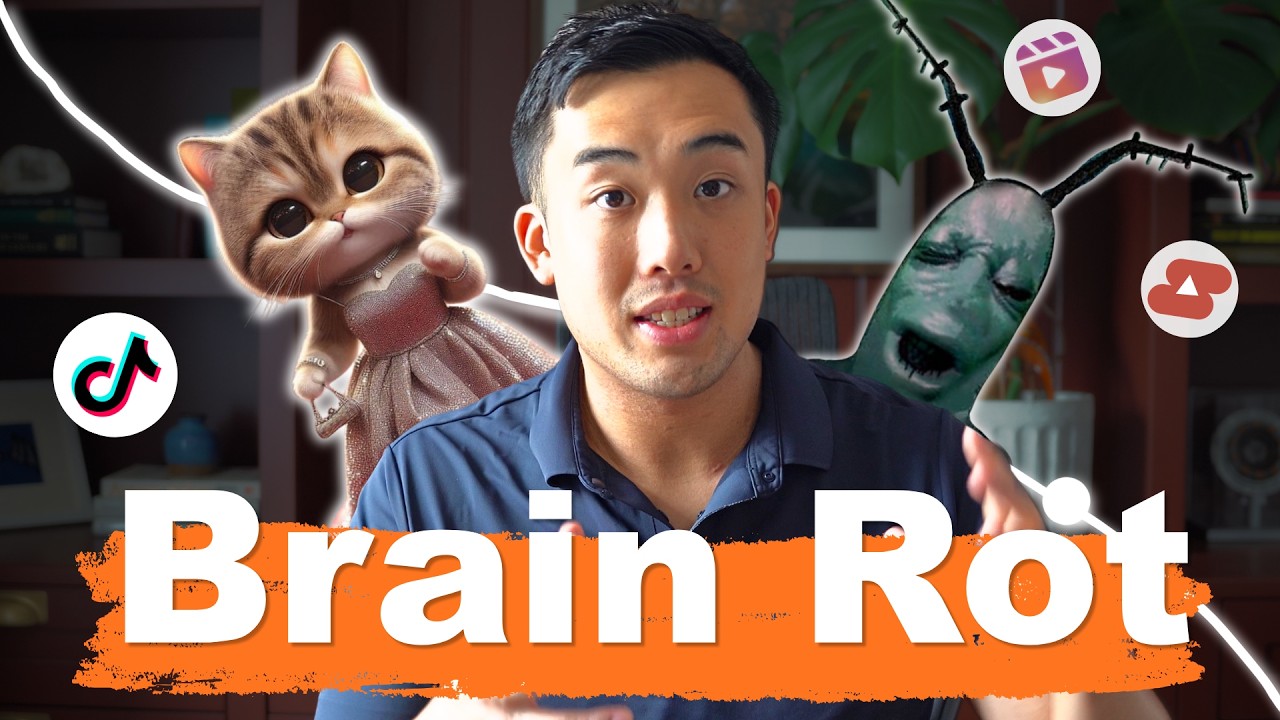
The video explores the concept of “brain rot,” a term used to describe the addictive and attention-hacking nature of low-quality, short-form social media content like TikTok reels and YouTube shorts. Pete Judo, an applied behavioral scientist, explains that this addiction is rooted in habit formation, which involves a context, an action, and a reward. Habits form when these three elements are repeatedly experienced together, leading to automatic behaviors. For example, walking into a kitchen (context) and opening the fridge (action) is reinforced by the reward of food, making it a habit. Similarly, social media habits are triggered not by physical contexts but by emotional states, particularly boredom, which prompts users to reach for their phones and scroll.
Pete highlights that social media habits are especially powerful because boredom can occur anywhere, making the phone a constant and easily accessible tool for relief. The reward system on social media operates on uncertain variable rewards, similar to gambling, where users swipe through content without knowing what the next video will bring. This unpredictability releases dopamine, reinforcing the habit. Brain rot content, which is mildly interesting but low effort, thrives in this environment because it is mixed with higher-quality videos, maintaining the uncertainty and reinforcing the habit through frequent, rapid consumption.
To combat the negative effects of doom scrolling, Pete suggests habit substitution, where the same emotional context is maintained but the action is replaced with a healthier alternative. He shares his personal experience with needlepoint, a tactile and relaxing hobby that occupies the hands and mind, preventing phone use while providing a sense of calm and productivity. This approach helps break the cycle of brain rot by offering a rewarding and engaging substitute that satisfies the same emotional need without the downsides of social media addiction.
Regarding the scientific evidence on whether brain rot actually harms cognitive functions like attention span and impulse control, Pete notes that current research is limited and mostly correlational. One significant study found associations between short-form video use and negative outcomes such as lower attention spans and higher anxiety, but it did not establish causation. More rigorous experimental studies, such as randomized control trials, are needed to determine if brain rot content directly causes these issues or if people with these traits are simply more drawn to such content.
In conclusion, Pete emphasizes the importance of further research on brain rot, especially given the increasing prevalence of AI-driven algorithms that flood users with this type of content. He acknowledges the concerns of many young people who feel their focus and productivity are compromised by endless scrolling. Pete expresses his commitment to creating more content on this topic and encourages viewers to subscribe for future videos exploring the psychology of brain rot, doom scrolling, and the impact of AI on our behaviors and habits.