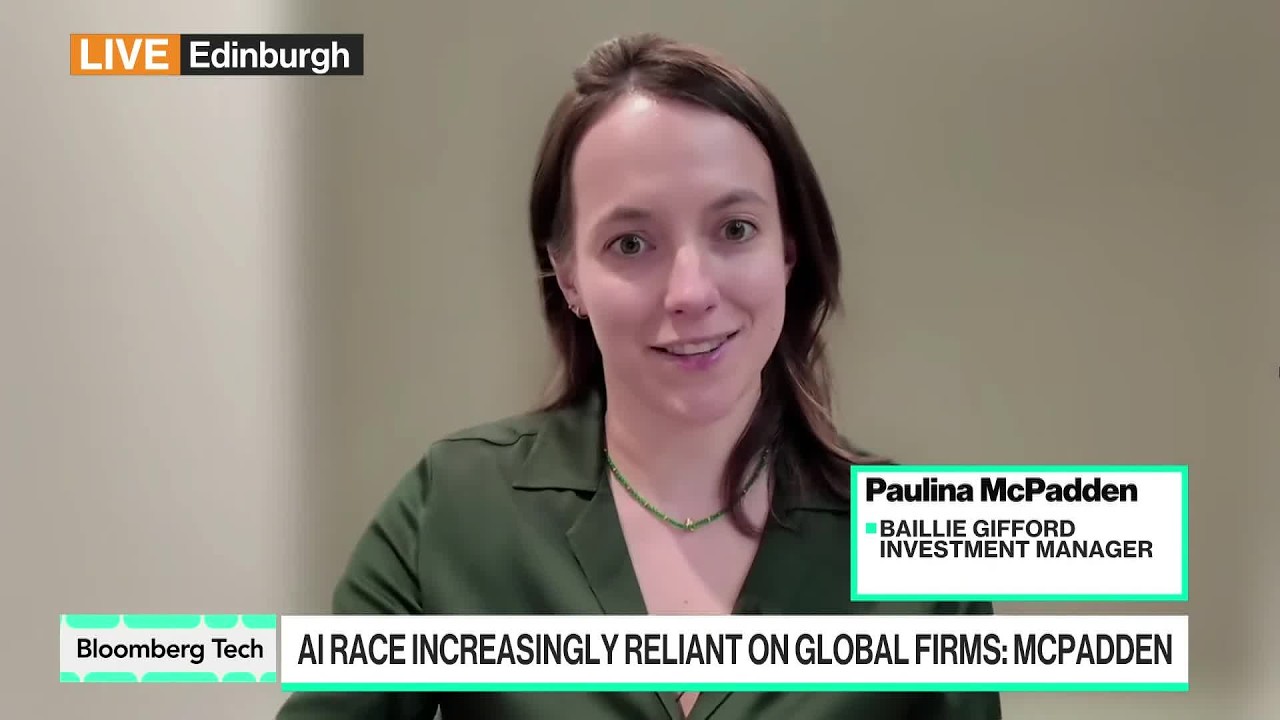
The discussion emphasizes that winning the AI race requires long-term capital investment in fundamentally strong companies with innovative business models, rather than focusing solely on technological advancements or short-term market trends. Case studies like TSMC, SK Hynix, Shopify, and MercadoLibre illustrate how sustained investment, market positioning, and AI integration are critical for creating lasting competitive advantages, especially given challenges like export controls and market complexity.
The discussion begins by reframing the US-China AI race beyond just technological advancements like superior chips or advanced models, emphasizing the critical role of access to capital. While capital has always been important, especially in capital-intensive industries like AI, the speaker suggests that long-term investors should focus on identifying outlier companies with fundamentally strong business models. These companies naturally attract more capital due to their innovation and potential for disruption, which is more important than chasing the latest news or trends in the fast-moving AI market.
The speaker highlights the noisy and fast-paced nature of today’s markets, driven by passive investing, quant funds, and increased retail participation. This environment makes it challenging to focus on the fundamental attributes of companies, such as the industries they aim to disrupt, their commitment to long-term innovation, and their potential to create new markets. True transformative change, the speaker argues, takes decades rather than quarters, and investors should adopt a long-term perspective of five to ten years when evaluating AI-related businesses.
Two key case studies discussed are TSMC and SK Hynix, both leaders in semiconductor manufacturing and memory technology. These companies have established near-monopolies in their fields due to decades of accumulated process knowledge and significant capital investment, making them difficult to disrupt. The speaker notes that Chinese companies face substantial challenges replicating this success, not only because of the enormous costs involved but also due to export controls limiting access to critical manufacturing equipment.
Beyond semiconductors, the speaker identifies promising non-US AI opportunities in companies like Shopify and MercadoLibre. Shopify leverages AI to enhance the shopping experience by providing a reliable catalog of merchant items and metadata, which significantly improves conversion rates when AI agents assist consumers. This capability is crucial as AI introduces more complexity into the shopping journey, requiring trustworthy data sources for autonomous decision-making.
MercadoLibre is highlighted as a company taking a long-term approach by investing heavily in user growth and AI development. Their efforts have led to substantial increases in gross merchandise volume (GMV) and faster, higher-quality software deployment, evidenced by a 75% increase in code deployment and fewer rollbacks. This strategic investment in AI and market expansion positions MercadoLibre well for future growth, although the market may not yet fully appreciate its potential.