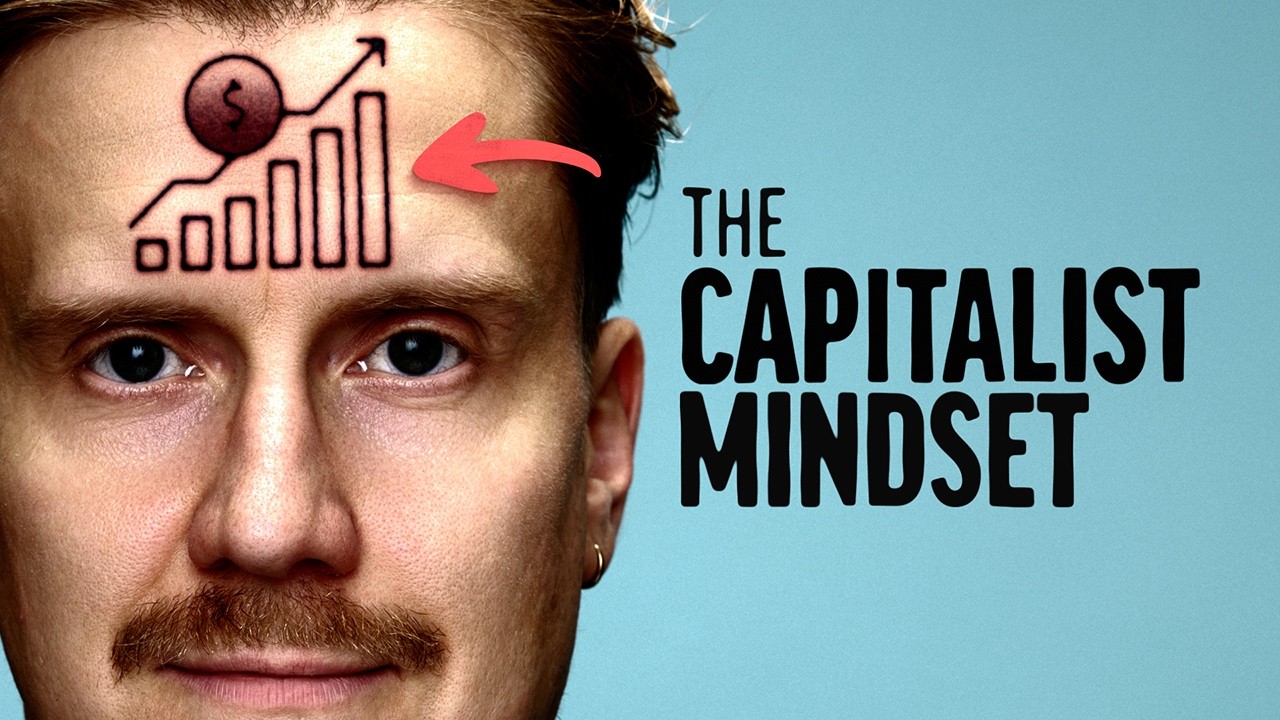
The video essay explores how capitalism is not just an economic system confined to places like Wall Street but a pervasive mindset that shapes many aspects of our lives. It introduces the concepts of use value and exchange value to explain this influence. Historically, societies operated on use value, where goods were produced primarily for their practical use, and money served merely as an intermediary to facilitate exchanges. This steady-state economy focused on satisfying human needs rather than accumulating wealth.
However, with the rise of capitalism in the 1700s, there was a profound shift from use value to exchange value. In capitalist systems, money or capital becomes the starting point, and the production of commodities aims at generating more money in an endless cycle of profit accumulation and reinvestment. This shift transforms money from a means of exchange into the ultimate goal, driving exponential growth and fundamentally changing how businesses operate and how value is perceived.
The video contrasts two cafes to illustrate this difference: Pomona, a small local cafe organized around use value, and Espresso House, a large chain driven by exchange value. Pomona operates with steady profits that satisfy the owner’s needs, reflecting traditional commerce focused on community and sustainability. In contrast, Espresso House exemplifies capitalist expansion, continuously reinvesting profits to grow aggressively, often at the expense of local businesses and cultural diversity. This example highlights how capitalist logic can dominate and disrupt local economies and social values.
The video also discusses the broader societal impacts of exchange value logic, noting widespread dissatisfaction with how capitalism influences various sectors. People dislike how beloved software turns into subscription traps, how the internet prioritizes endless scrolling over meaningful connection, and how essential services like education and healthcare become commodified. Even creators on platforms like YouTube face pressure to prioritize growth and monetization over the intrinsic value of their content, reflecting the pervasive reach of capitalist incentives.
Finally, the creator reflects on his own experience with YouTube, acknowledging the tension between growing a channel and maintaining the use value of his videos. He advocates for resisting the worst tendencies of capitalism by favoring use value over exchange value in our choices as consumers, creators, and citizens. Supporting local businesses, opposing privatization of essential services, and funding creators directly are ways to uphold this resistance. The video concludes with recommendations for further reading and an invitation to support the creator’s work to sustain content focused on meaningful value rather than profit.