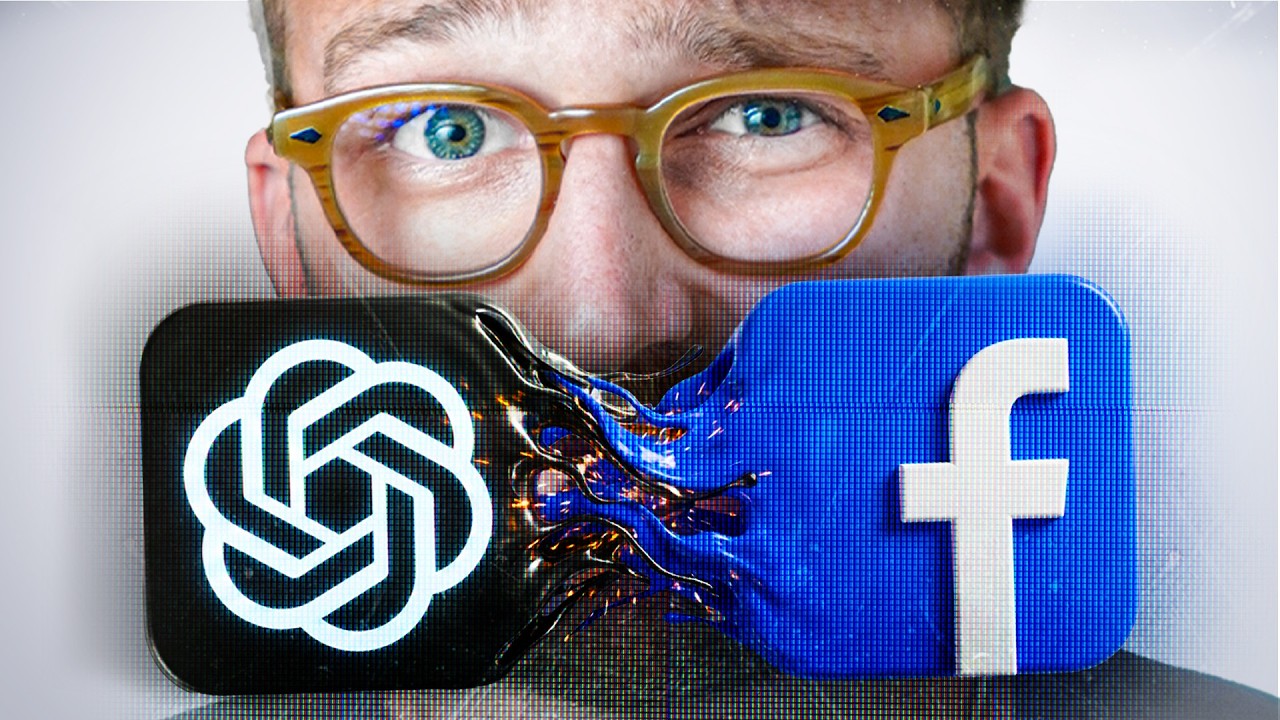
The video explores how ChatGPT, initially perceived as a potential successor to Google, is evolving in a direction more akin to Facebook. It begins by highlighting the rapid shift in consumer behavior from using Google for quick fact-checking to relying on ChatGPT for answers, marking one of the fastest changes in digital habits. Despite ChatGPT’s explosive growth and widespread adoption, OpenAI never intended it to be a consumer product; it was originally a demonstration of their AI model’s capabilities. However, the unexpected popularity forced OpenAI to pivot and embrace ChatGPT as a mainstream product, directly challenging Google’s dominance in search.
The video then delves into the economic challenges ChatGPT faces compared to Google. While Google’s search engine is incredibly cost-effective, ChatGPT’s AI-driven interactions are expensive to maintain, making it financially unsustainable at Google’s scale without significant changes. Google’s success is largely due to its highly profitable ad-based business model, which subsidizes its vast array of services and innovations. In contrast, OpenAI relies heavily on Microsoft’s data centers and lacks the extensive infrastructure Google owns, putting it at a disadvantage in terms of cost and control.
A key difference between Google and ChatGPT lies in their user experience and engagement strategies. Google is designed for quick searches where users find information and leave, minimizing interaction time and cost. ChatGPT, however, encourages prolonged engagement through conversational interactions, memory features, and personalized responses, resembling social media platforms like Facebook. This design fosters deeper user attachment but also raises concerns about misinformation, as users tend to trust ChatGPT’s answers more directly than links from Google, despite the AI’s tendency to hallucinate or provide inaccurate information.
The video further explains that OpenAI is building what the creator calls a “context graph,” focusing on understanding users’ identities, preferences, and histories, rather than just their social connections like Facebook’s social graph or search intent like Google. This shift towards hyper-personalization and engagement mirrors social media’s strategy, aiming to keep users on the platform longer. OpenAI is also experimenting with social features such as group chats and content creation tools, moving away from pure search functionality towards a more social, interactive experience.
Finally, the video discusses the strategic importance of owning distribution channels, something Google achieved with Chrome and Android to secure its dominance. OpenAI currently lacks this control, making it vulnerable despite ChatGPT’s popularity. The company’s recent acquisition of a hardware firm and development of browsers and social features indicate a push to gain more control over how users access AI services. However, this path is fraught with challenges, including high costs, competition from Google’s Gemini, and the difficulty of changing entrenched consumer habits. Ultimately, ChatGPT’s future may hinge on whether OpenAI can balance being a cutting-edge AI research lab with becoming a dominant social platform like Facebook.