The video discusses how a Chinese AI lab, Deepseek, has drastically reduced the cost of running large AI coding models by innovating on the attention mechanism, a core part of how AI models process and generate text. Attention involves comparing every word in a prompt to every other word, which becomes computationally expensive as prompts grow longer, leading to high costs for users. Traditional models struggle with scaling because doubling the prompt length quadruples the computational work, making long-context tasks prohibitively expensive.
Deepseek’s breakthrough comes from training their model, V4 Flash, with a novel sparse attention technique from the start, allowing it to selectively focus on the most relevant parts of the input while skipping less important information. Their approach uses three simultaneous views: compressed summaries of the prompt, a lightweight indexer to select the most relevant summaries, and a safety net that ensures no critical information is completely ignored. This design drastically reduces the amount of expensive attention computation needed, cutting memory and processing costs by large margins compared to previous models.
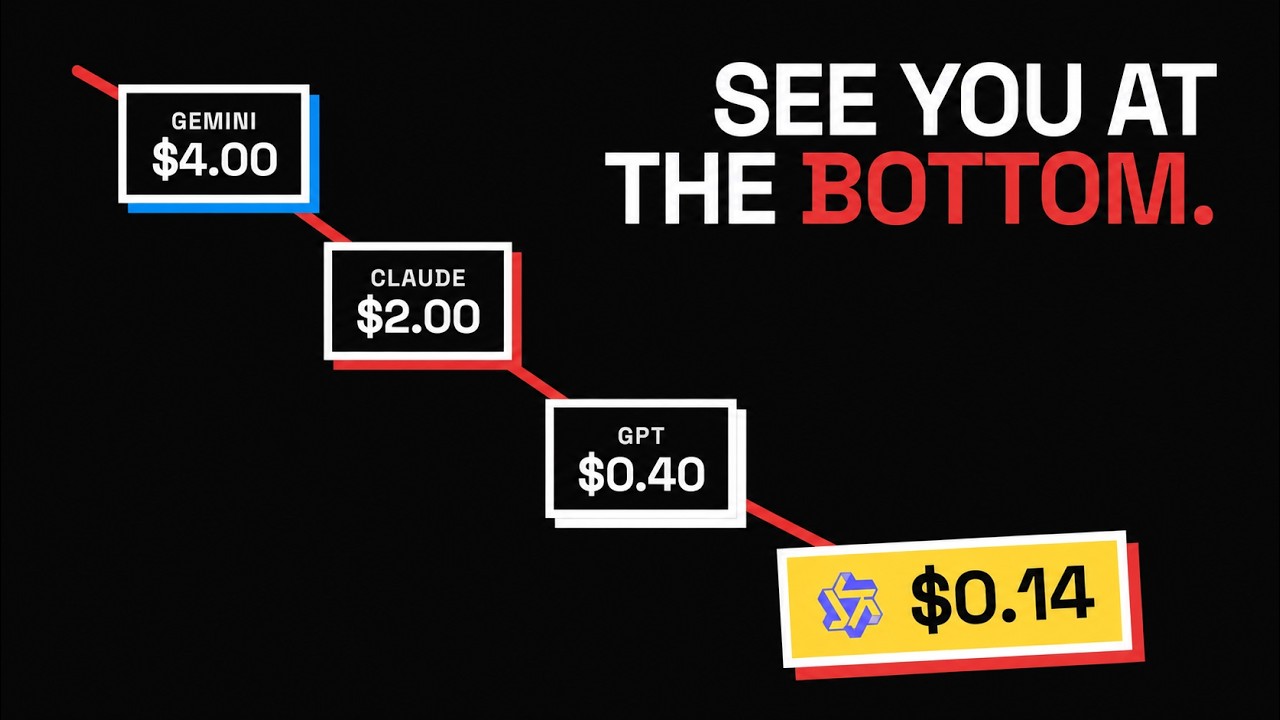
The economic impact is significant. Deepseek’s V4 Flash model can handle million-token prompts at a fraction of the cost of competitors like OpenAI’s GPT-5, Anthropic’s Claude, or Google’s Gemini. For example, a million-token request costs about 14 cents on Deepseek’s model, compared to 40 cents or more on others. This price reduction is not due to cheaper hardware but to more efficient software design, forcing other AI providers to slash their prices to remain competitive. OpenAI’s recent 80% API price cut coincided with Deepseek’s earlier 75% cut, highlighting the market pressure created by this innovation.
However, the sparse attention method has trade-offs. It works best for tasks where the important information is concentrated in a few key parts of the input. For workloads requiring exhaustive, exact recall of every detail—such as legal document analysis or complex multi-clause contracts—this approach may miss critical information or reduce accuracy. Additionally, for shorter prompts under 10,000 to 20,000 tokens, the overhead of the sparse attention mechanism can actually slow down processing, so it is most beneficial for very long-context applications.
Overall, Deepseek’s innovation is reshaping the economics of AI coding models by making long-context processing affordable and scalable. This shift enables developers to run large, complex tasks without rationing compute resources, fostering experimentation and productivity. The video concludes by noting that this external pressure from a Chinese lab has forced American AI companies to rethink pricing and efficiency, signaling a new era of competition and innovation in the AI industry.