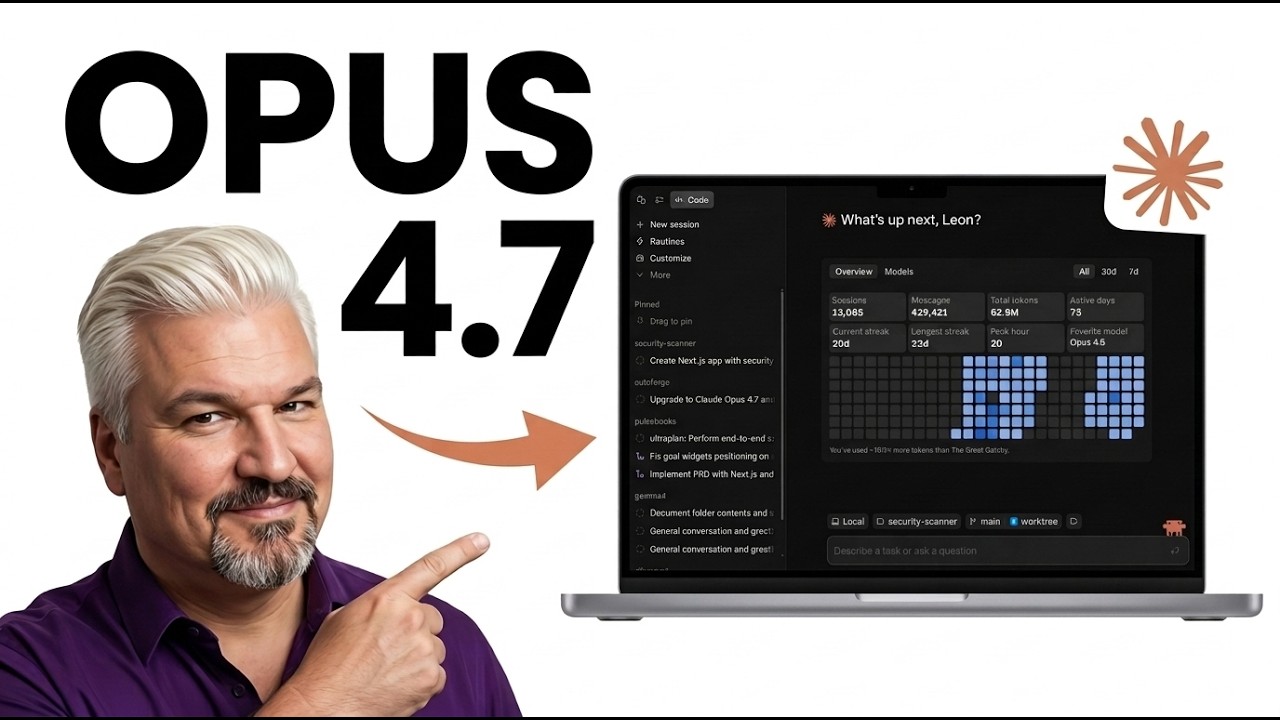
The video showcases the new Opus 4.7 coding model integrated with the latest Claude Code desktop app by Anthropic, emphasizing the enhanced developer experience rather than just benchmark scores. The updated UI offers a streamlined workspace view where users can manage multiple projects and sessions, either locally or connected to GitHub repositories. The app supports various modes like planning, auto-accept edits, and bypass permissions, allowing flexible control over how the AI agent interacts with the codebase. The presenter sets a challenging task for Opus 4.7: building an infinite canvas drawing app called Infinite Draw, designed to support shapes, text, icons, diagrams, keyboard shortcuts, and export functionality.
As the agent begins working, it asks clarifying questions about the tech stack and storage preferences, recommending modern tools like Next.js, TypeScript, Tailwind, Shad CN UI, React Canva, and IndexedDB via Dexie. The app’s interface allows users to monitor the agent’s progress through task lists, file diffs, and terminal access, enabling real-time code review and management of multiple concurrent sessions across projects. The presenter highlights the similarity of this interface to other AI coding tools like Cursor 3 and Codex, noting the trend towards agent-first development environments that integrate multiple workspaces and agents seamlessly.
The agent efficiently scaffolds the project, installs dependencies, and launches a live preview within an embedded browser, where it autonomously tests the app’s functionality. The Infinite Draw app supports light and dark modes, shape drawing, resizing, text addition, and connecting lines between elements. The presenter notes significant improvements over the previous Opus 4.6 model, especially in handling connectors that dynamically adjust when elements are moved. The agent also successfully implements exporting diagrams as PNG images and integrates icon support with resizing and color customization.
Throughout the demonstration, the presenter is impressed by the agent’s ability to self-identify and fix issues without manual intervention, highlighting the robustness and reliability of Opus 4.7 in a one-shot prompting scenario. The app responds intuitively to user interactions such as canvas panning, zooming, and keyboard shortcuts, delivering a smooth and modern user experience. The presenter expresses genuine amazement at how well the model performs complex coding tasks autonomously, suggesting that this could become their preferred AI-assisted coding workflow.
In conclusion, the video presents Opus 4.7 and the new Claude Code desktop app as a powerful combination that significantly enhances AI-driven software development. The seamless integration of project management, real-time code editing, autonomous testing, and live previews creates a highly productive environment for developers. The presenter invites viewers to share their thoughts on the evolving landscape of AI coding tools and encourages them to subscribe for more content, signaling confidence in the future of agent-based coding workflows.