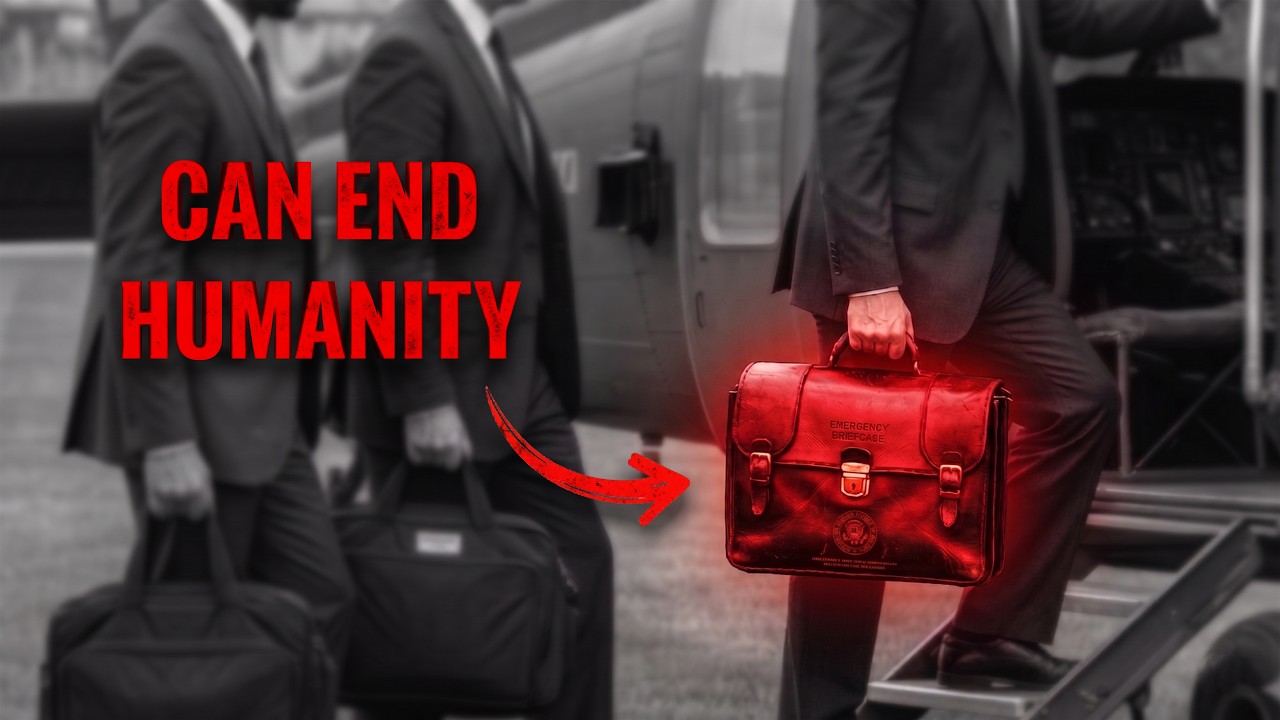
For nearly two decades, the U.S. nuclear launch code was reportedly set to a simple and insecure sequence of eight zeros, printed openly on launch checklists. The so-called “football,” a briefcase carried near the president, does not contain a launch button but rather a detailed “menu” of nuclear options, along with communication tools and evacuation plans. The actual authentication of a launch order depends on a small laminated card known as the “biscuit,” which the president must carry at all times. However, history reveals multiple instances where presidents lost or misplaced this critical card, highlighting the system’s vulnerabilities.
The U.S. nuclear command structure is designed to guarantee a launch once the president issues an order, with no built-in mechanism to veto or delay it. The president holds sole authority to launch nuclear weapons without needing approval from Congress, the Secretary of Defense, or any other officials. Even if multiple launch crews refuse to comply, the system can still proceed with the launch. The only legal limitation is that military personnel must refuse orders that are clearly illegal, but the definition of illegality is ambiguous and time-consuming to adjudicate, which is problematic given the extremely tight decision window.
The urgency of nuclear decision-making stems from the short warning time available in the event of an incoming missile attack—roughly 10 to 30 minutes depending on the source. This compressed timeline leaves the president with only about six minutes to decide on a retaliatory strike, making any cooling-off period or second opinion impractical. Attempts to add safety measures, such as the permissive action links introduced by President Kennedy to require launch codes, were undermined by military resistance who feared delays could jeopardize guaranteed retaliation. This led to the disabling of such locks in practice, maintaining a system that prioritizes rapid response over safety.
Other nuclear powers have developed different approaches to the problem of command and control. The UK uses “letters of last resort,” handwritten by each new prime minister, instructing submarine commanders on what to do if the government is destroyed. Russia has a “fail-deadly” system called Perimeter, which can automatically launch nuclear weapons if it detects a nuclear attack and loses contact with command, ensuring retaliation even if leadership is wiped out. These systems reflect the extreme measures nations take to guarantee a retaliatory strike, sometimes at the cost of increased risk.
Despite these precarious systems, humanity has narrowly avoided nuclear catastrophe multiple times, often due to the judgment of individual officers rather than technology. The most famous example is Soviet Lieutenant Colonel Stanislav Petrov, who in 1983 correctly identified a false alarm indicating a U.S. missile launch and chose not to escalate to nuclear war, despite protocol demanding he report it. Another close call occurred in 1995 when a Norwegian scientific rocket was mistaken for a missile by Russian early warning systems, nearly triggering a launch. These incidents underscore that while technology can fail or mislead, human intuition and restraint have been the ultimate safeguards against nuclear disaster.