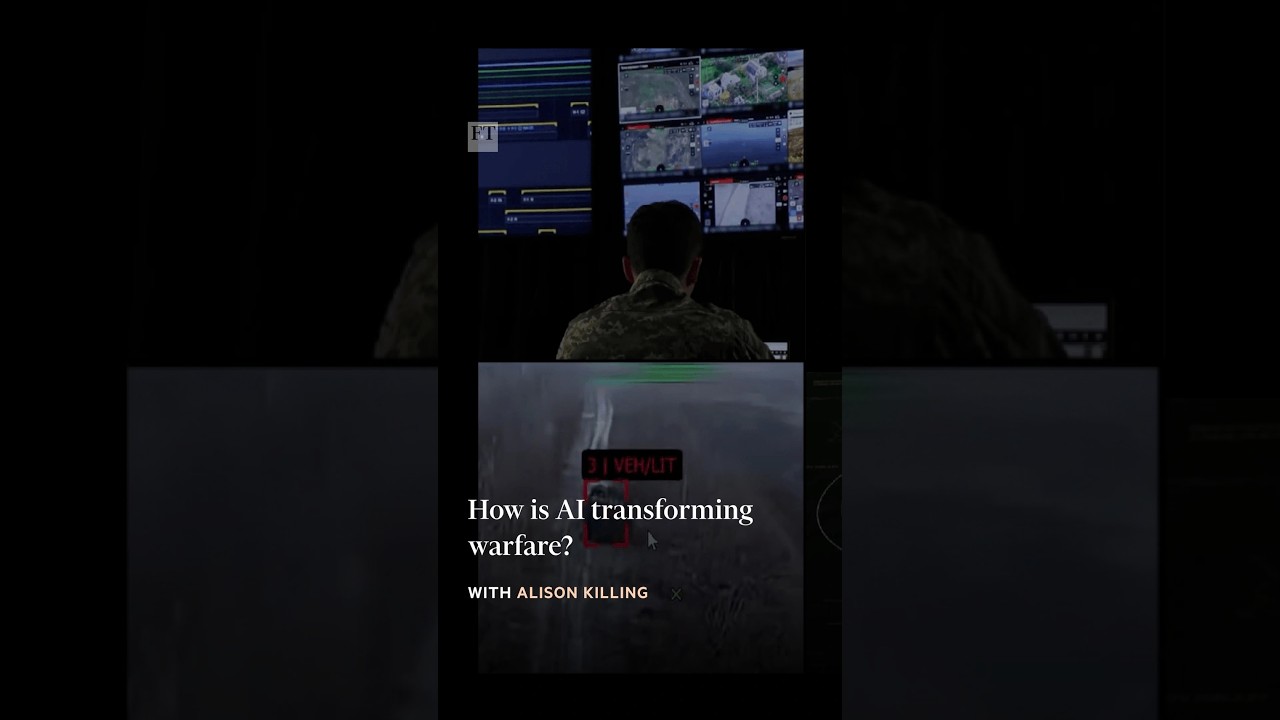
AI is significantly transforming modern warfare by drastically compressing the kill chain—the time between identifying a target and executing a strike. At the onset of the Russia-Ukraine war, this process took about 20 minutes, but advancements in AI have reduced it to under two minutes or even seconds. For example, the Seikka Scout drone uses machine learning to recognize 47 categories of military equipment, drawing virtual boxes around targets and assigning confidence scores, enabling rapid and precise strikes.
Beyond targeting, AI enhances drone stability in challenging conditions such as strong winds and signal jamming. Advanced terminal guidance systems allow drones to lock onto targets even when communication signals are lost. Additionally, battlefield management systems like Ukraine’s Delta and the US’s Project Maven integrate vast amounts of data from drones, satellites, electronic signals, and human intelligence, significantly increasing the number of targets that can be identified and engaged daily.
The integration of AI in warfare has led to a dramatic increase in AI-guided strikes. US intelligence reports a tenfold increase in target engagement capacity, from 100 to 1,000 targets per day, while Ukraine has also seen a tenfold rise in AI-guided attacks since the start of the year. However, these AI-driven strikes still represent a small portion of total military operations. In response, militaries are adapting by developing countermeasures such as dazzle camouflage, designed to confuse AI-assisted object recognition systems on drones.
The use of AI in life-and-death decisions raises complex legal and ethical concerns. While AI can easily identify certain objects like drones, distinguishing between soldiers, vehicles, and weapons is far more complicated, as is determining combatant status or national affiliation. The rapid pace of AI decision-making reduces the time available for human oversight, making it challenging to ensure compliance with international law and to consider the full context of each strike.
Historical conflicts illustrate both the power and pitfalls of AI in warfare. In Iraq, AI-enabled systems allowed the US to target 13,000 locations in just over a month, but flawed data led to tragic mistakes, such as the bombing of a girls’ school that resulted in significant civilian casualties. Similarly, while AI accelerates and intensifies combat, it does not guarantee victory, as seen in ongoing conflicts like those in Ukraine and Iraq, where faster, more lethal warfare has not necessarily translated into easier or decisive wins.