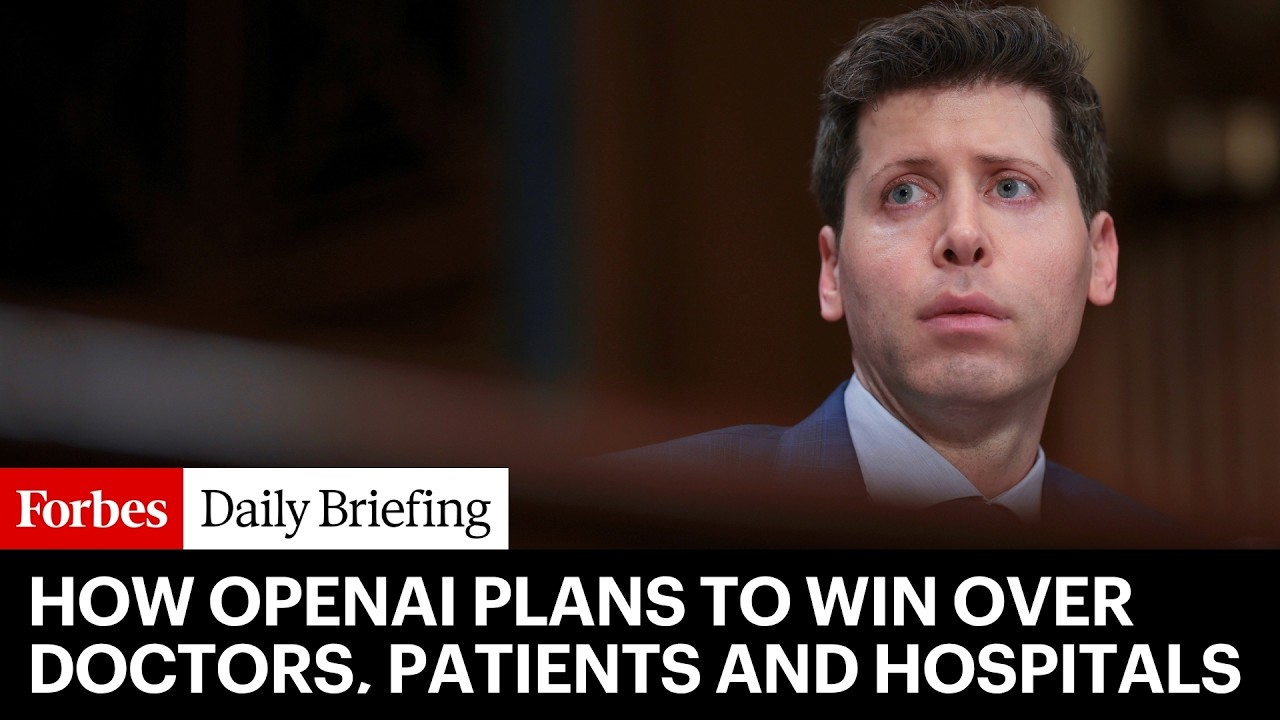
OpenAI is making a significant push into the healthcare sector, aiming to win over doctors, patients, and hospitals by showcasing its AI capabilities. Central to this effort is Sam Altman, OpenAI’s CEO and co-founder, who personally engages with hospital CEOs to promote the company’s healthcare ambitions. OpenAI has already secured major health systems like Cedars-Sinai Medical Center and HCA Healthcare as customers for its enterprise-grade healthcare tools. The company is also enhancing its AI models by collaborating with hundreds of doctors to improve the accuracy and reliability of health-related answers provided to over 230 million weekly ChatGPT users globally.
The company has introduced several healthcare-focused products recently, including a new version of ChatGPT tailored for clinicians and ChatGPT Health, which allows consumers to securely connect their medical records and wellness apps. OpenAI’s AI models also support other health tech companies by generating clinical notes and helping users interpret lab results. Nate Gross, who leads OpenAI’s healthcare strategy and has a strong medical and business background, emphasizes healthcare as one of OpenAI’s most important verticals, highlighting the sector’s vast potential given that healthcare accounts for about 18% of the US economy.
OpenAI’s healthcare ambitions come at a critical time as the company faces increasing competition from rivals like Anthropic and Google, both of which are also targeting the healthcare market with their AI solutions. Despite generating $13 billion in revenue in 2025, OpenAI’s net losses have surged, and the company is reportedly reconsidering the timing of its IPO amid investor pressure. Winning in healthcare is seen as crucial for OpenAI’s future success, but the company must navigate challenges such as commoditization of AI models, pricing pressures, and the razor-thin margins typical of hospital operations.
Consumers frequently use ChatGPT for health-related queries ranging from simple questions about symptoms and exercises to decoding complex medical jargon and lab reports. However, there is a dual potential for both benefit and harm, as some users inquire about serious symptoms that require professional medical attention. Karan Singal, OpenAI’s head of health AI, acknowledges the high activity in health-related use cases and stresses the importance of maximizing the positive impact of AI in healthcare while mitigating risks.
The healthcare system in the US faces significant challenges, including clinician shortages, administrative burdens, and limited access to care in rural areas. Many rural adults rely on emergency rooms for primary care needs, and a large percentage of rural counties lack specialists like cardiologists. OpenAI’s AI tools aim to alleviate some of these pressures by helping consumers make better health decisions, supporting doctors in delivering improved care, and assisting health systems in operating more efficiently. This strategic focus on healthcare reflects OpenAI’s broader mission to harness AI for widespread societal benefit.