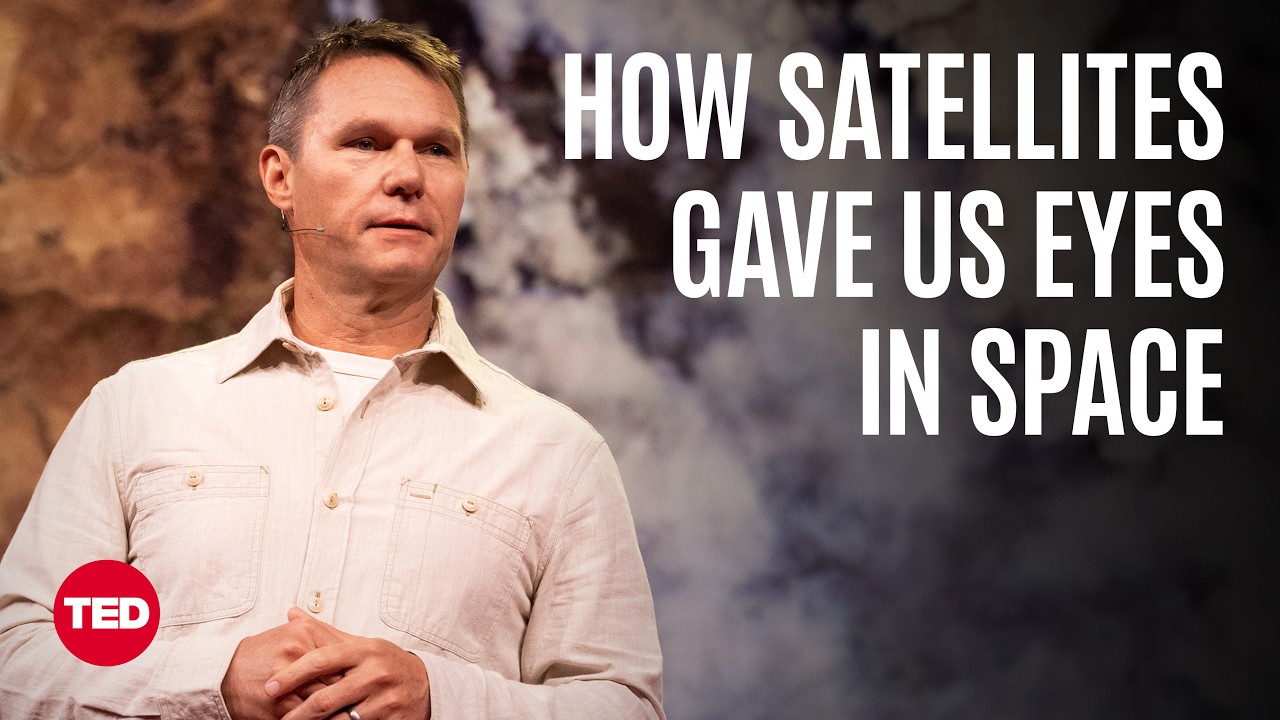
Robbie Schingler, co-founder of an earth imaging company, opens by recounting how satellite imagery detected a pontoon bridge near the Belarus-Ukraine border just before Russia’s invasion in 2022. This real-time satellite data provided governments, NGOs, researchers, and journalists with a shared, factual view of unfolding events, enabling coordinated responses such as sanctions and support for Ukraine. However, Schingler reflects on the limitations of existing institutions, which were not designed to process or act on such rapid and abundant information, highlighting a gap between awareness and effective response.
Schingler introduces the concept of “planetary intelligence,” which combines vast Earth observation data with the analytical power of artificial intelligence (AI) to enable near real-time understanding and action on global changes. He emphasizes the current renaissance in space technology, with reusable rockets, thousands of satellites, and renewed human space exploration, all contributing to a planetary nervous system. This system, paired with AI, can interpret environmental signals and guide human decisions, bridging the gap between seeing and acting on planetary changes.
Concrete examples illustrate the impact of this technology. In Brazil, a satellite-based monitoring system helps detect illegal activities like deforestation and illicit crop cultivation in the Amazon. Working with local authorities, this system has led to significant seizures of illegal equipment and a reduction in deforestation rates by over 50%. In Kenya, satellite data monitors grass health to trigger automatic drought insurance payments to pastoralists, protecting their livelihoods without requiring them to file claims, thereby preventing economic collapse during droughts.
Schingler argues that planetary intelligence not only changes how we act but also transforms our understanding of our relationship with the planet. It dissolves the false separation between human society and the natural world, fostering a holistic perspective. Amidst fracturing institutions and alliances, he believes this new intelligence can help build purpose-built institutions capable of responding swiftly and effectively to 21st-century challenges, enhancing resilience across sectors like finance, infrastructure, and governance.
Concluding, Schingler stresses that while information is crucial, coordination is what truly drives change. Satellites have given Earth “eyes,” and AI is connecting these to a “brain,” but humanity must now build the “body”—trustworthy institutions and alliances capable of acting decisively on these signals. This integrated approach offers hope for a future where crises can be averted before escalating, embodying stewardship of the planet rather than passive witnessing.