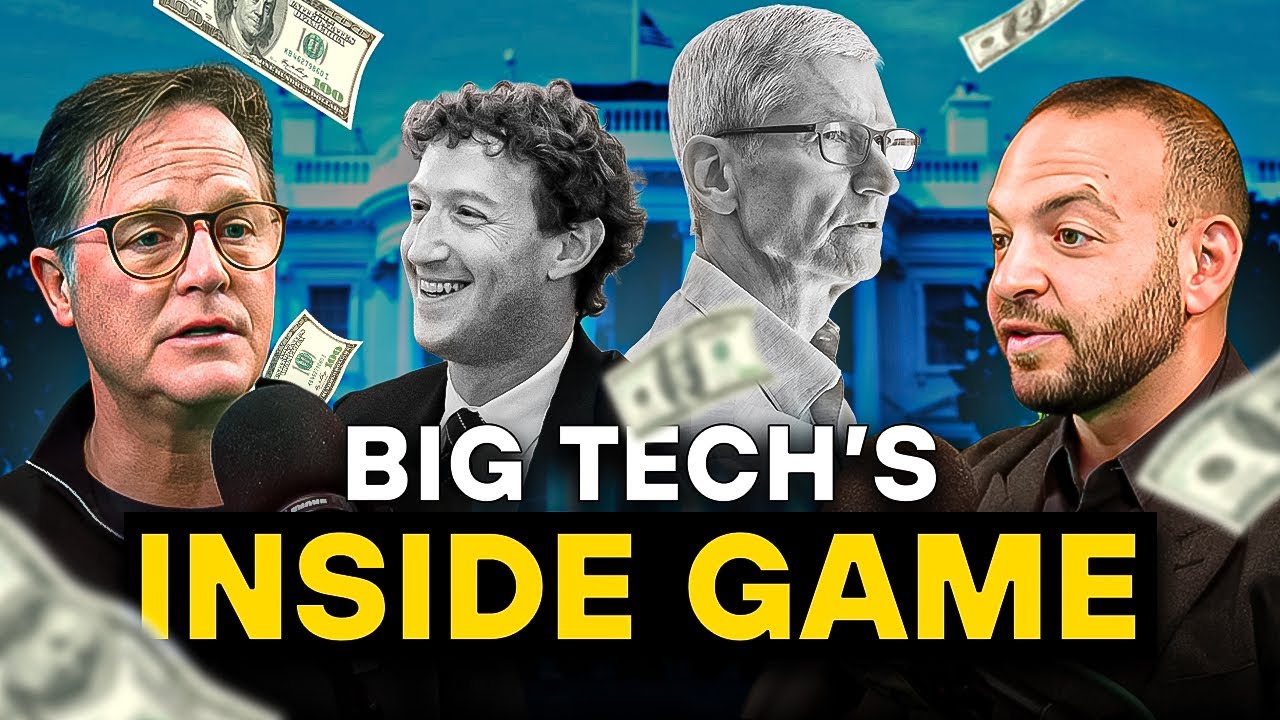
The video discusses how Silicon Valley companies, like Microsoft and Meta, buy influence in Washington through political donations and participation in exclusive events. Brad Smith, Microsoft’s president, explained that while the donation checks themselves may not be large, they serve as entry tickets to political events such as weekend retreats and dinners. These events allow corporate government affairs teams to build and solidify relationships with politicians, which facilitates communication and access. This transactional nature of American politics, where fundraising is constant and essential, is described as almost unprecedented compared to other democracies.
The speaker emphasizes that this system is legal and transparent, though it may appear transactional and even satirical at times, especially under the Trump administration when such financial exchanges became more overt. Despite the transactional nature, the speaker argues that this does not mean the political system is incapable of regulating or constraining big tech companies. The U.S. political system has historically regulated powerful industries like banking, arms, and oil, even though those industries engage in similar fundraising and relationship-building practices.
There is a discussion about the apparent hypocrisy of politicians who accept donations and host retreats with tech companies, only to publicly criticize those same companies during hearings. The speaker suggests that while this behavior may seem contradictory, it is preferable to politicians being ineffective or not holding companies accountable at all. The conversation also touches on the stark contrast between the U.S. and European approaches to political funding, with Europe generally viewing state subsidies for political campaigns as suspicious, whereas in the U.S., fundraising through corporate donations is deeply ingrained.
The speaker defends the political class and the government affairs professionals working for tech companies, describing them as decent people doing their jobs rather than shady operators. They highlight that political gridlock often stems more from deep ideological differences between parties, such as debates over state versus federal authority, rather than from corporate influence alone. For example, the lack of a federal privacy law in the U.S. is attributed to these fundamental disagreements rather than just lobbying efforts.
Finally, the video notes the frustration over the slow progress on federal legislation to protect vulnerable groups like children and teens on social media. Despite bipartisan concern, meaningful federal action has been limited, prompting states like California to take matters into their own hands with their own regulations. This state-level activism is seen as a reasonable response to federal inaction, reflecting the complex interplay between corporate influence, political processes, and regulatory outcomes in the U.S. system.