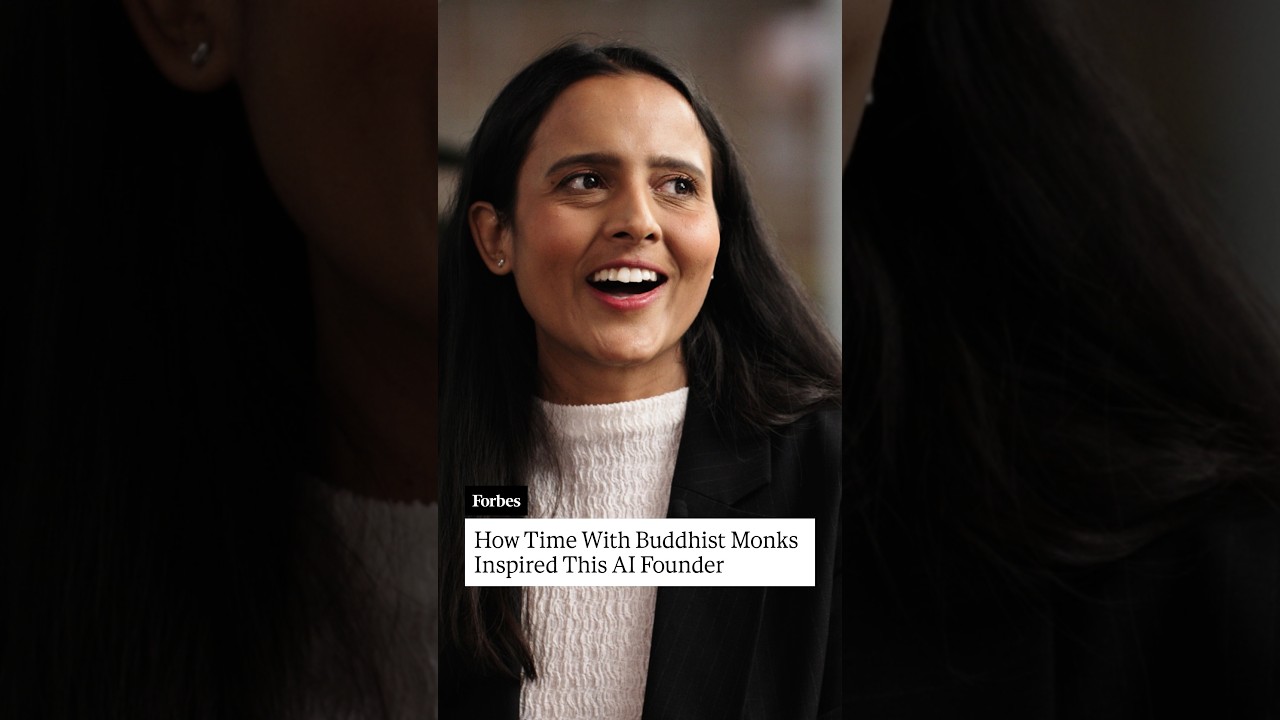
The speaker’s journey began with a year spent with a Buddhist monk, inspiring a deep interest in modeling human thought computationally, which led to pioneering work in conversational AI at Carnegie Mellon and contributions to major AI products at Facebook and Google. Their experiences shaped a vision of AI evolving from interactive assistants to autonomous systems capable of independent operation, emphasizing innovation, safety, and integration across diverse applications.
The speaker’s journey into the intersection of humans and AI began a decade ago when they spent a year with a Buddhist monk. During this time, they became fascinated by the Buddhist philosophy of Abid Dhama, a theory of thought, and sought to understand how such concepts could be modeled computationally. This curiosity led them to Carnegie Mellon University, where they spent several years researching natural language generation under the guidance of esteemed faculty.
At Carnegie Mellon, the speaker had the opportunity to work on the first iteration of the Alexa Prize Challenge, funded as a student. They contributed to building the first conversational social agent, initially called an assistant, which could engage users in discussions about topics like movies and sports. This experience was pivotal, as it revealed to the speaker that creating impactful AI technologies requires a balanced focus on both product development and technological innovation.
Following this realization, the speaker joined Facebook during the launch of Facebook Portal and the Facebook Assistant, another personal assistant product. However, they soon recognized a desire to deepen their expertise on the technology side rather than just product implementation. This led them to Gemini, where they played a key role in launching the product and bridging the gap between research and product development.
At Gemini, the speaker contributed to integrating AI capabilities across more than 14 product areas at Google, emphasizing the importance of safety and innovation. This experience reinforced their understanding of how AI can be embedded into diverse applications, enhancing user experiences while maintaining responsible use. The role also highlighted the evolving nature of AI from simple assistants to more complex, integrated systems.
Ultimately, the speaker developed a strong intuition that the future of AI would be autonomous rather than merely interactive or assistive. They sensed that the world was moving beyond co-pilot models, which rely on back-and-forth interactions, toward AI systems capable of independent operation. This insight continues to shape their vision and work in the AI field.
Useful Links