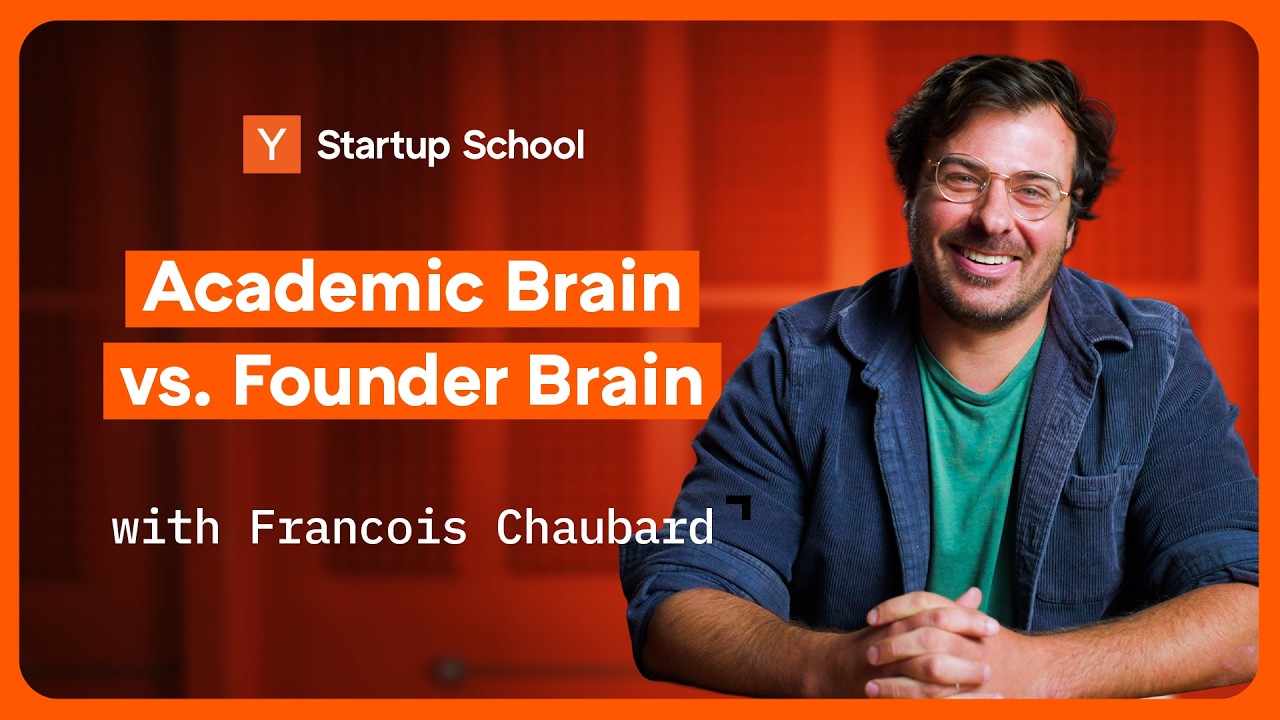
The video explains that academics transitioning to startup founders must shift their mindset from valuing novelty and perfection to prioritizing customer needs, rapid iteration, and practical solutions, while embracing roles beyond research such as sales and management. It emphasizes the importance of direct customer engagement, quick decision-making, and developing empathy, concluding that intelligence alone is insufficient without the willingness to adapt and adopt a founder’s mindset.
The video discusses the challenges academics face when transitioning from researchers to startup founders, emphasizing that the skills rewarded in academia often do not translate well to entrepreneurship. While some successful companies have been founded by PhDs, many academic startups fail because researchers must unlearn certain academic instincts to succeed in the startup world. The speaker outlines ten critical perspective shifts necessary for academics to build successful startups, starting with the need to focus on what customers actually want rather than vanity metrics like citations or grades.
One major shift is moving from valuing novelty and interesting research to prioritizing practical importance and customer needs. Unlike academia, where originality is paramount, startups often succeed by iterating on existing ideas and solving real customer problems, even if the solution is not novel. Founders must accept “good enough” solutions and focus relentlessly on achieving product-market fit, rather than seeking perfect understanding or groundbreaking inventions.
The speaker also highlights the importance of direct customer engagement, urging founders to leave their offices and talk to potential users to validate their assumptions. Many academic founders make the mistake of developing products in isolation, only to find that customers are unwilling to pay for their solutions. Rapid iteration based on customer feedback is crucial, as is embracing a more aggressive, capitalist mindset that includes sales, marketing, and competition—areas often uncomfortable for academics.
Another key difference is decision-making speed. Startups require making decisions with about 70% of the desired information, rather than waiting for complete certainty as academics might prefer. Founders must also take on diverse roles beyond research, including team management and business operations, rather than delegating these responsibilities entirely. Developing empathy for customers through active listening and engagement is essential for creating products that truly meet market needs.
In conclusion, the video encourages academics to adopt a founder’s mindset by focusing on customer problems, embracing imperfection, and engaging directly with users. It recommends reading books like “High Output Management” and “How to Win Friends and Influence People” to develop necessary skills. The final message is that intelligence alone is not enough; successful founders must also have the will to change themselves and their approach to build impactful companies.
Useful Links