The video explores the idea that although people throughout history have believed their own era to be the most significant, we may indeed be living through truly historic times marked by rapid and unprecedented changes since the Industrial Revolution. This period has seen explosive growth in population, global GDP, and environmental impact, raising the question of how our current trajectory will end—whether humanity will thrive and expand into the cosmos or face catastrophic collapse. Given this context, how we choose to spend our lives today carries immense importance.
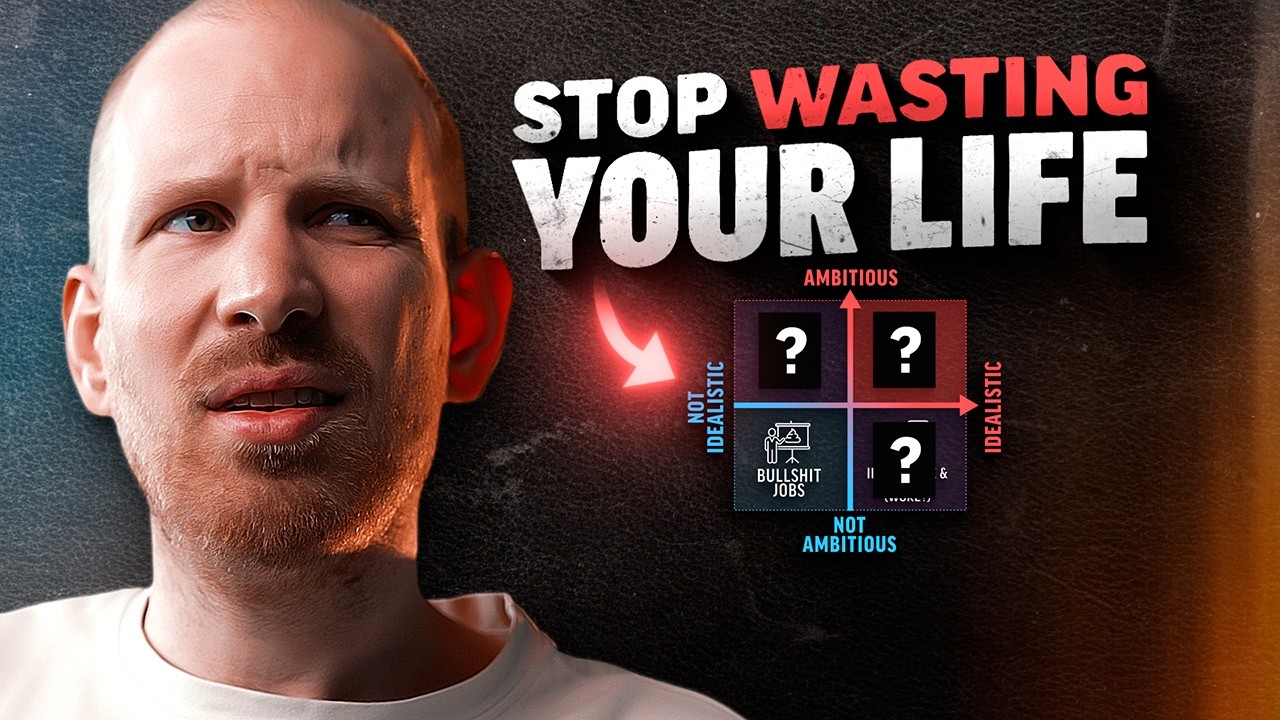
Rutger Bregman, a Dutch historian and author featured in the video, emphasizes the concept of “moral ambition,” which combines idealism and ambition to live a life that truly matters. He categorizes people based on their levels of ambition and idealism, noting that many are stuck in meaningless jobs or focus on limited personal actions that do not address systemic problems. Others pursue high-paying careers in industries perceived as morally questionable. The video argues that to make a meaningful impact, individuals should strive to be both ambitious and idealistic, working on causes that are sizable, solvable, and sorely neglected.
Bregman identifies six myths that hold people back from doing good: the myths of awareness, intention, right reasons, purity, synergy, and inevitability. Awareness and good intentions alone are insufficient to create change; history shows that progress often happens for pragmatic rather than purely moral reasons. The illusion of purity—believing one can only collaborate with like-minded people—fuels tribalism and hinders problem-solving. Similarly, the myth of synergy can paralyze action by insisting all problems must be solved simultaneously, whereas pragmatic, focused efforts can lead to success, as demonstrated by historical abolitionist campaigns.
The video also highlights that moral courage is not an innate trait but a social phenomenon that spreads when people are simply asked to help. Studies of resistance heroes during World War II reveal that ordinary people from diverse backgrounds acted bravely when called upon. This insight encourages viewers to start small and take action, reinforcing Aristotle’s idea that one becomes virtuous by doing virtuous acts. The video encourages focusing on causes that meet the S-S-S framework—sizable, solvable, and sorely neglected—to maximize impact, such as biodiversity loss or factory farming, which receive less attention than climate change despite their urgency.
In conclusion, the video promotes Rutger Bregman’s new book, “Moral Ambition,” as a guide to living a life that makes a difference by combining idealism with practical ambition. It challenges viewers to move beyond comfort and complacency, learn from historical pioneers, and contribute to solving humanity’s greatest challenges. The ultimate goal is to live a life worthy of being remembered and to make future historians proud, thereby achieving a form of immortality through meaningful impact.