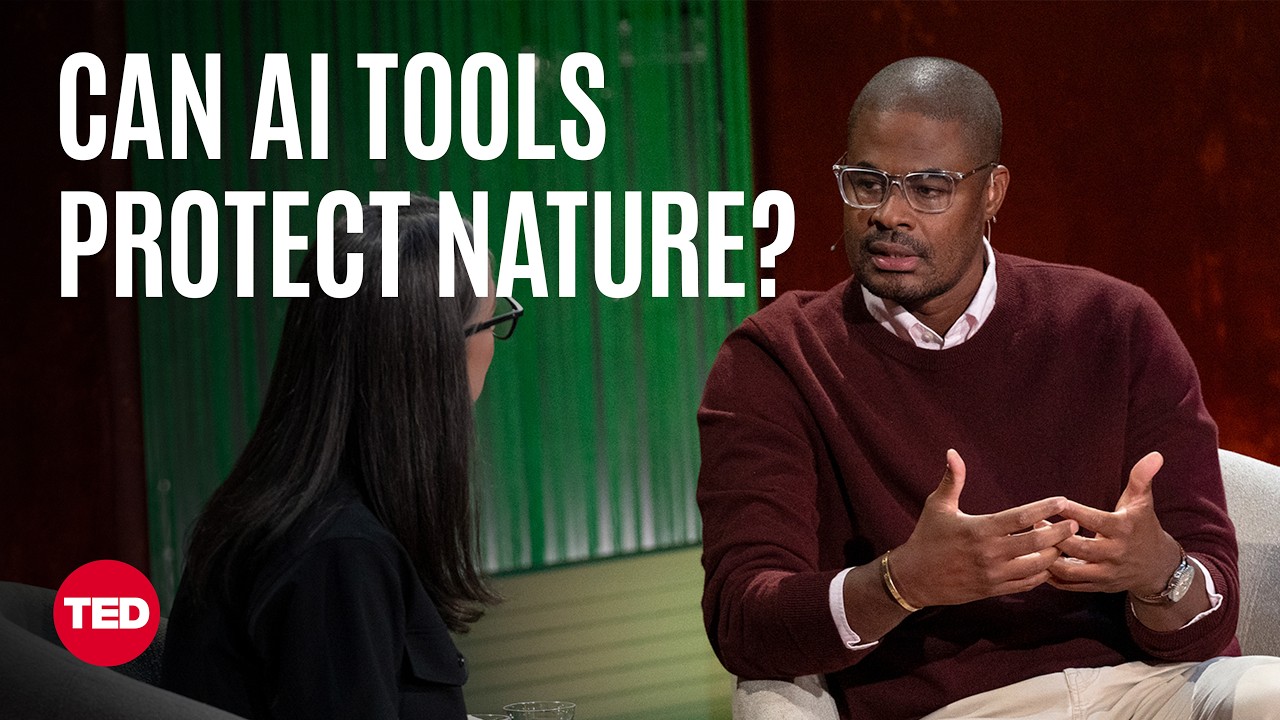
Amen Ra Mashariki explains that the Bezos Earth Fund uses a problem-first approach to apply AI purposefully to climate challenges, seeking projects that combine innovative technology with meaningful discoveries. He emphasizes the need for transparency, trust, and responsible development to ensure AI becomes a creative and positive force for addressing climate change.
Amen Ra Mashariki, a computer scientist with a background in research labs and public service, explains his journey to the Bezos Earth Fund and how it shapes his approach to using artificial intelligence (AI) for climate solutions. He emphasizes that, unlike his earlier career where he sought problems for AI to solve, the Fund starts by deeply understanding climate and nature challenges before applying AI as a tool to address them. This problem-first approach ensures that technology is used purposefully and effectively.
Mashariki introduces a mental model distinguishing between inventions and discoveries. He likens inventions to tools like telescopes, while discoveries are the insights gained from using those tools, such as identifying Jupiter’s moons. The Fund seeks projects that combine groundbreaking technological innovations with the potential for significant discoveries that can impact climate and nature positively.
Discussing the current state of AI, Mashariki references “move 37” from AlphaGo, where the AI made a creative, unexpected move that surpassed human expertise. He notes that while today’s AI often averages existing knowledge to provide solutions, the goal is to reach a point where AI can generate novel, counterintuitive solutions to climate problems—ideas that even experts might not conceive. He cites Meta’s DINOv3 project, which uses AI and satellite data to track tree growth efficiently, as an example of impactful innovation, though he acknowledges that truly creative AI solutions are still on the horizon.
Mashariki addresses concerns about the environmental impact of AI and the potential for greenwashing by tech giants. He acknowledges that AI does have environmental costs but maintains that, on balance, it can be a force for good if used deliberately and transparently. He stresses the importance of building trust among both experts and local communities, and calls for greater transparency and shared understanding of AI’s environmental footprint to guide responsible development.
Looking ahead, Mashariki is hopeful but realistic, emphasizing the need for clear milestones such as improved transparency, accurate measurement of AI’s environmental impact, and technological advances like more efficient cooling systems for data centers. He frames the current era as the intersection of the “consequential decade” for AI and the “decisive decade” for climate action, urging collaboration across sectors to ensure AI becomes a powerful tool for planetary good.