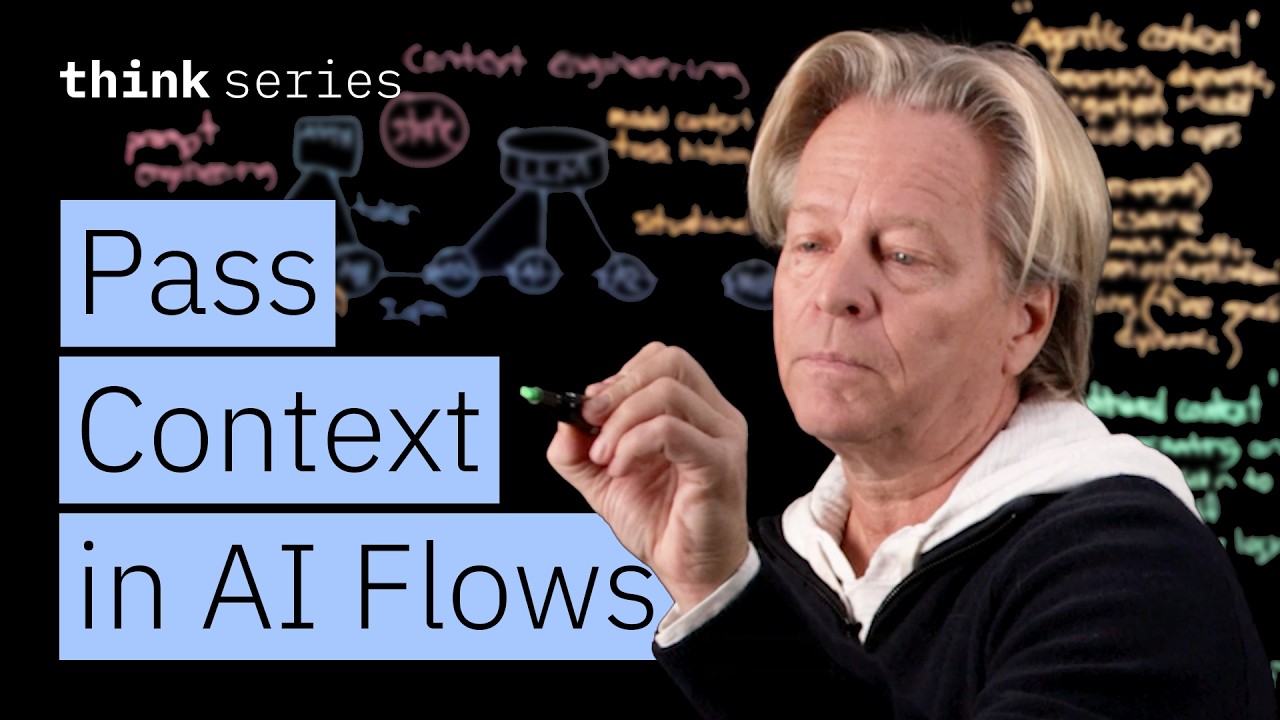
The video begins by explaining the importance of context in OAuth (OWAF) flows, focusing on traditional systems where a user grants an application permission to act on their behalf during a single login session. This traditional context involves three key elements: the user (who), the resource or application being accessed (what), and the permissions or scopes granted (conditions). The process typically involves issuing a token that represents the user’s authenticated identity and the allowed actions, enabling the application to interact with the resource securely.
Transitioning to agentic systems, the video highlights that context becomes significantly more complex due to the autonomous and dynamic nature of these systems. Unlike traditional flows involving a single application and resource, agentic systems involve multiple agents, orchestration layers, and potentially large language models (LLMs) working together. These systems operate non-deterministically, meaning they may take different actions each time to solve a task, often delegating responsibilities across various agents and applications, which expands the scope of context beyond the simple who, what, and conditions model.
The video further breaks down the expanded context in agentic systems into several components: the user context (who the user is and their environment), the resource context (multiple resources and their capabilities), the situational or environment state (the orchestration and agents involved), the model context (details about the LLMs used), and task history (previous interactions and responses). This broader context is necessary to manage the complexity and dynamic behavior of agentic flows, ensuring that the system can adapt and respond appropriately to user prompts.
Initially, efforts to improve agentic system responses focused heavily on prompt engineering—crafting and refining prompts to get better answers from LLMs. However, the video argues that prompt engineering alone is insufficient because it does not account for the full state of the system or the historical context. Instead, a new approach called context engineering is introduced, which involves integrating all relevant contextual variables—user, resources, environment, model, and history—into the process to guide the system’s behavior and improve the quality and relevance of responses.
In conclusion, the video emphasizes that agentic systems require a fundamentally different approach to managing context compared to traditional OAuth flows. The complexity and autonomy of these systems demand a comprehensive understanding and engineering of context to ensure effective and secure interactions. By adopting context engineering alongside prompt engineering, developers can better harness the capabilities of agentic AI systems, enabling them to dynamically orchestrate multiple agents and resources to fulfill user requests accurately and efficiently.