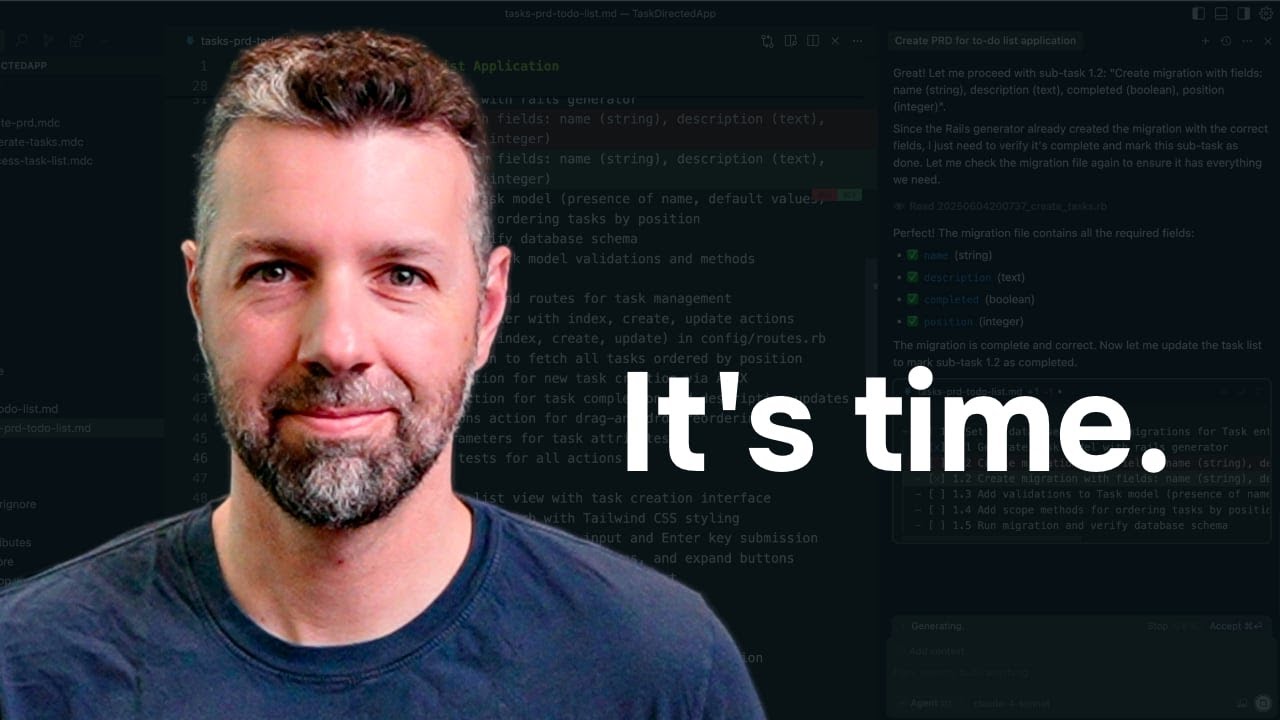
The video discusses the evolving landscape of “vibe coding,” or building software with AI, emphasizing its transition from a novelty or side project approach to a professional-level workflow. The presenter, a software developer with 20 years of experience, addresses skepticism around AI’s role in coding, reassuring viewers that AI is not replacing developers but rather enhancing their craft. He highlights that experienced developers have a significant advantage in this new paradigm, as their expertise allows them to guide AI effectively, while newcomers benefit from starting directly with AI-augmented workflows.
The evolution of AI-assisted coding is outlined in three major phases. Initially, tools like GitHub Copilot introduced tab-completion for code snippets, which was a significant improvement over manual typing. The current prevalent phase is “agent mode,” where developers interact with AI through chat interfaces like Cursor, prompting AI to write large portions of code. While this method accelerates development and enables more ambitious projects, it also has inefficiencies, particularly the time spent crafting detailed prompts for the AI.
To address these inefficiencies, the presenter introduces a third, more structured approach called “task-directed development.” This workflow begins with creating a detailed Project Requirements Document (PRD), which serves as a roadmap. The PRD is then broken down into high-level tasks and further into subtasks. AI executes these tasks sequentially, with the developer overseeing, approving, and adjusting as needed. This method reduces errors, minimizes repetitive prompt writing, and brings order and professionalism to AI-assisted coding.
The video demonstrates two tools that facilitate this task-directed workflow: Taskmaster and a set of Cursor rules developed by Ryan Carson. Taskmaster is a comprehensive tool that automates PRD creation, task generation, complexity analysis, and task execution, though the presenter finds it somewhat heavy and complex. In contrast, Ryan Carson’s Cursor rules offer a lighter, more adaptable approach that includes clarifying questions to refine the PRD and generates a markdown-based task list that the AI processes step-by-step, allowing for easier customization and oversight.
Ultimately, the presenter advocates for embracing this new professional workflow as the future norm in software development with AI. He emphasizes the importance of frontloading creativity and expertise into the PRD and task planning stages, enabling AI to efficiently execute the build process. The video concludes with an invitation to viewers to engage with the topic through comments and upcoming workshops, signaling ongoing exploration and refinement of AI-driven software development practices.