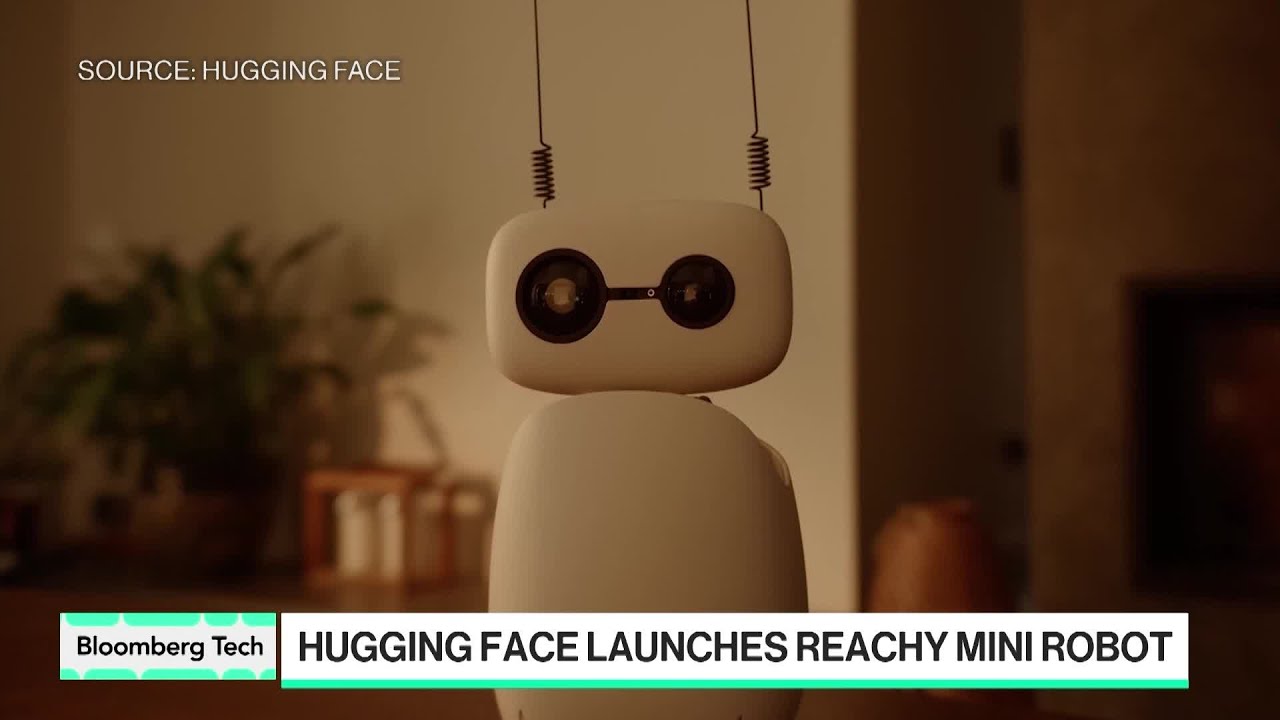
The video discusses Richie, an open-source AI robot designed primarily as a human-robot interaction platform. Richie is equipped with various sensors, including a camera, microphone, and speakers, allowing it to express emotions and interact naturally with users. The robot can move its head and body, enhancing its ability to engage in meaningful interactions. The core idea is to integrate Richie with advanced AI models capable of speech generation, image recognition, and natural language understanding, making it a versatile and accessible tool for developing human-robot interactions.
Richie is designed to be user-friendly and customizable, shipping as a kit similar to Lego that users can assemble with family or friends. It comes with pre-installed apps but also offers a software development kit (SDK) to encourage the community to create new applications and behaviors. Users can run these apps locally without needing to send data to the cloud, addressing privacy concerns. The platform aims to foster a collaborative environment where users share their creations, such as a cooking assistant app, which can then be accessed and used by other Richie robots worldwide.
The conversation highlights the rarity of open-source or open-weighted business models in robotics, attributing this to the high costs and complexity of humanoid robots, which often exceed $80,000. Richie, by contrast, is simpler and more affordable, making it a better candidate for open-source development. Its limited mobility—such as the inability to walk—makes it easier to build and modify, encouraging community involvement and innovation. This approach contrasts with the traditional focus on expensive, fully humanoid robots, potentially opening new avenues for accessible robotics.
Regarding market strategy and production, Richie is primarily designed and manufactured in the United States, with significant early sales revenue and a strong international customer base, including Europe, Asia, and South America. The team is exploring ways to source components locally in different regions to optimize production and distribution. This strategy aims to navigate the complexities of global trade, tariffs, and supply chain disruptions, leveraging the robot’s simple design to facilitate manufacturing in multiple locations worldwide.
Overall, Richie represents a novel approach to robotics by combining open-source principles with advanced AI capabilities in an affordable, customizable platform. Its design encourages community engagement and innovation, potentially accelerating the development of practical human-robot interaction applications. By addressing privacy concerns and enabling local app execution, Richie aims to be both user-friendly and versatile, positioning itself as a pioneering product in the evolving landscape of AI robotics.