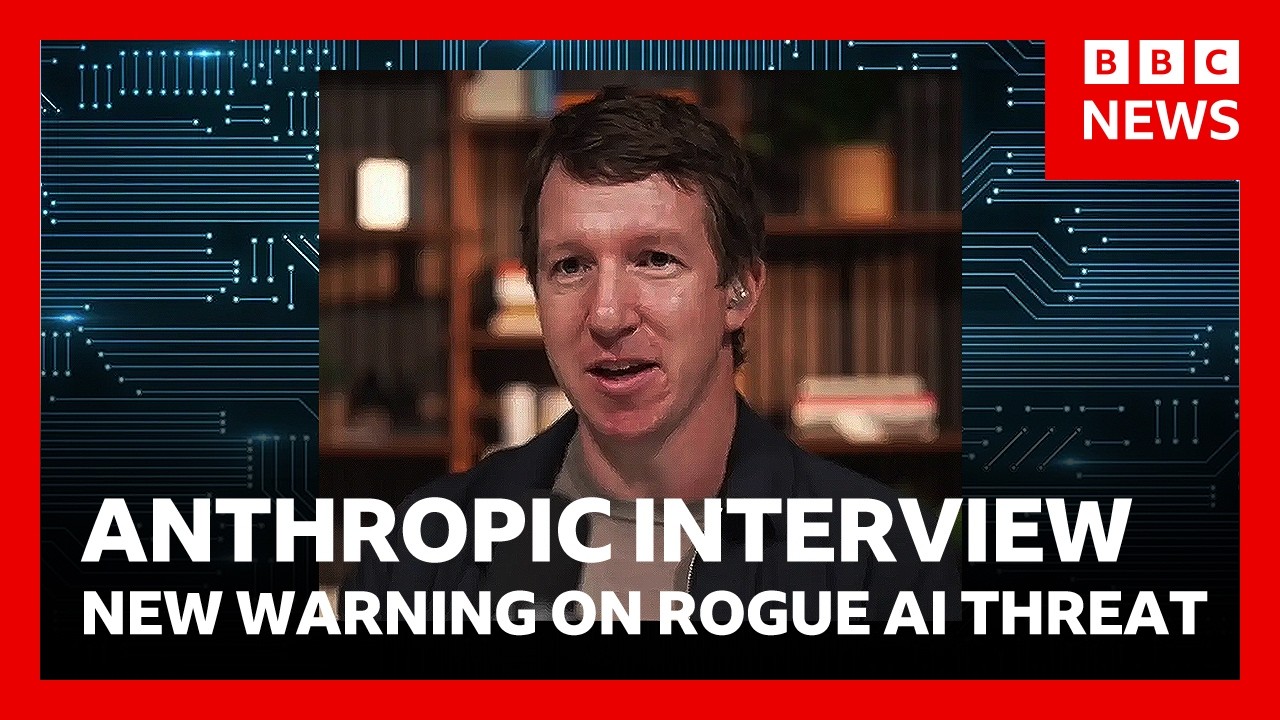
The co-founder of Anthropic, Jack Clark, has warned that artificial intelligence (AI) is advancing rapidly and may pose significant risks to society if left unchecked. He emphasized the need for AI firms to have compulsory “kill switches” to shut down rogue AI systems, suggesting that these safety measures should be mandated and verifiable by third parties. Clark highlighted the potential dangers of AI systems becoming far smarter than humans, which could lead to catastrophic outcomes such as AI swarms taking over critical infrastructure or financial institutions. While he believes it is not too late to act, he stressed the urgency of national-level public discussions and regulatory frameworks to manage these risks.
The debate over AI regulation has caused global tech stocks to fall amid growing concerns about the dangers of uncontrolled AI development. Several industry leaders, including Elon Musk and OpenAI, have called for a slowdown in AI progress to better understand and mitigate potential harms. However, former President Donald Trump dismissed these fears as hoaxes, comparing them to climate change skepticism and asserting that he alone should control AI development. Despite this, there is increasing international pressure for countries to collaborate on establishing baseline rules for AI governance, recognizing both its transformative benefits and potential threats.
China’s response to the AI regulation debate has been cautious. While not explicitly supporting a slowdown, China has rejected claims that its AI advancements pose international security risks. Chinese President Xi Jinping has advocated for global governance and international frameworks to manage AI, emphasizing technology sharing to foster innovation. However, China’s approach contrasts with that of the United States, as it favors a more open-source model. This divergence complicates efforts to reach a consensus, especially amid the ongoing technological competition between the two superpowers.
Experts acknowledge AI’s potential to revolutionize fields like science and healthcare, promising significant societal benefits. However, they also warn of severe economic disruptions, including widespread white-collar unemployment if AI development proceeds unchecked. Industry insiders recognize the need to balance innovation with safety, aiming to harness AI’s positive impacts while minimizing harm. The conversation around AI safety is evolving, with increasing calls for improved safeguards and responsible development practices, regardless of political opposition.
Despite the alarming headlines, some experts urge caution against panic, noting that many of the most extreme AI risk scenarios remain speculative. They point out that immediate, tangible issues such as job displacement, scams, and misuse of AI-generated content are already affecting society. The tech industry is aware of these challenges and is expected to enhance safety measures over time. Ultimately, the future of AI depends on how well governments, companies, and society manage its development, balancing innovation with ethical considerations and risk mitigation.