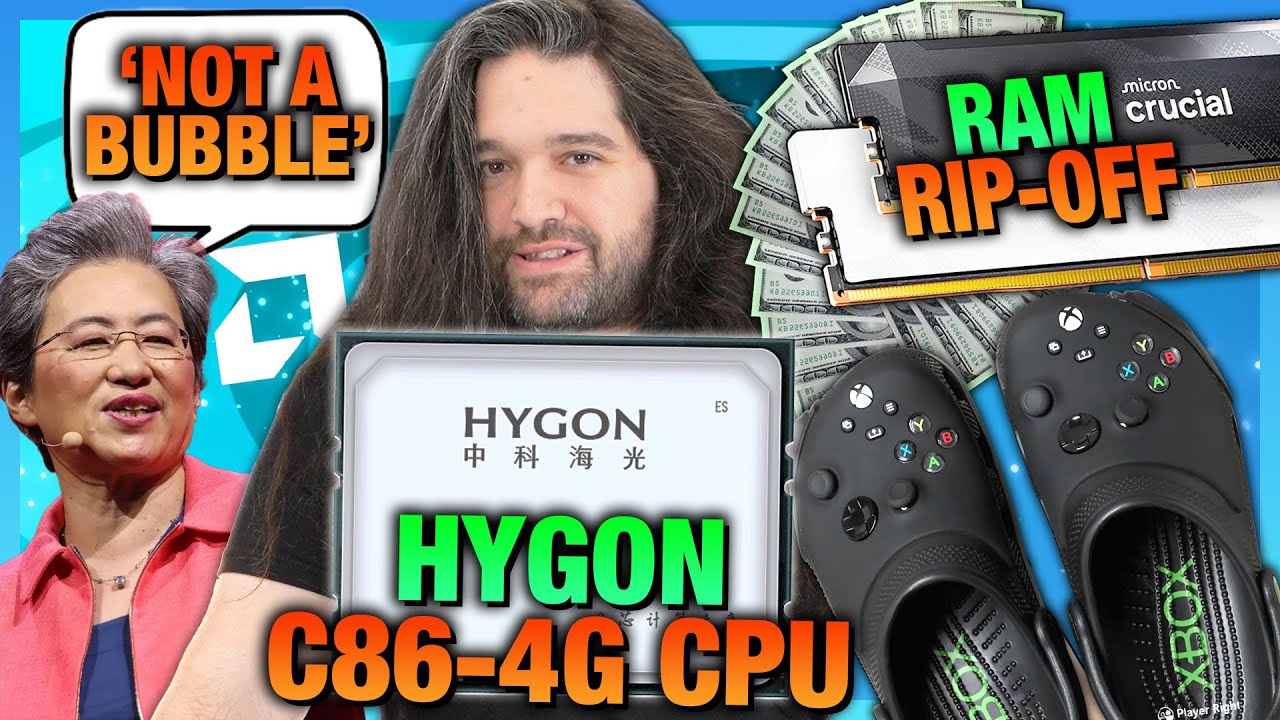
The hardware news recap begins with a grim update on the current state of memory pricing and consumer hardware sales. Memory prices, particularly RAM, have surged dramatically, with some prices tripling, leading to a significant decline in consumer spending. November sales for many hardware manufacturers, especially those not directly involved in silicon production like case and cooling manufacturers, have dropped between 30% to 60% year-over-year. This downturn is attributed to tighter consumer budgets and the high cost of components, exacerbated by the demand from AI and data center markets. Some Chinese manufacturers focusing on budget coolers or data center cooling solutions have managed to stabilize or grow by shifting focus away from the consumer market.
AMD CEO Lisa Su addressed concerns about an AI bubble during a recent interview, firmly stating that the AI industry is not in a bubble and that the technology is still in its early stages. She emphasized the real demand for AI computing power and the ongoing innovation in the field, dismissing fears of an imminent crash. This contrasts with Nvidia’s CEO Jensen Huang, who has been highlighting defense applications for AI, signaling a shift in focus from gaming and workstation markets to data centers and military contracts. Both companies are heavily invested in AI, but AMD appears less focused on military applications compared to Nvidia.
In GPU market news, Intel’s ARC GPUs have finally appeared in market share reports, capturing about 1% of the add-in board market, a small but notable gain from zero. Nvidia still dominates with over 92% market share, though this is a slight decrease from previous quarters, with AMD also gaining some ground. Meanwhile, Samsung is considering shifting its memory contract pricing from long-term agreements to quarterly pricing, which could increase price volatility for consumers. This change is partly driven by high demand for high-bandwidth memory used in AI accelerators, contributing to rising costs for devices like smartphones and gaming consoles.
Chinese hardware developments include the unveiling of new GPUs by the company Xanden, based on Imagination Technologies’ architecture, marking a significant step for a non-Nvidia/AMD player in the GPU market. Additionally, a Chinese pre-built gaming PC featuring the domestically produced Hygon C86-4G CPU, derived from AMD’s Zen architecture, was introduced, highlighting China’s growing efforts to develop homegrown computing technology. On the consumer front, Sony has updated the PS5 Slim’s thermal design to address previous issues with liquid metal cooling, and the case manufacturer Haven responded to a typo in their product by offering free corrective stickers to customers.
The recap ends on a lighter note with Microsoft’s unusual new Xbox-themed Crocs, designed as a novelty product for gamers. These Crocs feature Xbox controller button layouts and branding, available for purchase alongside themed charms inspired by popular games. While the bulk of the episode focused on challenging market conditions and rising hardware costs, this quirky collaboration offers a humorous and unexpected conclusion to the week’s hardware news.