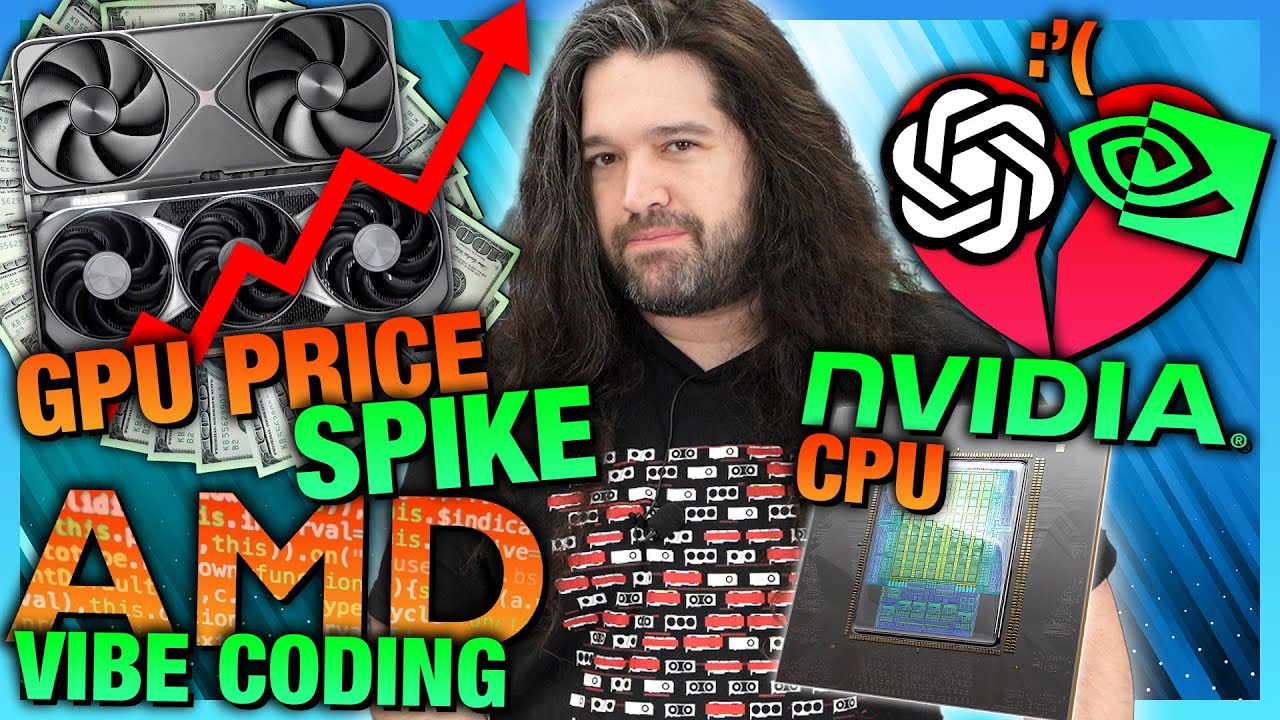
The video covers several major developments in the tech and hardware industry, starting with the uncertain status of the $100 billion deal between OpenAI and Nvidia. Originally, this deal involved Nvidia investing in OpenAI, which would then use the funds to lease Nvidia GPUs for data centers that are not yet built. However, recent reports suggest the agreement was non-binding and not finalized, with Nvidia CEO Jensen Huang expressing skepticism about OpenAI’s business strategy. The video highlights the interconnectedness of the AI investment bubble and the potential economic risks if Nvidia’s sales or stock were to falter, given its significant influence on the tech sector and broader markets.
Next, the video discusses the recent actions of the Norwegian Sovereign Wealth Fund, which has reduced its holdings in major US tech companies, including Nvidia, Microsoft, and Apple, due to concerns about the AI bubble and the need for more stable returns. The fund’s stress-testing scenarios indicate that an AI market correction could have the largest negative impact on equities by 2025. This move reflects growing caution among large investors about the sustainability of current valuations in the AI and tech sectors.
The video then shifts to a controversy involving AMD and the open-source project FFmpeg. FFmpeg developers accused AMD of submitting AI-generated code that was verbose and poorly documented, leading to a public exchange on forums and social media. While it’s unclear whether AI was actually used in the code, the incident underscores the growing tension in open-source communities about the use of AI-generated content and the importance of clear communication and manual review in software development.
A significant portion of the video is dedicated to the sudden spike in GPU prices after a year of gradual improvement. Nvidia is reportedly shifting most of its GPU supply to lower VRAM models, such as the RTX 5060 8GB, 5060 Ti 8GB, and 5070 12GB, due to memory shortages and increased costs. This supply adjustment, along with reduced production of higher-end models, has led to soaring prices for GPUs across the board, with some models now selling for double their original MSRP. The video notes that this trend is not limited to Nvidia, as AMD GPUs are also experiencing price increases, reversing the positive pricing trends seen in late 2023.
Finally, the video touches on several other industry updates, including Nvidia’s plan to sell its Vera ARM CPUs as standalone products, which will increase competition with AMD’s EPYC line in the enterprise market. Additionally, new leaks about AMD’s upcoming Zen 6 architecture suggest a move to 12-core CCDs and increased cache, potentially shifting mainstream CPUs to higher core counts and improving silicon density. The host concludes by promoting their recent documentary on Chinese memory manufacturers and encouraging viewers to support the channel for more in-depth hardware coverage.