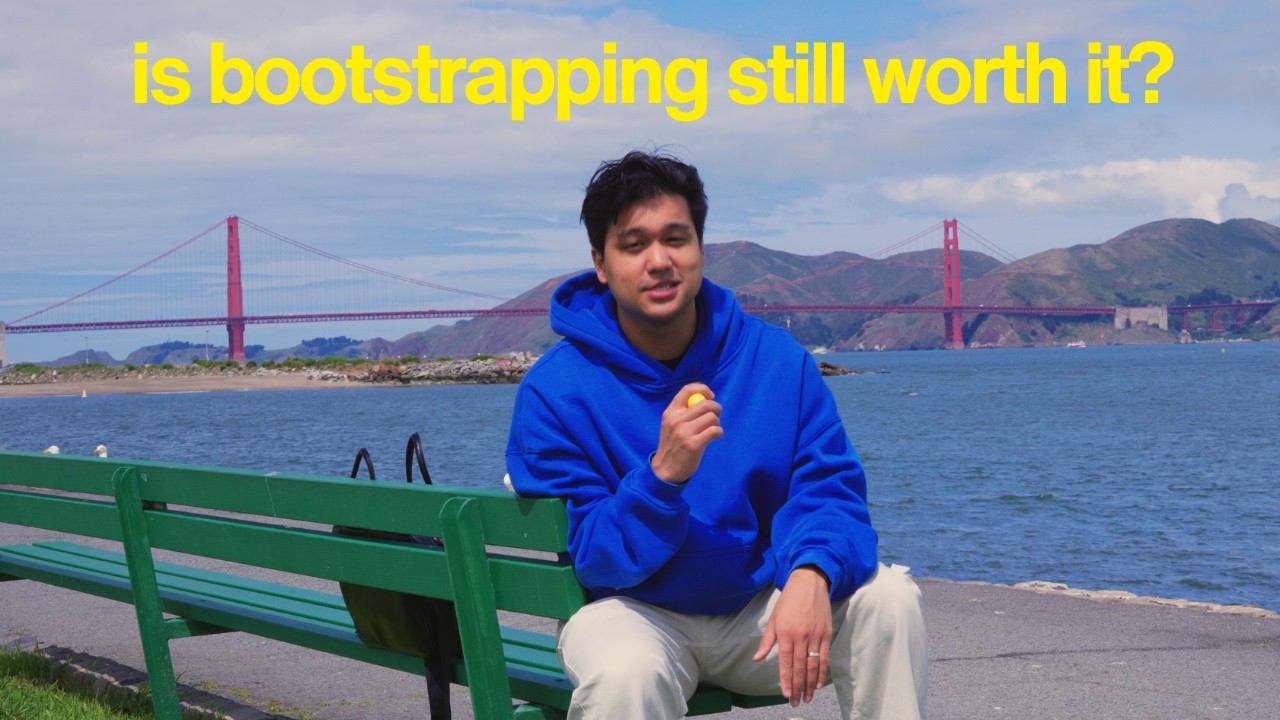
In this video, Chris, a solo developer known for bootstrapping productivity apps, travels to San Francisco to seek advice from startup founders about whether he should continue bootstrapping or consider raising venture capital (VC). Feeling stuck and uncertain about the direction of his projects, Chris attends various events and meets with founders from different backgrounds, including YC-backed companies and indie hackers, to gain insights into the pros and cons of bootstrapping versus raising money. He captures candid conversations that reveal the diverse motivations and challenges founders face in their journeys.
One key interview is with Tim, co-founder and co-CEO of Post Hog, who shares his experience of initially bootstrapping before raising VC to scale in a competitive space. Tim emphasizes the importance of choosing the right investors, maintaining control over the company, and understanding the legal and financial complexities of fundraising. He also discusses lifestyle changes post-funding, highlighting that good investors support founders with reasonable salaries and resources to focus on growth, while poor investor relationships can lead to stress and loss of control.
Chris also interviews Sahes, CTO of Whisper Flow, a VC-backed company known for its highly sticky product. Sahes explains that their decision to raise money was driven by the need to build a large, talented team quickly to achieve ambitious goals in voice technology. He stresses the importance of building a product that users genuinely engage with and retain, focusing on qualitative feedback early on and key metrics like week-one retention. Sahes advises founders to build products they want for themselves and iterate relentlessly to create value for others.
Another insightful conversation is with Doc, CEO of Grapile, a young founder who chose VC funding to pursue ambitious goals in code validation. Doc candidly shares the difficulties of startup life, the importance of honest revenue tracking, and the challenge of achieving product-market fit. He highlights that bootstrapping is much harder in highly competitive markets where well-funded competitors exist, and stresses the need for deep user engagement and iterative development based on real feedback rather than assumptions.
Finally, Chris talks with Drew, CEO of Anything.com, who shares his experience bootstrapping for over a year before raising VC to accelerate growth. Drew advises that the choice between focusing on a portfolio of apps or a single project depends largely on personality and working style. He notes that raising money brings higher expectations and risks but also greater leverage to scale. After these conversations, Chris concludes that he will continue bootstrapping his current projects but remains open to raising money for bigger ambitions, inspired by the mission-driven founders he met who raised capital only to realize their vision at scale.