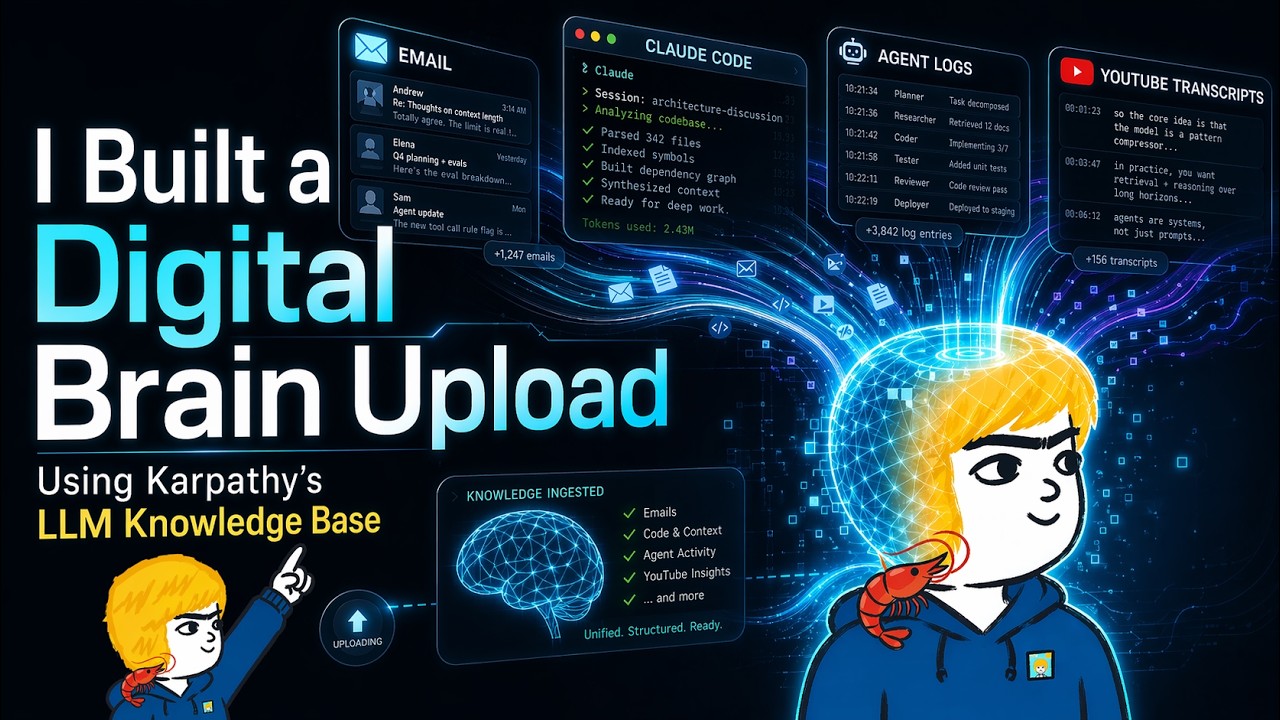
In this video, the creator builds a personal digital brain or “second brain” using the concept of an LLM Wiki inspired by Andrej Karpathy’s knowledge base idea. Initially developed for trading methods, the LLM Wiki concept is versatile and adaptable to various projects. The idea was further inspired by a conversation between Jen and Karpathy about building a second brain on Obsidian and Karpathy’s notion of it being a practical form of brain upload using detailed video interviews. Additionally, Bryan Johnson’s approach of compiling extensive personal health data into a queryable knowledge base sparked the creator’s interest in building a similar digital upload of himself using his own data.
The creator gathers raw data from multiple sources to build this knowledge base, including Claude Code session logs, Gmail emails, agent logs from AI interactions, and YouTube video transcripts. These sources collectively capture his voice, work style, interests, projects, and communication patterns. He emphasizes the importance of data privacy and security when handling such personal information. The process involves exporting data, cleaning raw files, and structuring them into a coherent knowledge base format compatible with tools like Obsidian.
Once the data ingestion is complete, the LLM processes and organizes the information into categories such as goals, projects, interests, values, and communication style. The knowledge base captures both hard data like project details and soft data like personal values and tone of communication. For example, it identifies his terse prompting style with Claude and warmer tone in YouTube videos. This digital brain also tracks project progress and goals, providing a comprehensive overview of his work and thought processes over time.
The creator demonstrates querying the knowledge base to retrieve insights about his past projects, frustrations, and emotional responses during machine learning experiments. This capability allows him to revisit forgotten details and gain new perspectives on his work and behavior. The digital brain acts as an interactive map of his mind, passions, and experiences, potentially serving as a legacy or tool for self-reflection. He notes that while he lacks the extensive health data Bryan Johnson has, his knowledge base still reveals meaningful patterns about his psyche and work habits.
In conclusion, the video showcases an innovative experiment in building a personal second brain by integrating diverse personal data sources into an LLM-powered knowledge base. The creator encourages viewers to try building their own digital uploads to explore self-knowledge and productivity benefits. He highlights the potential of such systems to track goals, preserve memories, and provide emotional insights, making the concept of a digital brain or brain upload more accessible and practical. The video ends with an invitation to subscribe and share feedback on this intriguing approach to personal knowledge management.