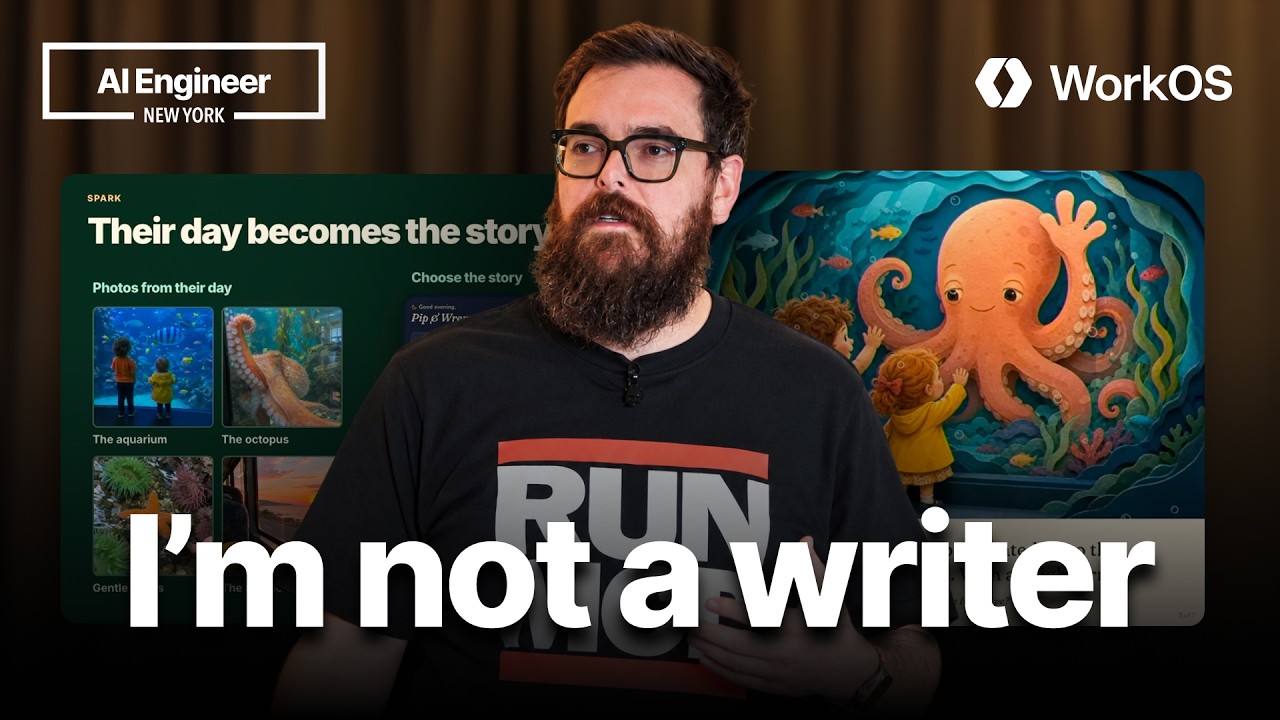
In his talk, Zack Proser emphasizes the importance of building “factories” for people we care about—systems or tools that help them produce meaningful work more efficiently. Drawing from his 15 years as an open-source developer and prolific writer, Zack shares how his obsessive writing practice enabled him to produce high-quality content quickly. He argues that while AI-generated content may sometimes be imperfect or “sloppy,” the greater concern should be the many valuable stories that remain untold due to fear, shame, or self-doubt. By creating supportive systems, more people can share their insights and experiences effectively.
Zack describes his experience at WorkOS, where he developed “Blog Bot,” an AI-powered tool integrated with Slack that helps colleagues rapidly generate draft blog posts from event transcripts and other company data. This tool provides “asymmetric leverage,” allowing users to produce content that is 85-90% complete, requiring only human review and final edits. The system automates tedious tasks like gathering context and generating images, enabling employees who might not consider themselves writers to share their work and increase the organization’s publishing velocity without sacrificing quality.
He reflects on a conversation with WorkOS founder Michael Grinich, who likened their AI-assisted content creation process to a production line that still embodies craft through careful human inspection and quality control. Zack initially felt uneasy about this comparison but came to appreciate that human judgment remains central to ensuring truthfulness, usefulness, and beauty in the final product. He uses a blacksmithing metaphor to illustrate his role as the spark, bellows, and quench—initiating, shaping, and finalizing the work—highlighting that AI tools augment rather than replace human creativity and responsibility.
Beyond professional applications, Zack shares a personal project where he built a “factory” for his two toddlers: an app that automatically generates bedtime stories based on photos from their day. This tool not only creates personalized narratives but also responds to voice commands, making storytelling interactive and engaging. This example underscores the broader potential of such factories to enrich lives by capturing and sharing meaningful experiences, whether in a corporate setting or at home.
In conclusion, Zack challenges the audience to consider who they might build a factory for—someone they care about or a team they support. He encourages leveraging one’s expertise and passion to create tools that empower others to tell their stories and share their work. By doing so, we can overcome barriers to expression, foster creativity, and amplify voices that might otherwise go unheard, ultimately enriching both individual lives and collective knowledge.
Useful Links