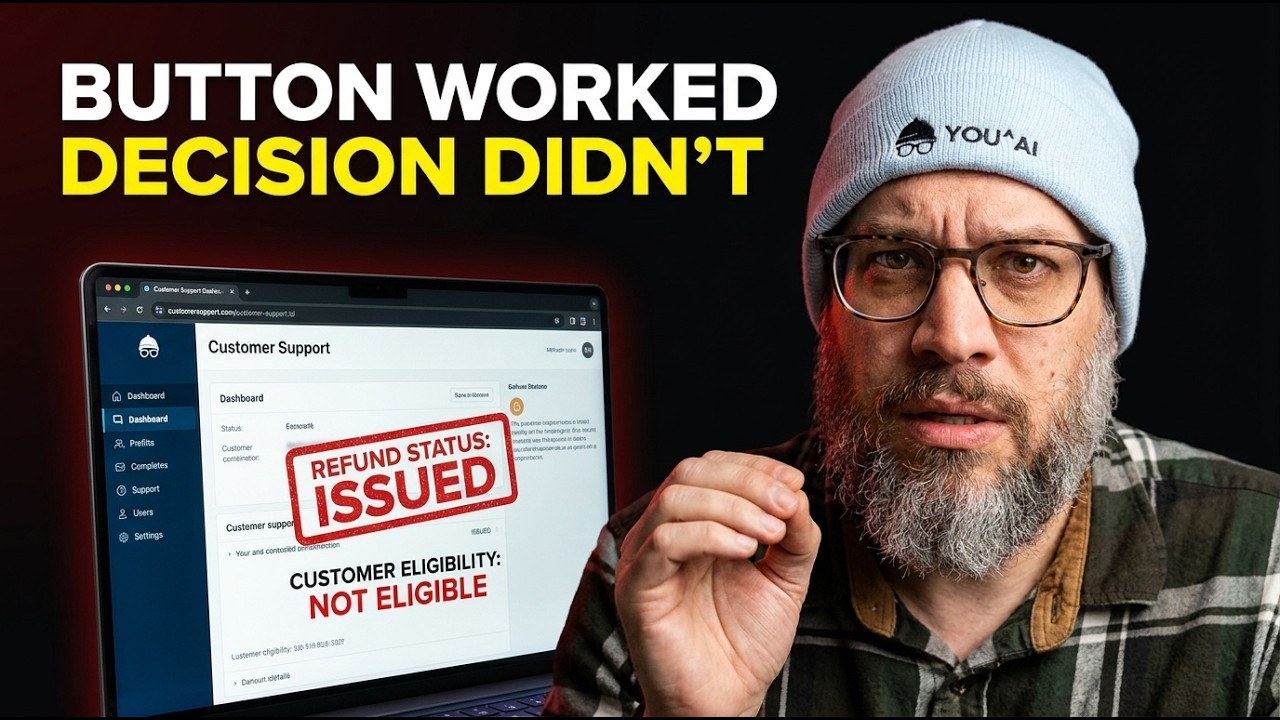
The video discusses a critical strategic layer in AI agent development that goes beyond mere computer use—the concept of “semantic work primitives.” While AI agents today can interact with computers by clicking buttons and navigating interfaces, the real challenge lies in whether these agents truly understand the meaning behind their actions. For example, moving a calendar invite is not just about changing a time; it involves understanding the implications for attendees, commitments, and priorities. The speaker argues that controlling these semantic primitives—units of work with clear meaning, permissions, and consequences—is where the future platform power lies, not just in enabling agents to use computers.
The speaker outlines three essential layers for AI agents: access, meaning, and authority. Access allows agents to interact with software interfaces, but meaning provides the context and understanding of what the agent is doing, and authority governs who can perform which actions and under what conditions. Current tools like Codex provide access and some guardrails, but they lack deep semantic understanding. The richer the semantic interface—such as APIs, typed objects, and permissioned actions—the better the agent can perform complex, high-stakes tasks autonomously and safely.
Coding agents serve as a prime example of semantic work primitives in action because software development inherently has rich semantic structures like modules, tests, and dependencies. This environment allows agents to perceive state, receive feedback, and iterate without constant human supervision. In contrast, most knowledge work lacks such explicit semantic feedback, making it harder for agents to understand the full context and meaning of tasks like scheduling meetings or managing procurement. Thus, coding acts as a wedge technology, demonstrating how semantic meaning can unlock more autonomous and reliable agent workflows.
The video also highlights the strategic tension between different players in the AI ecosystem—model providers, browser companies, SaaS vendors, and identity providers—all vying to control the semantic meaning of work. For instance, companies like Salesforce embrace agent integration by exposing semantic APIs, while others like SAP resist, risking obsolescence. The future of AI-enabled work depends on software that is designed from the ground up to be semantically legible to agents, enabling them to understand permissions, consequences, and workflows deeply rather than just operating user interfaces superficially.
In conclusion, the speaker emphasizes that the next wave of AI product development must focus on semantic meaning rather than just agent capability. Agents need to operate on meaningful units of work that are permissioned, reviewable, and reversible, not just on raw computer access. This shift requires rethinking software design to expose these semantic layers, enabling AI and humans to collaborate effectively. The video calls on product leaders and startups to prioritize building these semantic work primitives to create durable, trustworthy AI workflows that go beyond flashy demos and truly transform how work is done.